Search


Citations & References (186)
Invitrogen™
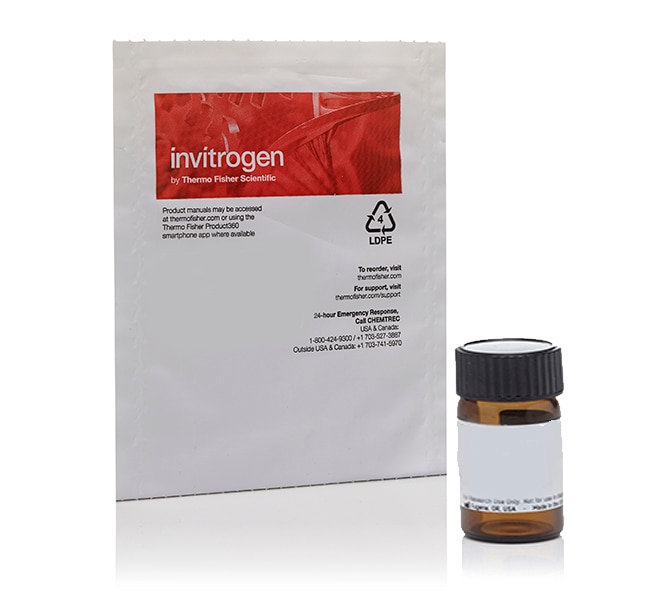
Tetramethylrhodamine, Methyl Ester, Perchlorate (TMRM)
Tetramethylrhodamine, methyl ester (TMRM) is a cell-permeant, cationic, red-orange fluorescent dye that is readily sequestered by active mitochondria.Visualize staining yourRead more
| Catalog Number | Quantity |
|---|---|
| T668 | 25 mg |
Catalog number T668
Price (CNY)
2,491.00
飞享价
Ends: 31-Dec-2026
3,459.00Save 968.00 (28%)
25 mg
Quantity:
25 mg
Price (CNY)
2,491.00
飞享价
Ends: 31-Dec-2026
3,459.00Save 968.00 (28%)
25 mg
Tetramethylrhodamine, methyl ester (TMRM) is a cell-permeant, cationic, red-orange fluorescent dye that is readily sequestered by active mitochondria.
Visualize staining your cell without wasting your reagents, antibodies, or time with our new Stain-iT Cell Staining Simulator.
Visualize staining your cell without wasting your reagents, antibodies, or time with our new Stain-iT Cell Staining Simulator.
For Research Use Only. Not for use in diagnostic procedures.
Specifications
Detection MethodFluorescence
Quantity25 mg
Shipping ConditionRoom Temperature
Sub Cellular LocalizationMitochondria
ColorRed-Orange
For Use With (Equipment)Fluorescence Microscope
Product TypeTMRM
Unit Size25 mg
Contents & Storage
Store in freezer -5°C to -30°C and protect from light.
Frequently asked questions (FAQs)
I am seeing high background outside of my neuronal cells when using membrane potential indicators. What can I do to reduce background?
What is the difference between fast and slow-response membrane potential probes?
What type of membrane potential indicators do you offer and how should I choose one for my experiment?
I am testing mitochondrial membrane potential, but my untreated cells are fluorescing, and I'm not seeing a significant difference in my test sample.
Citations & References (186)
Citations & References
Abstract
Spatially organised mitochondrial calcium uptake through a novel pathway in chick neurones.
Journal:Cell Calcium
PubMed ID:16338004
'A brief depolarisation of chick sensory neurones evokes a calcium increase in mitochondria that peaks 1-2s after the depolarisation event and then decays over tens of seconds. Peripheral mitochondria take up more calcium than do central ones, even when the cytosolic calcium increase is spatially homogeneous. The calcium influx into
Tissue transglutaminase is a multifunctional BH3-only protein.
Journal:J Biol Chem
PubMed ID:15485857
'Tissue transglutaminase (TG2) protein accumulates to high levels in cells during early stages of apoptosis both in vivo and in vitro. The analysis of the TG2 primary sequence showed the presence of an eight amino acid domain, sharing 70% identity with the Bcl-2 family BH3 domain. Cell-permeable peptides, mimicking the
Methods for assessing autophagy and autophagic cell death.
Journal:Methods Mol Biol
PubMed ID:18425442
'Autophagic (or type 2) cell death is characterized by the massive accumulation of autophagic vacuoles (autophagosomes) in the cytoplasm of cells that lack signs of apoptosis (type 1 cell death). Here we detail and critically assess a series of methods to promote and inhibit autophagy via pharmacological and genetic manipulations.
Trafficking of ganglioside GD3 to mitochondria by tumor necrosis factor-alpha.
Journal:J Biol Chem
PubMed ID:12118012
'The interaction of mitochondria with proapoptotic proteins activates apoptosis pathways. Previous findings have identified ganglioside GD3 (GD3) as an emerging apoptotic lipid intermediate that targets mitochondria in response to death signals. Using immunoelectron and laser scanning confocal microscopy, we characterize the trafficking of GD3 to mitochondria in response to tumor
Unreliability of the cytochrome c-enhanced green fluorescent fusion protein as a marker of cytochrome c release in cells that overexpress Bcl-2.
Journal:J Biol Chem
PubMed ID:11489892
'A cytochrome c-enhanced green fluorescent protein chimera (cyt-c.EGFP) was used to monitor the release of cytochrome c from mitochondria in Bcl-2-negative and Bcl-2-positive MDA-MB-468 breast cancer cells. A comparison was made with the intracellular distribution of endogenous cytochrome c based on Western blotting of cell fractions and immunocytochemistry. The release