Search


Citations & References (508)
Invitrogen™
Thapsigargin
Thapsigargin is a naturally occurring sesquiterpene lactone isolated from the umbelliferous plant Thapsia garganica. This tumor promoter releases Ca2+ fromRead more
Have Questions?
Change view

| Catalog Number | Quantity |
|---|---|
| T7458 | 1 mg |
| T7459 | 20 x 50 μg |
Catalog number T7458
Price (CNY)
2,419.00
1 mg
Quantity:
1 mg
Price (CNY)
2,419.00
1 mg
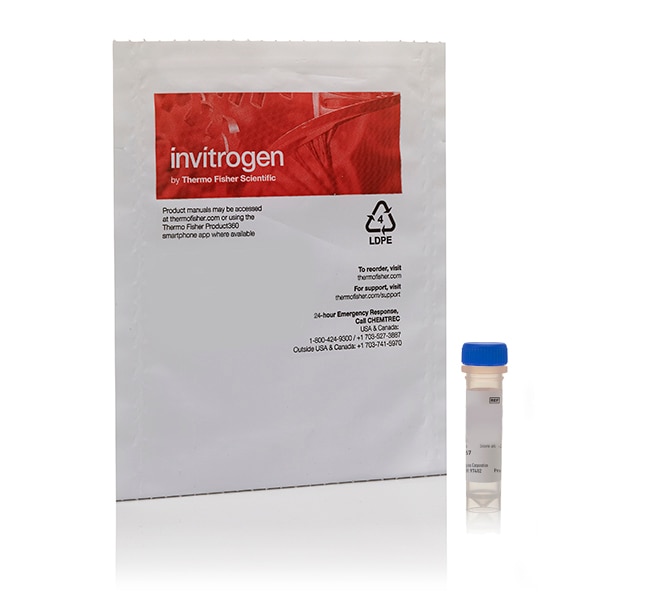
Thapsigargin is a naturally occurring sesquiterpene lactone isolated from the umbelliferous plant Thapsia garganica. This tumor promoter releases Ca2+ from intracellular stores by specifically inhibiting the endoplasmic reticulum Ca2+-ATPase; it does not directly affect plasma membrane Ca2+-ATPases, Ins 1,4,5-P3 production or protein kinase C activity. Thapsigargin is also available in a 1 mg packaging, T7458.
For Research Use Only. Not for use in diagnostic procedures.
Specifications
Label TypeUnlabeled
Molecular FormulaC34H50O12
Quantity1 mg
Recommended StorageStore in freezer (-5°C to -30°C)
Shipping ConditionRoom Temperature
Physical FormSolid
Product TypeInhibitor
Unit Size1 mg
Citations & References (508)
Citations & References
Abstract
Calcium signaling.
Journal:Cell
PubMed ID:7834745
Thapsigargin, a tumor promoter, discharges intracellular Ca2+ stores by specific inhibition of the endoplasmic reticulum Ca2(+)-ATPase.
Journal:Proc Natl Acad Sci U S A
PubMed ID:2138778
Thapsigargin, a tumor-promoting sesquiterpene lactone, discharges intracellular Ca2+ in rat hepatocytes, as it does in many vertebrate cell types. It appears to act intracellularly, as incubation of isolated rat liver microsomes with thapsigargin induces a rapid, dose-dependent release of stored Ca2+. The thapsigargin-releasable pool of microsomal Ca2+ includes the pools
Muscarinic receptors modulate intracellular Ca(2+) concentration in hyaline cells of the chicken basilar papilla.
Journal:J Comp Physiol A Neuroethol Sens Neural Behav Physiol
PubMed ID:12073083
Nonsensory hyaline cells border the sensory epithelium of the auditory end-organ (basilar papilla) in birds and reptiles. Their innervation by cochlear cholinergic efferent fibers and the presence of contractile proteins suggest that hyaline cells may actively regulate basilar membrane mechanics. The cholinergic pharmacology of hyaline cells was studied by measuring
Transmission of cell stress from endoplasmic reticulum to mitochondria: enhanced expression of Lon protease.
Journal:J Cell Biol
PubMed ID:12082077
'The rat homologue of a mitochondrial ATP-dependent protease Lon was cloned from cultured astrocytes exposed to hypoxia. Expression of Lon was enhanced in vitro by hypoxia or ER stress, and in vivo by brain ischemia. These observations suggested that changes in nuclear gene expression (Lon) triggered by ER stress had
Identification of ERSE-II, a new cis-acting element responsible for the ATF6-dependent mammalian unfolded protein response.
Journal:J Biol Chem
PubMed ID:11112790
'Herp is a 54-kDa membrane protein in the endoplasmic reticulum (ER). The mRNA expression level of Herp is increased by the accumulation of unfolded proteins in the ER. Transcriptional changes designed to deal with this type of ER stress is called the unfolded protein response (UPR). Most mammalian UPR-target genes