Search

Invitrogen™
NuPAGE™ Tris-Acetate Mini Protein Gels, 3 to 8%, 1.0 mm, WedgeWell™ format
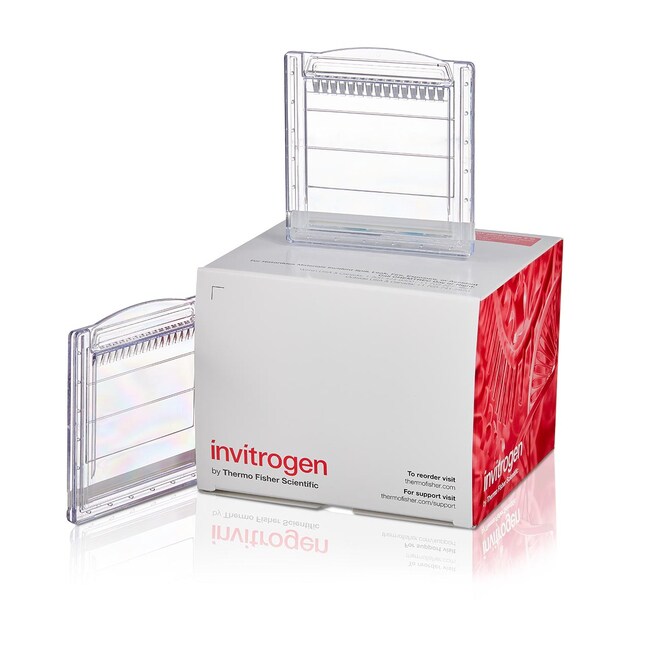
Invitrogen NuPAGE Tris-Acetate protein gels, WedgeWell format provide excellent separation of large molecular weight proteins. They are high performance polyacrylamide gels that simulate the denaturing or native conditions of the traditional Laemmli system.
Have Questions?
Change view

| Catalog Number | Wells |
|---|---|
| TA03815BOX | 15-well |
| TA03810BOX | 10-well |
| TA03812BOX | 12-well |
Catalog number TA03815BOX
Price (CNY)
1,126.00
飞享价
Ends: 31-Dec-2026
1,502.00Save 376.00 (25%)
10 gels (1 box)
Wells:
15-well
Price (CNY)
1,126.00
飞享价
Ends: 31-Dec-2026
1,502.00Save 376.00 (25%)
10 gels (1 box)
Invitrogen NuPAGE Tris-Acetate protein gels, WedgeWell format provide excellent separation of large molecular weight proteins. They are high performance polyacrylamide gels that simulate the denaturing or native conditions of the traditional Laemmli system. The unique buffer formulation maintains a low operating pH during electrophoresis, resulting in superior resolution of high molecular weight proteins compared to traditional Tris-glycine SDS-PAGE gels.
Invitrogen NuPAGE Tris-Acetate WedgeWell format protein gels provide excellent separation of large molecular weight proteins. They are high performance polyacrylamide gels that simulate the denaturing or native conditions of the traditional Laemmli system. The unique buffer formulation maintains a low operating pH during electrophoresis, resulting in superior resolution of high molecular weight proteins compared to traditional Tris-glycine SDS-PAGE gels.
Product features
- High resolution—gels offer optimal separation of high molecular weight proteins
- Better protein integrity—sample preparation process has been optimized to help preserve proteins
- Longer shelf life—gels can be stored for at least 12 months
- Wedge-shaped wells—for easier sample loading and up to two times higher sample volume
Run your proteins in native or denatured form
NuPAGE Tris-Acetate protein gels do not contain SDS and can be used to separate proteins in native or denatured form. For denatured proteins, we recommend using NuPAGE LDS Sample Buffer (NP0007) and NuPAGE Tris-Acetate SDS Running Buffer (LA0041). For native proteins, we recommend using Novex Tris-Glycine Native Sample Buffer (LC2673) and Novex Tris-Glycine Native Running Buffer (LC2672).
For transfer of proteins to a membrane, we recommend using NuPAGE Transfer Buffer (NP00061) for traditional wet transfer using the XCell II Blot Module (EI9051) or the Mini Blot Module (B1000). Alternatively, rapid semi-dry transfer can be done using the Invitrogen Power Blotter or rapid dry transfer using the iBlot 3 Gel Transfer Device (IB31001).
Convenient to use
NuPAGE Tris-Acetate WedgeWell format gels have innovative wedge-shaped wells that allow up to two times more sample load volume than other 1.0 mm-thick gels. The wedge-shaped wells also have larger openings, making sample loading easier. The mini gels can be run using our XCell SureLock Mini-Cell (EI0001) or Mini Gel Tank (A25977).
For Research Use Only. Not for use in diagnostic procedures.
Specifications
For Use With (Equipment)Mini Gel Tank
Gel Thickness1.0 mm
Length (Metric)13 cm
Mode of SeparationMolecular Weight
Quantity10 Gels/Box
Sample Loading VolumeUp to 35 μL
Shelf Life12 Months
Shipping ConditionWet Ice
Width (Metric)8 cm
Gel Percentage3 to 8%
Gel SizeMini
Gel TypeTris-Acetate
Product LineNuPAGE
Separation Range36 to 500 kDa
Separation TypeDenaturing, Native
Wells15-well
Unit Size10 gels (1 box)
Contents & Storage
Store at 4°C to 25°C. Do not freeze.