Search

Thermo Scientific™
Staphylococcal Enterotoxin Reversed Passive Latex Agglutination Kit (SET- RPLA)
Rapidly detect staphylococcal enterotoxins A, B, C and D in food samples or culture filtrates with this reversed passive latex agglutination test.
| Catalog Number | Quantity |
|---|---|
| TD0900A | 20 Tests |
Catalog number TD0900A
Price (CNY)Request A Quote
-
Quantity:
20 Tests
Rapidly detect staphylococcal enterotoxins A, B, C and D in food samples or culture filtrates with Thermo Scientific™ Oxoid™ Staphylococcal Enterotoxin Reversed Passive Latex Agglutination Kit (SET-RPLA). The technique of reversed passive latex agglutination (RPLA) enables soluble antigens such as bacterial toxins to be detected in an agglutination assay.
The SET-RPLA can be used to detect staphylococcal enterotoxins in a wide variety of foods and to give a semi-quantitative result.
Staphylococcal food poisoning is caused by eating foods contaminated with enterotoxins produced during the growth of certain strains of Staphylococcus aureus. The enterotoxins A, B, C, D and E play an important role in the pathogenesis of staphylococcal food poisoning which is normally characterized by nausea, vomiting and diarrhoea.
Use Staphylococcal Enterotoxin RPLA test for simple and semi-quantitative detection of staphylococcal enterotoxins in food samples.
- Simple – easy to implement
- Visual – easy to read results
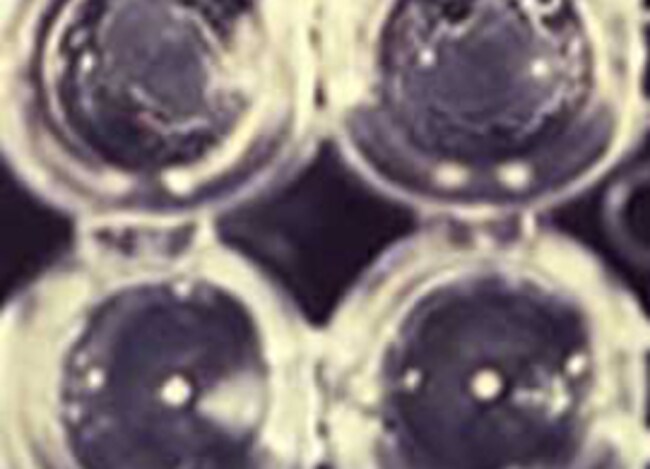
In a standard agglutination assay, soluble antibody reacts with particulate antigen such as bacterial cells. However, in a REVERSED agglutination assay the antibody, which is attached to particles, reacts with the soluble antigen. The particles (in this case, latex) do not themselves play a part in the reaction and they are therefore PASSIVE. The cross-linking of the latex particles by the specific antigen/antibody reaction results in the visible LATEX AGGLUTINATION reaction.
The SET-RPLA test kit is based upon the reports by Shingaki et al.1 and Oda et al.2 It was developed under the guidance of the Tokyo Metropolitan Research Laboratory of Public Health.
Not all products are available for sale in all territories. Please inquire.
Remel™ and Oxoid™ products are now part of the Thermo Scientific™ brand.
For In Vitro Diagnostic Use.
For In Vitro Diagnostic Use.
1. Shingaki,M et al. (1981). Ann. Rep. Tokyo Metro. Lab. Public Health 32: 128.
2. Oda, T. (1978) Jap. J. Bacteriol. 33: 743
Specifications
DescriptionStaphylococcal Enterotoxin Reversed Passive Latex Agglutination Kit (SET-RPLA)
IncludesLatex sensitized with anti-enterotoxin A, B, C and D, latex control, Staphylococcal enterotoxin A, B, C and D, sample diluent, instruction leafelt.
Organism GroupGroup A, B, C, D
Quantity20 Tests
Sample TypeFood
Target Organism ClassStaphylococcus aureus
TypeStaphylococcus aureus Test Kit
Detectable AnalytesStaphylococcal Enterotoxins A, B, C, D
Unit SizeEach
Contents & Storage
2°C to 8°C