Search


Citations & References (2)
Invitrogen™
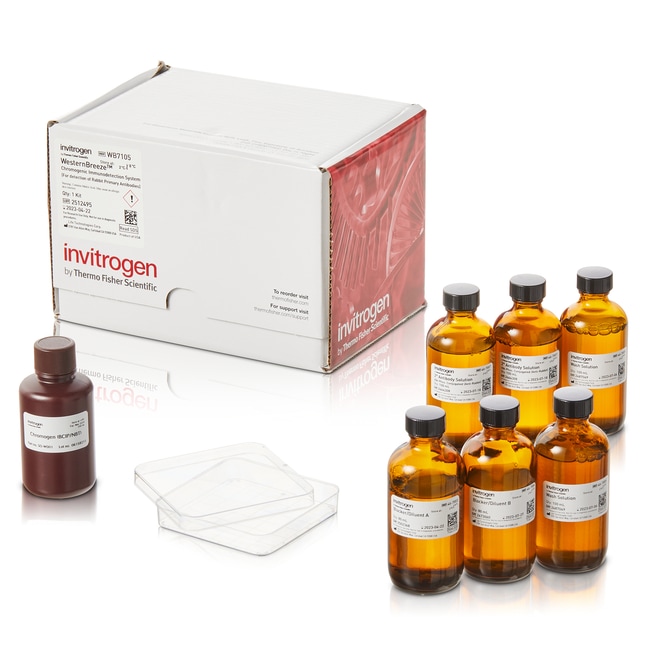
WesternBreeze™ Chromogenic Kit, anti-rabbit
WesternBreeze® Chromogenic Kits detect proteins that have been immobilized on membranes (nitrocellulose or PVDF) following western transfer or bound directlyRead more
| Catalog Number | Quantity |
|---|---|
| WB7105 | 1 kit |
Catalog number WB7105
Price (CNY)
6,791.00
1 kit
Quantity:
1 kit
Price (CNY)
6,791.00
1 kit
WesternBreeze® Chromogenic Kits detect proteins that have been immobilized on membranes (nitrocellulose or PVDF) following western transfer or bound directly from solution (dot blots). Detection is accomplished with a ready-to-use BCIP/NBT substrate for alkaline phosphatase. Non-fading purple precipitates develop at the protein bands on the membrane. WesternBreeze® chromogenic offers:
• Clear background
• High sensitivity-low picogram levels detectable
• High specificity
• One simple protocol-no optimization required
• Clear background
• High sensitivity-low picogram levels detectable
• High specificity
• One simple protocol-no optimization required
For Research Use Only. Not for use in diagnostic procedures.
Specifications
Cross ReactivityRabbit
Quantity1 kit
ReactivityRabbit
Shipping ConditionWet Ice
Substrate TypeAP (Alkaline Phosphatase) Substrate
Detection MethodChromogenic
Membrane CompatibilityNitrocellulose, PVDF
Product LineWesternBreeze
Product TypeWestern Blot Kit
Unit Size1 kit
Contents & Storage
The WesternBreeze Chromogenic kits include blocking solutions, primary antibody diluent, ready-to-use secondary antibody solution (anti-mouse, anti-rabbit or anti-goat), ready-to-use chromogenic substrate, wash solutions, and incubation trays. Each kit contains complete reagents for 20 mini-blots.
Store the kits at 2–8°C. Guaranteed stable for 6 months when properly stored.
Store the kits at 2–8°C. Guaranteed stable for 6 months when properly stored.
Frequently asked questions (FAQs)
Why is the actual band size on a western blot different from the predicted size of the protein?
What are the standard lysis buffers used with mammalian cells for detection of protein expression by immunoprecipitation (IP) or Western blot analysis?
What conditions do you recommend for overnight Western transfer?
Can I purchase the Secondary Antibody solutions from the WesternBreeze Chromogenic Detection kits as standalone products?
Can I purchase the Blocker/Diluent and Antibody Wash solutions from the WesternBreeze Chromogenic Detection kits as standalone products?
Citations & References (2)
Citations & References
Abstract
Hop Is an Unusual Homeobox Gene that Modulates Cardiac Development.
Journal:Cell
PubMed ID:12297045
'Hop is a small, divergent homeodomain protein that lacks certain conserved residues required for DNA binding. Hop gene expression initiates early in cardiogenesis and continues in cardiomyocytes throughout embryonic and postnatal development. Genetic and biochemical data indicate that Hop functions directly downstream of Nkx2-5. Inactivation of Hop in mice by
An iron-regulated ferric reductase associated with the absorption of dietary iron.
Journal:Science
PubMed ID:11230685
The ability of intestinal mucosa to absorb dietary ferric iron is attributed to the presence of a brush-border membrane reductase activity that displays adaptive responses to iron status. We have isolated a complementary DNA, Dcytb (for duodenal cytochrome b), which encoded a putative plasma membrane di-heme protein in mouse duodenal