Search


引用和文献 (28)
Invitrogen™
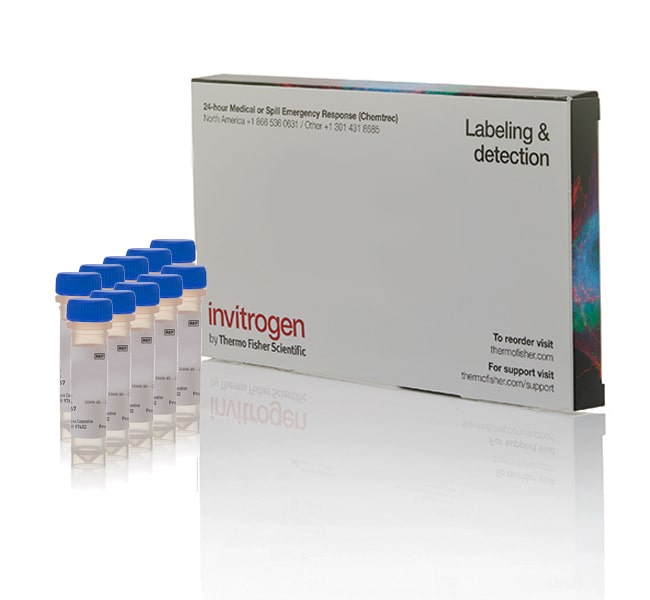
Calcium Orange™, AM,细胞可透过性 - 特殊包装
标记钙指示剂是结合 Ca2+ 离子后荧光强度增加的分子。其可用于多种钙信号转导研究,包括测量细胞内 Ca2+、跟踪 Ca2+ 进入和释放以及对活组织中 Ca2+ 进行多光子激发成像了解更多信息
| 货号 | 数量 |
|---|---|
| C3015 又称 C-3015 | 10 x 50 μg |
货号 C3015
又称 C-3015
价格(CNY)
5,463.00
Each
数量:
10 x 50 μg
价格(CNY)
5,463.00
Each
标记钙指示剂是结合 Ca2+ 离子后荧光强度增加的分子。其可用于多种钙信号转导研究,包括测量细胞内 Ca2+、跟踪 Ca2+ 进入和释放以及对活组织中 Ca2+ 进行多光子激发成像。将溶解后的指示剂直接加入含有培养细胞的培养皿中,即可向细胞上样 AM 酯形式的这类钙离子指示剂。通常使用荧光显微镜检查、荧光微孔板检测或流式细胞分析测量这些细胞的荧光信号。
了解有关离子指示剂(包括钙、钾、pH 值和膜电位指示剂)的更多信息›
钙指示剂(AM 酯)规格:
• 标记(激发/发射波长):Calcium Orange™ (549/576 nm)
• 结合 Ca2+ 后荧光强度增加:∼3 倍
• 结合 Ca2+ 之后荧光增加,波长稍有变化
Molecular Probes™ 钙指示剂的光谱特性
这类探针被可见光激发,且由于激发所需的能量较低,引起细胞光损伤的可能性较低。常用的激光仪器(如共聚焦激光扫描显微镜)能够有效激发这类指示剂,且其发射光谱位于通常不受细胞自发荧光和散射背景干扰的光谱区域。
更丰富的钙荧光指示剂的选择
我们提供了大量 Molecular Probes™ 钙指示剂,可用于各种实验方案,例如右旋糖酐形式可减少泄漏和区室化、 BAPTA 偶联物用于检测高幅钙瞬变。更多信息请参阅 Molecular Probes™ 手册可见光激发的 Ca2+ 荧光指示剂—第 19.3 节。
对于 UV 激发的 Ca2+ 指示剂、基于蛋白的 Ca2+ 指示剂、Ca2+ 指示剂的偶联物以及其他金属离子(即 Mg2+、Zn2+)的荧光指示剂,请查看 Molecular Probes™ 手册中的 Ca2+、Mg2+、Zn2+ 以及其他金属离子指示剂—第 19 章。
仅供科研使用。不适用于动物或人类的治疗或诊断。
了解有关离子指示剂(包括钙、钾、pH 值和膜电位指示剂)的更多信息›
钙指示剂(AM 酯)规格:
• 标记(激发/发射波长):Calcium Orange™ (549/576 nm)
• 结合 Ca2+ 后荧光强度增加:∼3 倍
• 结合 Ca2+ 之后荧光增加,波长稍有变化
Molecular Probes™ 钙指示剂的光谱特性
这类探针被可见光激发,且由于激发所需的能量较低,引起细胞光损伤的可能性较低。常用的激光仪器(如共聚焦激光扫描显微镜)能够有效激发这类指示剂,且其发射光谱位于通常不受细胞自发荧光和散射背景干扰的光谱区域。
更丰富的钙荧光指示剂的选择
我们提供了大量 Molecular Probes™ 钙指示剂,可用于各种实验方案,例如右旋糖酐形式可减少泄漏和区室化、 BAPTA 偶联物用于检测高幅钙瞬变。更多信息请参阅 Molecular Probes™ 手册可见光激发的 Ca2+ 荧光指示剂—第 19.3 节。
对于 UV 激发的 Ca2+ 指示剂、基于蛋白的 Ca2+ 指示剂、Ca2+ 指示剂的偶联物以及其他金属离子(即 Mg2+、Zn2+)的荧光指示剂,请查看 Molecular Probes™ 手册中的 Ca2+、Mg2+、Zn2+ 以及其他金属离子指示剂—第 19 章。
仅供科研使用。不适用于动物或人类的治疗或诊断。
仅供科研使用。不可用于诊断程序。
规格
检测方法荧光
染料类型基于荧光染料
数量10 x 50 μg
运输条件室温
适用于(应用)细胞活力与增殖
适用于(设备)荧光显微镜
产品线CALCIUM ORANGE
产品类型钙指示剂
Unit SizeEach
内容与储存
在冷冻冰箱(-5°C 至 -30°C)中避光储存。
常见问题解答 (FAQ)
I am doing calcium flux imaging with your Fura-2 calibration kit, but am seeing a large variability in ratio in different places around the slide. I am correcting for uniform illumination, using the product as directed, and sealing the coverslip with nail polish.
When using Calcium Crimson, AM, as an indicator of intracellular calcium flux, I am not getting a good degree of change. The cells also have GFP. What can I do?
I need to label cells with Fluo-4, AM, for a calcium flux assay. How long after labeling will the dye be retained?
引用和文献 (28)
引用和文献
Abstract
AM-loading of fluorescent Ca2+ indicators into intact single fibers of frog muscle.
Journal:Biophys J
PubMed ID:9168048
'The AM loading of a number of different fluorescent Ca2+ indicators was compared in intact single fibers of frog muscle. Among the 13 indicators studied, loading rates (the average increase in the fiber concentration of indicator per first 60 min of loading) varied approximately 100-fold, from approximately 3 microM/h to
Intracellular Ca2+ dynamics during spontaneous and evoked activity of leech heart interneurons: low-threshold Ca currents and graded synaptic transmission.
Journal:J Neurosci
PubMed ID:10864951
'In oscillatory neuronal networks that pace rhythmic behavior, Ca(2+) entry through voltage-gated Ca channels often supports bursting activity and mediates graded transmitter release. We monitored simultaneously membrane potential and/or ionic currents and changes of Ca fluorescence (using the fluorescence indicator Ca Orange) in spontaneously active and experimentally manipulated oscillator heart
The role of Ca(2+) in stimulated bioluminescence of the dinoflagellate Lingulodinium polyedrum.
Journal:J Exp Biol
PubMed ID:12200401
'Many marine dinoflagellates emit bright discrete flashes of light nearly instantaneously in response to either laminar or turbulent flows as well as to direct mechanical stimulation. The flash involves a unique pH-dependent luciferase and a proton-mediated action potential across the vacuole membrane. The mechanotransduction process initiating this action potential is
Ryanodine receptor mutations associated with stress-induced ventricular tachycardia mediate increased calcium release in stimulated cardiomyocytes.
Journal:Circ Res
PubMed ID:12919952
'Ca2+ release from the sarcoplasmic reticulum mediated by the cardiac ryanodine receptor (RyR2) is a fundamental event in cardiac muscle contraction. RyR2 mutations suggested to cause defective Ca2+ channel function have recently been identified in catecholaminergic polymorphic ventricular tachycardia (CPVT) and arrhythmogenic right ventricular dysplasia (ARVD) affected individuals. We report
Cell-permeant Ca2+ chelators reduce early excitotoxic and ischemic neuronal injury in vitro and in vivo.
Journal:Neuron
PubMed ID:8102532
'We report the characterization of the first successful treatment of neuronal ischemic injury in vivo by cell-permeant Ca2+ chelators. The chelators attenuated glutamate-induced intracellular Ca2+ increases and neurotoxicity in neuronal explant cultures. When infused intravenously in rats, permeant fluorescent BAPTA analogs accumulated in neurons in several brain regions. BAPTA-AM, infused