Search


引用和文献 (18)
Invitrogen™
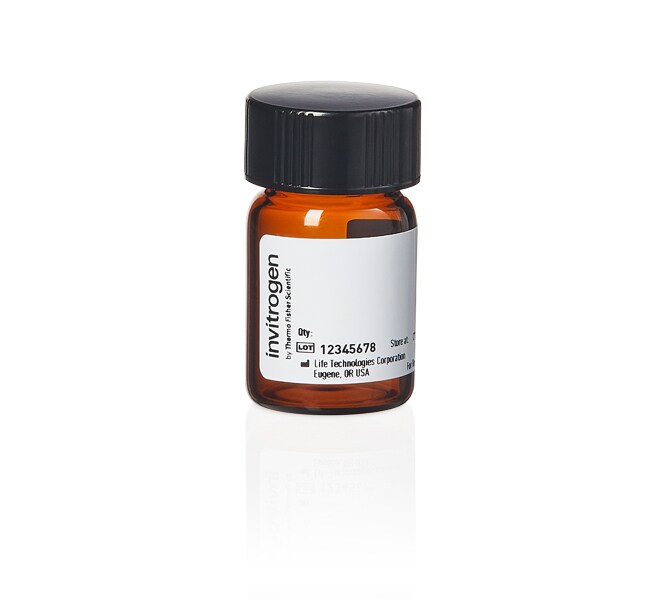
BODIPY™ 630/650-X NHS 酯(琥珀酰亚胺酯)
BODIPY™ 630/650-X 染料是一种明亮的远红荧光染料。它具有高消光系数和荧光量子产率,对溶剂极性和 pH 值变化相对不敏感。与高水溶性荧光基团 Alexa Fluor™ 488了解更多信息
| 货号 | 数量 |
|---|---|
| D10000 | 5 mg |
货号 D10000
价格(CNY)
7,181.00
Each
数量:
5 mg
价格(CNY)
7,181.00
Each
BODIPY™ 630/650-X 染料是一种明亮的远红荧光染料。它具有高消光系数和荧光量子产率,对溶剂极性和 pH 值变化相对不敏感。与高水溶性荧光基团 Alexa Fluor™ 488 染料和荧光素 (FITC) 不同,BODIPY™ 染料具有独特的疏水特性,适用于染色脂质、膜和其他亲脂性化合物。BODIPY™ 630/650-X 染料具有相对较长的激发状态寿命(通常为 5 纳秒或更长),可用于基于荧光偏振的测定以及多光子激发的大型双光子横截面。除反应性染料配方外,我们还提供可与多种抗体、肽、蛋白、示踪剂和扩增底物偶联并且针对细胞标记和检测进行优化的 BODIPY™ 630/650-X 染料。
BODIPY™ 630/650-X 的 NHS 酯(或琥珀酰亚胺酯)是将该染料与蛋白或抗体偶联的较常用工具。NHS 酯可用于标记蛋白的伯胺 (R-NH2)、胺修饰的寡核苷酸和其他含胺分子。由此产生的 BODIPY™ 630/650-X 偶联物显示明亮荧光、窄发射带宽和相对较长的激发状态寿命,可用于荧光偏振测定和双光子激发 (TPE) 显微镜检查。
该反应性染料在荧光基团与 NHS 酯基团之间存在一个七原子氨基己酰基 ('X') 间隔。该间隔有助于将荧光基团与连接点分离,可能减少荧光基团和其偶联的生物分子的相互作用。
关于 BODIPY™ 630/650-X NHS 酯的详细信息:
荧光基团标记:BODIPY™ 630/650-X 染料
反应性基团:NHS 酯(琥珀酰亚胺酯)
反应性:蛋白和配体、胺修饰的寡核苷酸上的伯胺
偶联物的 Ex/Em:625/640 nm
消光系数:101,000 cm-1M-1
分子量:660.5
典型偶联反应
胺反应性试剂可与几乎任何蛋白或肽偶联;提供的方案针对 IgG 抗体进行了优化。可以与任何量的蛋白发生反应,但为了获得较佳结果,蛋白浓度应至少为 2 mg/mL。我们建议使用三种不同摩尔比的反应性试剂对蛋白进行三种不同程度的标记。
BODIPY™ NHS 酯通常溶于高质量的无水二甲基甲酰胺 (DMF) 或二甲亚砜 (DMSO) 中,并在 0.1-0.2 M 碳酸氢钠缓冲液(pH 值 8.3)中于室温下进行反应,持续 1 小时。由于末端胺的 pKa 低于赖氨酸 ε -氨基基团的 pKa,您可以使用接近中性 pH 值的缓冲液对胺末端进行更具选择性的标记。
偶联物纯化
通常使用凝胶过滤柱(如 Sephadex™ G-25、BioGel™ P-30 或等同产品)将标记抗体与游离 BODIPY™ 染料分离。对于更大或更小的蛋白,选择具有适当截留分子量的凝胶过滤介质或通过透析纯化。我们提供了多种优化的纯化试剂盒,可用于不同量抗体偶联物:
0.5-1 mg 用抗体偶联物纯化试剂盒 (A33086)
20-50 µg 用抗体偶联物纯化试剂盒 (A33087)
50-100 µg 用抗体偶联物纯化试剂盒 (A33088)
了解关于蛋白和抗体标记的更多信息
我们提供一系列 Molecular Probes™ 抗体和蛋白标记试剂盒,旨在满足您的起始材料和实验设置需求。参见我们的抗体标记试剂盒或使用我们的标记化学选择工具进行其他选择。欲了解有关我们标记试剂盒的更多信息,请参阅 Molecular Probes™ 手册中第 1.2 节—蛋白和核酸标记试剂盒。
我们还’可为您定制偶联物
如果您’无法在我们的在线目录中找到’想要的产品,我们还’可为您定制抗体或蛋白偶联物。我们的定制偶联服务是高效和保密的,我们保证我们的工作质量。我们经过ISO 9001:2000认证。
BODIPY™ 630/650-X 的 NHS 酯(或琥珀酰亚胺酯)是将该染料与蛋白或抗体偶联的较常用工具。NHS 酯可用于标记蛋白的伯胺 (R-NH2)、胺修饰的寡核苷酸和其他含胺分子。由此产生的 BODIPY™ 630/650-X 偶联物显示明亮荧光、窄发射带宽和相对较长的激发状态寿命,可用于荧光偏振测定和双光子激发 (TPE) 显微镜检查。
该反应性染料在荧光基团与 NHS 酯基团之间存在一个七原子氨基己酰基 ('X') 间隔。该间隔有助于将荧光基团与连接点分离,可能减少荧光基团和其偶联的生物分子的相互作用。
关于 BODIPY™ 630/650-X NHS 酯的详细信息:
荧光基团标记:BODIPY™ 630/650-X 染料
反应性基团:NHS 酯(琥珀酰亚胺酯)
反应性:蛋白和配体、胺修饰的寡核苷酸上的伯胺
偶联物的 Ex/Em:625/640 nm
消光系数:101,000 cm-1M-1
分子量:660.5
典型偶联反应
胺反应性试剂可与几乎任何蛋白或肽偶联;提供的方案针对 IgG 抗体进行了优化。可以与任何量的蛋白发生反应,但为了获得较佳结果,蛋白浓度应至少为 2 mg/mL。我们建议使用三种不同摩尔比的反应性试剂对蛋白进行三种不同程度的标记。
BODIPY™ NHS 酯通常溶于高质量的无水二甲基甲酰胺 (DMF) 或二甲亚砜 (DMSO) 中,并在 0.1-0.2 M 碳酸氢钠缓冲液(pH 值 8.3)中于室温下进行反应,持续 1 小时。由于末端胺的 pKa 低于赖氨酸 ε -氨基基团的 pKa,您可以使用接近中性 pH 值的缓冲液对胺末端进行更具选择性的标记。
偶联物纯化
通常使用凝胶过滤柱(如 Sephadex™ G-25、BioGel™ P-30 或等同产品)将标记抗体与游离 BODIPY™ 染料分离。对于更大或更小的蛋白,选择具有适当截留分子量的凝胶过滤介质或通过透析纯化。我们提供了多种优化的纯化试剂盒,可用于不同量抗体偶联物:
0.5-1 mg 用抗体偶联物纯化试剂盒 (A33086)
20-50 µg 用抗体偶联物纯化试剂盒 (A33087)
50-100 µg 用抗体偶联物纯化试剂盒 (A33088)
了解关于蛋白和抗体标记的更多信息
我们提供一系列 Molecular Probes™ 抗体和蛋白标记试剂盒,旨在满足您的起始材料和实验设置需求。参见我们的抗体标记试剂盒或使用我们的标记化学选择工具进行其他选择。欲了解有关我们标记试剂盒的更多信息,请参阅 Molecular Probes™ 手册中第 1.2 节—蛋白和核酸标记试剂盒。
我们还’可为您定制偶联物
如果您’无法在我们的在线目录中找到’想要的产品,我们还’可为您定制抗体或蛋白偶联物。我们的定制偶联服务是高效和保密的,我们保证我们的工作质量。我们经过ISO 9001:2000认证。
仅供科研使用。不可用于诊断程序。
规格
化学反应性胺
发射640 nm
激发625 nm
标签或染料BODIPY™ 630⁄650
产品类型NHS 酯(琥珀酰亚胺酯)
数量5 mg
反应一部分活性酯、琥珀酰亚胺酯
运输条件室温
标签类型BODIPY 染料
产品线BODIPY
Unit SizeEach
内容与储存
储存在冰箱(-5 至 -30°C)中并避光。
引用和文献 (18)
引用和文献
Abstract
Inter- and intramolecular fluorescence quenching of organic dyes by tryptophan.
Journal:Bioconjug Chem
PubMed ID:14624626
'Steady-state and time-resolved fluorescence measurements were performed to elucidate the fluorescence quenching of oxazine, rhodamine, carbocyanine, and bora-diaza-indacene dyes by amino acids. Among the natural amino acids, tryptophan exhibits the most pronounced quenching efficiency. Especially, the red-absorbing dyes ATTO 655, ATTO 680, and the oxazine derivative MR 121 are strongly
Two-color labeling of temporally defined protein populations in mammalian cells.
Journal:Bioorg Med Chem Lett
PubMed ID:18774715
'The proteome undergoes complex changes in response to disease, drug treatment, and normal cellular signaling processes. Characterization of such changes requires methods for time-resolved protein identification and imaging. Here, we describe the application of two reactive methionine (Met) analogues, azidohomoalanine (Aha) and homopropargylglycine (Hpg), to label two protein populations in
Nanoparticle-mediated drug delivery to tumor vasculature suppresses metastasis.
Journal:Proc Natl Acad Sci U S A
PubMed ID:18607000
'Integrin alphanubeta3 is found on a subset of tumor blood vessels where it is associated with angiogenesis and malignant tumor growth. We designed an alphanubeta3-targeted nanoparticle (NP) encapsulating the cytotoxic drug doxorubicin (Dox) for targeted drug delivery to the alphanubeta3-expressing tumor vasculature. We observed real-time targeting of this NP to
Trogocytosis-based generation of suppressive NK cells.
Journal:EMBO J
PubMed ID:17318190
'Trogocytosis is a fast uptake of membranes and associated molecules from one cell by another. Trogocytosis between natural killer (NK) cells and tumors is already described, but the functional relevance of NK-tumor targets material exchange is unclear. We investigated whether the immunosuppressive molecule HLA-G that is commonly expressed by tumors
Toll-like receptor 9-dependent activation by DNA-containing immune complexes is mediated by HMGB1 and RAGE.
Journal:Nat Immunol
PubMed ID:17417641
'Increased concentrations of DNA-containing immune complexes in the serum are associated with systemic autoimmune diseases such as lupus. Stimulation of Toll-like receptor 9 (TLR9) by DNA is important in the activation of plasmacytoid dendritic cells and B cells. Here we show that HMGB1, a nuclear DNA-binding protein released from necrotic