Search


引用和文献 (17)
Invitrogen™
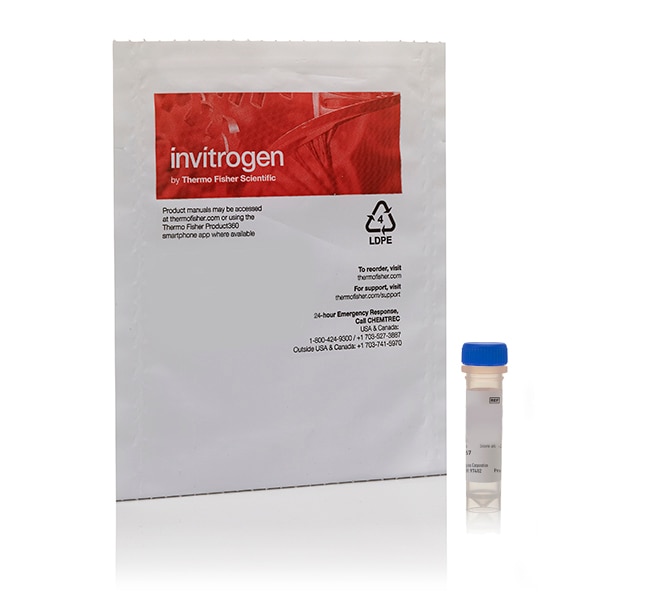
Vybrant™ CM-DiI 细胞标记溶液
Vybrant™ CM-DiI 细胞标记溶液是一种染料递送溶液,可直接添加到正常培养基中,以便均匀标记悬浮或贴壁培养细胞,适用于细胞融合、细胞贴壁和迁移研究应用。了解更多信息
| 货号 | 数量 |
|---|---|
| V22888 | 1 mL |
货号 V22888
价格(CNY)
2,690.00
飞享价
Ends: 31-Dec-2026
3,736.00共减 1,046.00 (28%)
1 mL
数量:
1 mL
价格(CNY)
2,690.00
飞享价
Ends: 31-Dec-2026
3,736.00共减 1,046.00 (28%)
1 mL
Vybrant™ CM-DiI 细胞标记溶液是一种染料递送溶液,可直接添加到正常培养基中,以便均匀标记悬浮或贴壁培养细胞,适用于细胞融合、细胞贴壁和迁移研究应用。
仅供科研使用。不可用于诊断程序。
规格
颜色黄色
检测方法荧光
适用于(设备)荧光显微镜、流式细胞仪
产品线Vybrant
数量1 mL
运输条件室温
标签类型Fluorescent Dye
产品类型细胞标记溶液
亚细胞定位细胞膜&脂质, Lipids
Unit Size1 mL
内容与储存
在冷冻冰箱(-5°C 至 -30°C)中避光储存。
常见问题解答 (FAQ)
我该如何为自己的试验选择示踪对象?
我想用核酸染料来追踪我的细胞,比如DAPI或者Hoechst染料。您有什么建议吗?
我想追踪细胞,但贵司有很多产品可供选择,我该如何选择?
I want to perform a cell fusion assay, where one cell line is labeled with one color and the other cell line with another color, and combine with a nucleic acid stain. What do you recommend?
I need to look at live cell morphology deformation over the course of a few hours. What sort of membrane dye would be useful for this?
引用和文献 (17)
引用和文献
Abstract
No evidence of transdifferentiation of human endothelial progenitor cells into cardiomyocytes after coculture with neonatal rat cardiomyocytes.
Journal:Circulation
PubMed ID:16520414
'BACKGROUND: Recent studies have suggested the differentiation of human endothelial progenitor cells (huEPCs) isolated from peripheral blood into cardiomyocytes. This study investigates whether, when cocultured, neonatal rat cardiomyocytes (NRCMs) can induce transdifferentiation of huEPCs into cardiomyocytes. METHODS AND RESULTS: Coculture experiments with 1,1''-dioctadecyl-3,3,3'',3''-tetramethylindocarbocyanine (DiI)-labeled huEPCs and NRCMs have been performed.
Human mesenchymal stem cells exert potent antitumorigenic effects in a model of Kaposi's sarcoma.
Journal:J Exp Med
PubMed ID:16636132
'Emerging evidence suggests that both human stem cells and mature stromal cells can play an important role in the development and growth of human malignancies. In contrast to these tumor-promoting properties, we observed that in an in vivo model of Kaposi''s sarcoma (KS), intravenously (i.v.) injected human mesenchymal stem cells
Intra-vital fluorescence microscopy for intra-myocardial graft detection following cell transplantation.
Journal:Int J Cardiovasc Imaging
PubMed ID:16175449
'INTRODUCTION: The aim of our study was the development of a potentially clinically applicable approach, which allows for intra-myocardial detection of the transplanted cells without the need for collection of tissue samples. Intra-myocardial transplantation of myocytes and bone marrow derived cells is currently under clinical evaluation as a therapy of
Application and limitations of chloromethyl-benzamidodialkylcarbocyanine for tracing cells used in bone Tissue engineering.
Journal:Tissue Eng
PubMed ID:12625959
Bone tissue engineering has the potential to provide us with an autologous bone substitute. Despite extensive research to optimize the technique, little is known about the survival and function of the cells after implantation. To monitor the cells, in vivo labeling is the method of choice. In this study we
Mesenchymal stem cells: isolation, characterisation and in vivo fluorescent dye tracking.
Journal:Heart Lung Circ
PubMed ID:18396458
Cell therapies have been used to regenerate the heart by direct myocardial delivery, by coronary infusion and by surface attached scaffolds. Multipotent mesenchymal stem cells (MSC) with capacity to differentiate into cardiomyocytes and other cell lines have been predominantly trialled in rodents. However, large animal models are increasingly needed to