Search


引用和文献 (53)
Invitrogen™
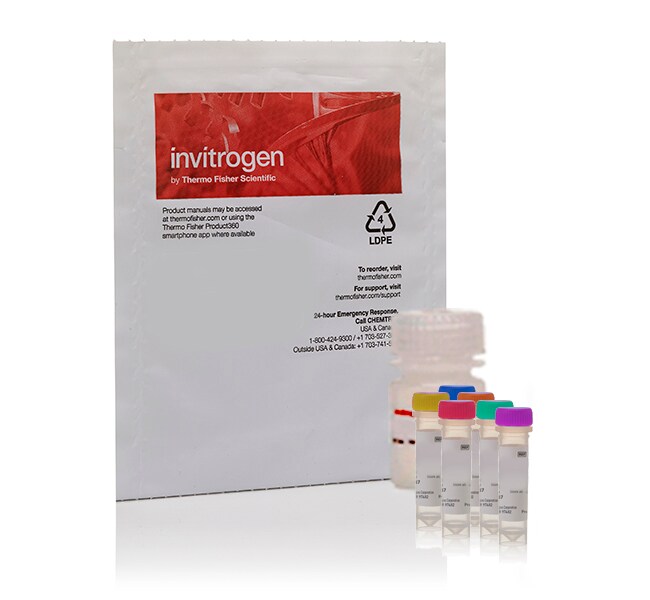
EnzChek™ 半胱天冬酶-3 活性检测试剂盒
使用 EnzChek 半胱天冬酶-3 活性检测试剂盒以及 Z-DEVD-AMC 底物或 Z-DEVD-R110 底物,检测细胞提取物和纯化酶制剂中的细胞凋亡情况。
Have Questions?
更改视图

| 货号 | 标签或染料 |
|---|---|
| E13183 | AMC(7-氨基-4-甲基香豆素) |
| E13184 | 罗丹明 110 |
货号 E13183
价格(CNY)
6,747.00
Each
标签或染料:
AMC(7-氨基-4-甲基香豆素)
价格(CNY)
6,747.00
Each
使用 EnzChek 半胱天冬酶-3 活性检测试剂盒,能够简单可靠地检测半胱天冬酶-3 活性介导的细胞凋亡,该试剂盒利用了经过特殊设计的底物,这些底物经半胱天冬酶-3 酶切割后可发出荧光。EnzChek 半胱天冬酶-3 活性检测试剂盒可与 Z-DEVD-AMC 或 Z-DEVD-R110 底物一起使用,这些底物经半胱天冬酶 3/7 蛋白水解切割后产生明亮的荧光产物。
EnzChek 半胱天冬酶-3 活性检测试剂盒通过提供一种简单可靠的半胱天冬酶-3/7 活性检测方法来检测细胞凋亡情况。通过荧光计或荧光微孔板读数仪,该试剂盒可用于连续测定细胞提取物和纯化酶制剂中的半胱天冬酶-3/7 活性。
EnzChek 半胱天冬酶-3 活性检测试剂盒的主要特点包括:
• 使用标准荧光素 (FITC) 激发/发射设置进行荧光检测
• 使用该规格可连续测定细胞提取物中的半胱天冬酶-3/7 活性
• 含有荧光和酶对照品
EnzChek 半胱天冬酶-3 活性检测试剂盒中包含的氨基甲基香豆素 (AMC)-衍生底物(Z-天冬氨酸-谷氨酸-缬氨酸-天冬氨酸 (DEVD)-AMC)在紫外范围内会发出微弱荧光(最大激发/发射波长 ˜330/390 nm),蛋白水解后可产生明亮的蓝色荧光产物(最大激发/发射波长 ˜342/441 nm)。通过荧光计或荧光微孔板读数仪,该试剂盒可用于连续测定细胞提取物和纯化酶制剂中的半胱天冬酶-3 及密切相关的蛋白酶的活性。
EnzChek 半胱天冬酶-3 活性检测试剂盒中使用的罗丹明 110 衍生底物 (Z-DEVD-R110) 是一种非荧光双酰胺化合物,可在两步法过程中通过酶促切割转化为荧光单酰胺,然后再转化为具有更强荧光的 R110 产物。这两种水解产物的光谱特性与荧光素相似,峰值激发和发射波长分别为 496 nm 和 520 nm。
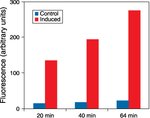
除底物外,EnzChek 半胱天冬酶活性检测试剂盒还含有可逆醛抑制剂 Ac-DEVD-CHO 以及一种 AMC 或 R110 参考标准品。Ac-DEVD-CHO 抑制剂证实,诱导细胞群和对照细胞群中的荧光信号均归因于半胱天冬酶-3/7 蛋白酶的活性。使用参考标准品可定量测定反应中释放的 AMC 或 R110 含量。
EnzChek 半胱天冬酶-3 活性检测试剂盒的主要特点包括:
• 使用标准荧光素 (FITC) 激发/发射设置进行荧光检测
• 使用该规格可连续测定细胞提取物中的半胱天冬酶-3/7 活性
• 含有荧光和酶对照品
EnzChek 半胱天冬酶-3 活性检测试剂盒中包含的氨基甲基香豆素 (AMC)-衍生底物(Z-天冬氨酸-谷氨酸-缬氨酸-天冬氨酸 (DEVD)-AMC)在紫外范围内会发出微弱荧光(最大激发/发射波长 ˜330/390 nm),蛋白水解后可产生明亮的蓝色荧光产物(最大激发/发射波长 ˜342/441 nm)。通过荧光计或荧光微孔板读数仪,该试剂盒可用于连续测定细胞提取物和纯化酶制剂中的半胱天冬酶-3 及密切相关的蛋白酶的活性。
EnzChek 半胱天冬酶-3 活性检测试剂盒中使用的罗丹明 110 衍生底物 (Z-DEVD-R110) 是一种非荧光双酰胺化合物,可在两步法过程中通过酶促切割转化为荧光单酰胺,然后再转化为具有更强荧光的 R110 产物。这两种水解产物的光谱特性与荧光素相似,峰值激发和发射波长分别为 496 nm 和 520 nm。
除底物外,EnzChek 半胱天冬酶活性检测试剂盒还含有可逆醛抑制剂 Ac-DEVD-CHO 以及一种 AMC 或 R110 参考标准品。Ac-DEVD-CHO 抑制剂证实,诱导细胞群和对照细胞群中的荧光信号均归因于半胱天冬酶-3/7 蛋白酶的活性。使用参考标准品可定量测定反应中释放的 AMC 或 R110 含量。
仅供科研使用。不可用于诊断程序。
规格
描述EnzChek 半胱天冬酶-3 检测试剂盒 #1,Z-DEVD-AMC 底物
激发/发射342/441(切割底物)
适用于(设备)荧光计、微孔板读数仪
标签类型其他标记或染料
标签或染料AMC(7-氨基-4-甲基香豆素)
反应次数500 次检测(反应体积为 100 μL/检测)
产品线EnzChek
产品类型半胱天冬酶检测试剂盒
数量500 Assays
运输条件室温
检测方法荧光
产品规格比色皿、96 孔板
Unit SizeEach
内容与储存
Store in freezer (-5°C to -30°C) and protect from light.
常见问题解答 (FAQ)
I am planning to use the EnzChek Caspase-3 Assay Kit #1 with Z-DEVD-AMC substrate. What are the fluorescence excitation/emission maxima of the cleaved substrate?
引用和文献 (53)
引用和文献
Abstract
Journal:
PubMed ID:9078237
Jun NH2-terminal kinase (JNK) prevents nuclear beta-catenin accumulation and regulates axis formation in Xenopus embryos.
Journal:Proc Natl Acad Sci U S A
PubMed ID:17060633
'Jun NH(2)-terminal kinases (JNKs) regulate convergent extension movements in Xenopus embryos through the noncanonical Wnt/planar cell polarity pathway. In addition, there is a high level of maternal JNK activity spanning from oocyte maturation until the onset of gastrulation that has no defined functions. Here, we show that maternal JNK activation
VDAC-dependent permeabilization of the outer mitochondrial membrane by superoxide induces rapid and massive cytochrome c release.
Journal:J Cell Biol
PubMed ID:11739410
'Enhanced formation of reactive oxygen species (ROS), superoxide (O2*-), and hydrogen peroxide (H2O2) may result in either apoptosis or other forms of cell death. Here, we studied the mechanisms underlying activation of the apoptotic machinery by ROS. Exposure of permeabilized HepG2 cells to O2*- elicited rapid and massive cytochrome c
One-step cellular caspase-3/7 assay.
Journal:Biotechniques
PubMed ID:12765032
Protease involvement in fodrin cleavage and phosphatidylserine exposure in apoptosis.
Journal:J Biol Chem
PubMed ID:8940103
'A detailed kinetic analysis of three extranuclear end points of apoptosis, phosphatidylserine exposure, alpha-fodrin degradation, and plasma membrane blebbing, was performed and compared with nuclear fragmentation and the activation of the interleukin-1beta-converting enzyme (ICE)-like proteases in Jurkat T lymphocytes stimulated by anti-Fas monoclonal antibody (anti-Fas mAb) and in monocytic U937