Search

Thermo Scientific™
Plates and Modules with Affinity Binding Surfaces
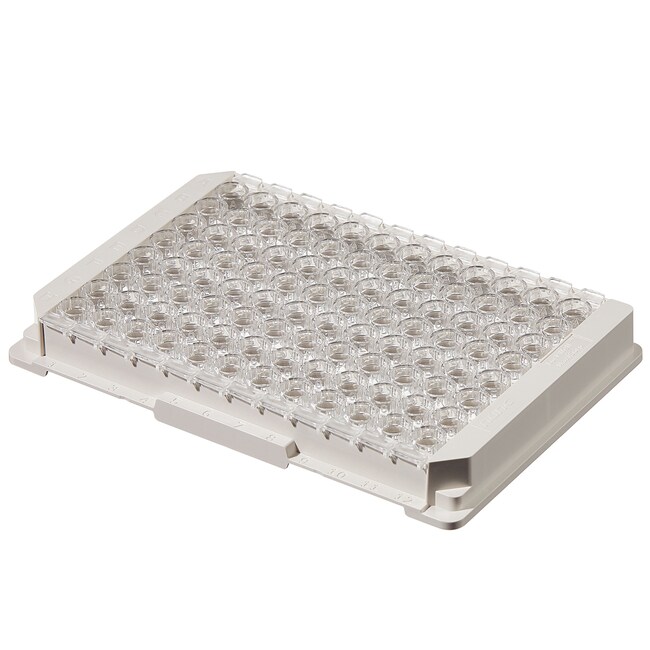
Help reduce variability in molecular orientation with these plates and modules with affinity binding surfaces.
Have Questions?
Change view

| Catalog Number | Color | Product Type | Surface Treatment | Total Volume (Metric) Well |
|---|---|---|---|---|
| 436022 | Clear | Lock-Well Module C8 (x12) in Frame | Streptavidin | 350 μL |
| 436014 | Clear | Microplate | Streptavidin | 400 μL |
| 436015 | White | Microplate | Streptavidin | 400 μL |
| 436016 | Black | Microplate | Streptavidin | 400 μL |
| 436017 | Clear | Microplate | Streptavidin | 120 μL |
| 436018 | White | Microplate | Streptavidin | 120 μL |
| 436020 | Clear | Solid Module F8 (x12) in Frame | Streptavidin | 400 μL |
| 436032 | Clear | Microplate | Glutathione | 400 μL |
| 436033 | White | Microplate | Glutathione | 400 μL |
| 95029263 | Clear | Microplate | Streptavidin | 400 μL |
| 95029293 | Clear | Breakable Module F8 (x12) in Frame | Streptavidin | 400 μL |
Catalog number 436022
Price (CNY)
5,462.30
Online exclusive
Ends: 31-Dec-2026
13,655.76Save 8,193.46 (60%)
Case of 15
Color:
Clear
Product Type:
Lock-Well Module C8 (x12) in Frame
Surface Treatment:
Streptavidin
Total Volume (Metric) Well:
350 μL
Price (CNY)
5,462.30
Online exclusive
Ends: 31-Dec-2026
13,655.76Save 8,193.46 (60%)
Case of 15
Help reduce variability in molecular orientation with Thermo Scientific™ Plates and Modules with Affinity Binding Surfaces.
Affinity Capture Surfaces (Passive Streptavidin and Immobilizer Streptavidin, Nickel Chelate and Glutathione, BioBind):
- Highly specific binding surfaces reduce variability in molecular orientation.
- Immobilizer surfaces improve signal to noise ratios.
- Streptavidin biotin interaction can be exploited to immobilize a wide range of biomolecules.
Specifications
Binding TypeAffinity
Detection MethodColorimetric
FormatStandard
LidWithout Lid
No. per Case15
No. per Pack1
PackagingIndividually Wrapped
Plate BlockingUnspecified
Product TypeLock-Well Module C8 (x12) in Frame
Quantity15/Cs.
Target MoleculeBiotinylated
Total Volume (Metric) Well350 μL
Volume (Metric) Well350 μL
Volume (Metric) Working100 μL
Array8 x 12
ColorClear
MaterialPolystyrene
No. of Wells96
SterilityNon-sterile
Surface TreatmentStreptavidin
Well ShapeRound, Flat Bottom (F-well)
Unit SizeCase of 15