Search


Citations & References (8)
Invitrogen™
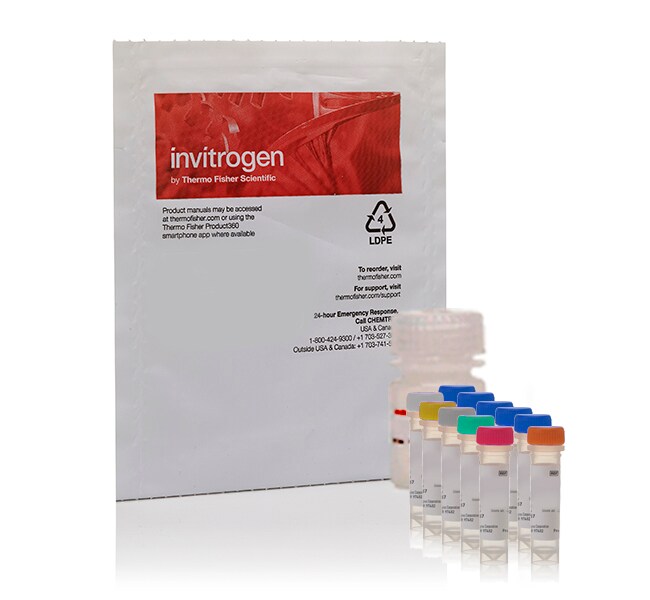
Amplex™ Acetylcholine/Acetlycholinesterase Assay Kit
Detect activity levels as low as 0.002U/mL in one hour
| Catalog Number | Quantity |
|---|---|
| A12217 | 500 Assays |
Catalog number A12217
Price (CNY)
5,920.00
Each
Quantity:
500 Assays
Price (CNY)
5,920.00
Each
The Amplex™ Red Acetylcholine/Acetylcholinesterase Assay Kit provides an ultrasensitive method for detecting acetylcholinesterase (AChE) activity in a fluorescence microplate reader or fluorometer.
- Detect AChE activity levels as low as 0.002 U/mL in one hour
- Detect acetylcholine levels as low as 0.3 μM using excess AChE
- Achieve detection ranges of 0.3 μM to 100 μM acetylcholine
- Format allows for multiple time point measurements
- Designed for minimal autofluorescence interference
AChE activity is monitored indirectly using 10-acetyl-3,7-dihydroxyphenoxazine (Amplex™ Red reagent), a sensitive fluorogenic probe for hydrogen peroxide. AChE converts the acetylcholine substrate to choline, which is then oxidized by choline oxidase to betaine and hydrogen peroxide. In the presence of horseradish peroxidase, hydrogen peroxide reacts with the Amplex™ Red reagent in a 1:1 stoichiometric ratio to generate the highly fluorescent product resorufin.
Because resorufin has absorption and fluorescence emission maxima of approximately 571 nm and 585 nm, respectively, there is little interference from autofluorescence in most biological samples. Experiments with purified AChE from electric eel indicate that the Amplex™ Red Acetylcholine/Acetylcholinesterase Assay Kit can detect AChE levels as low as 0.002 U/mL using a reaction time of one hour. By providing an excess of AChE in the assay, the kit can also be used to detect acetylcholine levels as low as 0.3 μM, with a range of detection from 0.3 μM to 100 μM acetylcholine.
Use Amplex™ Red Assays for a Broad Range of Investigations
A wide variety of validated Amplex™ Red assays are available for studying cell signaling and lipids, neurobiology, inflammation and immune function, and metabolism. We also offer Amplex™ UltraRed Reagent (Cat. No. A36006), a second-generation reagent providing greater sensitivity and brighter fluorescence, and the Amplex™ Red/UltraRed Stop Reagent (Cat. No. A33855). The Amplex™ Red/UltraRed Stop Reagent provides convenience and control by allowing the fluorescence signal-generating reaction to be terminated at a user-determined time point. After addition of the stop reagent, the fluorescence signal remains stable for at least three hours. Custom assay design and packaging are also available.
For Research Use Only. Not for use in diagnostic procedures.
Specifications
Detection MethodFluorescence
Dye TypeAmplex Red
Emission Wavelength585 nm
Excitation Wavelength571 nm
Quantity500 Assays
Shipping ConditionRoom Temperature
Substrate PropertiesMolecular Substrate
Substrate TypeHRP (Horseradish Peroxidase) Substrate, Acetylcholinesterase Substrate
Target EnzymeAcetylcholinesterase
For Use With (Application)Enzyme and Metabolic Activity
For Use With (Equipment)Microplate Reader
Product LineAmplex
Product TypeAmplex Red Assay Kit
Unit SizeEach
Contents & Storage
Store in freezer -5°C to -30°C and protect from light.
Frequently asked questions (FAQs)
I'm using an Amplex Red kit, the reagent changes color to pink almost immediately in my own Krebs-Ringer buffer but not in HBSS. Why is this?
Can Amplex Red Assays be performed using cell lysates?
Citations & References (8)
Citations & References
Abstract
G-CSF rescues the memory impairment of animal models of Alzheimer's disease.
Journal:J Exp Med
PubMed ID:17517969
'Most of the current clinical treatments for Alzheimer''s disease (AD) are largely symptomatic and can have serious side effects. We have tested the feasibility of using the granulocyte colony-stimulating factor (G-CSF), which is known to mobilize hematopoietic stem cells (HSCs) from the bone marrow into the peripheral blood, as a
The effects of anticholinergic insecticides on human mesenchymal stem cells.
Journal:Toxicol Sci
PubMed ID:16960032
'Mesenchymal stem cells (MSCs) are located primarily in the bone marrow and are characterized by their capacity to differentiate into mesenchymal lineages such as bone, fat, and cartilage in response to appropriate signals. Several signaling mechanisms act to control MSC survival, proliferation, and differentiation, and failure or disruption of these
Enhanced purinergic contractile responses and P2X1 receptor expression in detrusor muscle during cycles of hypoxia-glucopenia and reoxygenation.
Journal:
PubMed ID:23975903
'Bladders from patients with detrusor overactivity have an increased atropine-resistant contractile response to nerve stimulation. The bladder has also been shown to be very susceptible to hypoxia-glucopenia and reperfusion injury, leading to the hypothesis that episodes of hypoxia-glucopenia and reoxygenation result in increased atropine-resistant responses to nerve stimulation in the
Role of pancreatic cancer-derived exosomes in salivary biomarker development.
Journal:
PubMed ID:23880764
'Recent studies have demonstrated that discriminatory salivary biomarkers can be readily detected upon the development of systemic diseases such as pancreatic cancer, breast cancer, lung cancer, and ovarian cancer. However, the utility of salivary biomarkers for the detection of systemic diseases has been undermined due to the absence of the
Butyrate enemas enhance both cholinergic and nitrergic phenotype of myenteric neurons and neuromuscular transmission in newborn rat colon.
Journal:Am J Physiol Gastrointest Liver Physiol
PubMed ID:22492692
'Postnatal changes in the enteric nervous system (ENS) are involved in the establishment of colonic motility. In adult rats, butyrate induced neuroplastic changes in the ENS, leading to enhanced colonic motility. Whether butyrate can induce similar changes during the postnatal period remains unknown. Enemas (Na-butyrate) were performed daily in rat