Search


Citations & References (397)
Invitrogen™
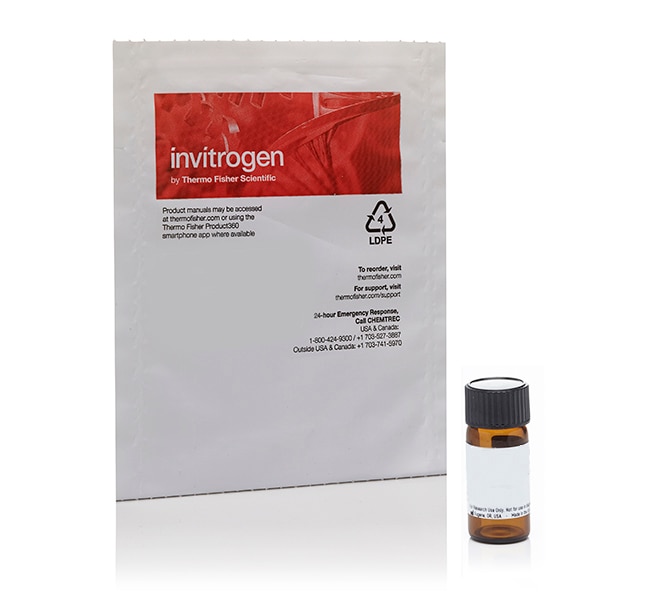
A-23187 Free Acid (Calcimycin)
The Ca2+ ionophore A-23187 is commonly used for in situ calibrations of fluorescent Ca2+ indicators, to equilibrate intracellular and extracellularRead more
| Catalog Number | Quantity |
|---|---|
| A1493 | 10 mg |
Catalog number A1493
Price (CNY)
2,785.00
飞享价
Ends: 31-Dec-2026
3,867.00Save 1,082.00 (28%)
Each
Quantity:
10 mg
Price (CNY)
2,785.00
飞享价
Ends: 31-Dec-2026
3,867.00Save 1,082.00 (28%)
Each
The Ca2+ ionophore A-23187 is commonly used for in situ calibrations of fluorescent Ca2+ indicators, to equilibrate intracellular and extracellular Ca2+ concentrations and to permit Mn2+ to enter the cell to quench intracellular dye fluorescence. Although the intrinsic fluorescence of A-23197 is too high for use with UV-excitable calcium indicators like fura-2, indo-1 and quin-2 it is suitable for use with the visible light-excitable indicators, including fluo-4, fluo-3, Calcium Green and rhod-2. A-23187 can also be used to equilibrate extracelular and intrcellular Mg2+ concentrations, making it useful for calibrating Mg2+ indicators.
Learn more about ion indicators including calcium, potassium, pH, and membrane potential indicators ›
Learn more about ion indicators including calcium, potassium, pH, and membrane potential indicators ›
For Research Use Only. Not for use in diagnostic procedures.
Specifications
Detection MethodFluorescence
For Use With (Equipment)Fluorescence Microscope, Flow Cytometer, Fluorometer, Fluorescent Imager
IndicatorCalcium Indicator
Molecular FormulaC29H37N3O6
Quantity10 mg
Recommended StorageStore in freezer (-5°C to -30°C) and protect from light.
Shipping ConditionRoom Temperature
Physical FormSolid
Product TypeCalcium Ionophore
Unit SizeEach
Citations & References (397)
Citations & References
Abstract
Flow cytometric measurement of the production of reactive oxygen intermediate in activated rat mast cells.
Journal:APMIS
PubMed ID:7520710
The production of reactive oxygen intermediates (ROI) in compound 48/80- or calcium ionophore A 23187- activated pleural or peritoneal mast cells was monitored using flow cytometry and the fluorescence indicator dihydrorhodamine 123 (a derivate of rhodamine 123). Mast cell degranulation and ROI production were estimated by flow cytometric fluorescence and
Inhibition of NADPH oxidase activation by 4-(2-aminoethyl)-benzenesulfonyl fluoride and related compounds.
Journal:J Biol Chem
PubMed ID:9148950
The elicitation of an oxidative burst in phagocytes rests on the assembly of a multicomponental complex (NADPH oxidase) consisting of a membrane-associated flavocytochrome (cytochrome b559), representing the redox element responsible for the NADPH-dependent reduction of oxygen to superoxide (O-2), two cytosolic components (p47(phox), p67(phox)), and the small GTPase Rac (1
Exocytotic insertion of calcium channels constrains compensatory endocytosis to sites of exocytosis.
Journal:J Cell Biol
PubMed ID:10684256
'Proteins inserted into the cell surface by exocytosis are thought to be retrieved by compensatory endocytosis, suggesting that retrieval requires granule proteins. In sea urchin eggs, calcium influx through P-type calcium channels is required for retrieval, and the large size of sea urchin secretory granules permits the direct observation of
Involvement of nuclear factor of activated T cells activation in UV response. Evidence from cell culture and transgenic mice.
Journal:J Biol Chem
PubMed ID:10734048
'Mammalian cells respond to UV radiation by signaling cascades leading to activation of transcription factors, such as activated protein 1, NFkappaB, and p53, a process known as the "UV response." Nuclear factor of activated T cells (NFAT) was first identified as an inducible nuclear factor in immune response and subsequently
Potentiation of CD3-induced expression of the linker for activation of T cells (LAT) by the calcineurin inhibitors cyclosporin A and FK506.
Journal:Blood
PubMed ID:10779414
'The activation of blood cells, including T cells, triggers intracellular signals that control the expression of critical molecules, including cytokines and cytokine receptors. We show that T-cell receptor (TCR) ligation increases the cellular level of the protein linker for activation of T cells (LAT), a molecule critical for T-cell development