Search


Citations & References (18)
Invitrogen™
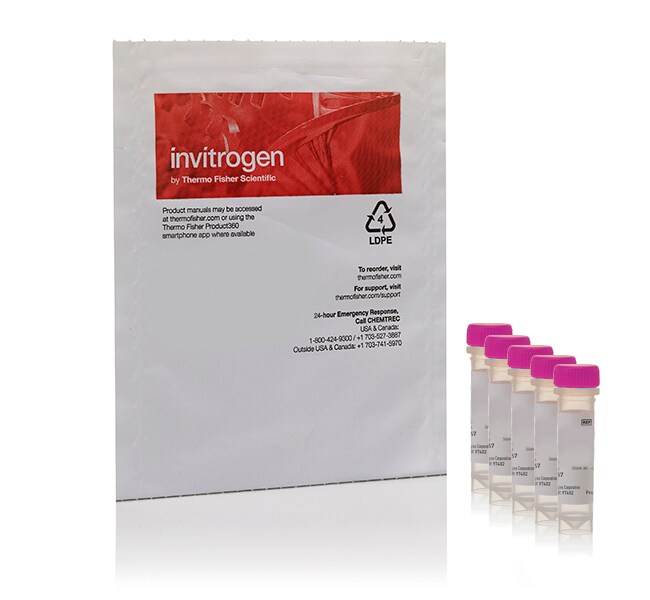
CellROX™ Orange Reagent, for oxidative stress detection
CellROX™ Orange Reagent is a novel fluorogenic probe for measuring oxidative stress in live cells. This cell-permeant dye is non-fluorescent while in a reduced state and exhibits bright orange fluorescence upon oxidation by reactive oxygen species (ROS), with absorption/emission maxima of ∼545/565 nm.
| Catalog Number | Quantity |
|---|---|
| C10443 | 5 x 50 μL |
Catalog number C10443
Price (CNY)
5,951.00
飞享价
Ends: 31-Dec-2026
8,265.00Save 2,314.00 (28%)
Each
Quantity:
5 x 50 μL
Price (CNY)
5,951.00
飞享价
Ends: 31-Dec-2026
8,265.00Save 2,314.00 (28%)
Each
CellROX™ Orange Reagent is a novel fluorogenic probe for measuring oxidative stress in live cells. This cell-permeant dye is non-fluorescent while in a reduced state and exhibits bright orange fluorescence upon oxidation by reactive oxygen species (ROS), with absorption/emission maxima of ∼545/565 nm. While this reagent is not formaldehyde-fixable, it can be multiplexed with other live cell-compatible probes such as GFP, CellEvent™ Caspase 3/7 Green reagent, Image-iT™ DEAD Green, Green and Deep Red MitoTracker™ dyes, and NucBlue™ reagent.
CellROX™ Orange Reagent is compatible with various platforms, such as traditional fluorescence microscopy, high content screening (HCS), and flow cytometery. This reagent is also compatible with the Tali™ Image-based Cytometer.
In addition, CellROX™ Orange Reagent is:
• Compatible with other live cell probes, including GFP, and may be added directly to serum-containing growth media
• Provided as a stable, ready-to-use DMSO solution with a simple protocol compatible with standard workflows in fluorescence microscopy
• Provided as five single-use vials containing enough total reagent for five 96-well plates or 100 coverslips
Oxidative stress results from an imbalance between the production of reactive oxygen species (ROS) and the ability of cells to scavenge them. ROS play an important role in the progression of several diseases, including inflammation, atherosclerosis, aging, and age-related degenerative disorders.
For Research Use Only. Not intended for any animal or human therapeutic or diagnostic use.
For Research Use Only. Not for use in diagnostic procedures.
Specifications
ColorOrange
Concentration2.5 mM stabilized solution in DMSO
For Use With (Equipment)Imaging, HCS, Cytometer
FormatFrozen
Quantity5 x 50 μL
Detection MethodLive Cell Imaging
Excitation/Emission545/565 nm
IndicatorOxidative stress
Product LineCellROX
Unit SizeEach
Contents & Storage
Store at ≤–20°C. Protect from light and desiccate.
Frequently asked questions (FAQs)
What dyes can I use to detect reactive oxygen species (ROS) in my bacteria?
I am trying to label my cells with a reactive oxygen species (ROS) indicator dye, but I am not seeing a significant difference in signal. What could be happening?
Citations & References (18)
Citations & References
Abstract
MicroRNA-27 (miR-27) Targets Prohibitin and Impairs Adipocyte Differentiation and Mitochondrial Function in Human Adipose-derived Stem Cells.
Journal:
PubMed ID:24133204
Prohibitin (PHB) has been reported to play a crucial role in adipocyte differentiation and mitochondrial function. However, the regulative mechanism of PHB during adipogenesis remains unclear. In this study, we determined that the levels of both microRNA (miR)-27a and miR-27b were down-regulated following adipogenic induction of human adipose-derived stem cells,
Mitohormesis in Hypothalamic POMC Neurons Mediates Regular Exercise-Induced High-Turnover Metabolism.
Journal:Cell Metab
PubMed ID:33535098
Anti-inflammatory effect of strawberry extract against LPS-induced stress in RAW 264.7 macrophages.
Journal:Food Chem Toxicol
PubMed ID:28130090
'A common denominator in the pathogenesis of most chronic inflammatory diseases is the involvement of oxidative stress, related to ROS production by all aerobic organisms. Dietary antioxidants from plant foods represent an efficient strategy to counteract this condition. The aim of the present study was to evaluate the protective effects
Targeting Breast Cancer Stem Cell State Equilibrium through Modulation of Redox Signaling.
Journal:Cell Metab
PubMed ID:29972798
Integrative Omics Analyses Reveal Epigenetic Memory in Diabetic Renal Cells Regulating Genes Associated With Kidney Dysfunction.
Journal:Diabetes
PubMed ID:32747424