Search


Citations & References (1088)
Invitrogen™
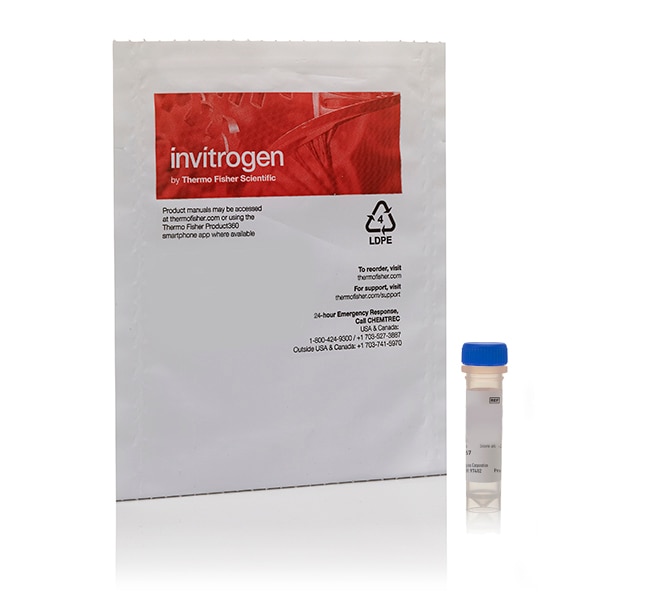
Indo-1, AM, cell permeant
Indo-1, AM is a high affinity, intracellular calcium indicator (Kd ∼0.23 μM) that is ratiometric and UV light—excitable. This acetoxymethylRead more
| Catalog Number | Quantity |
|---|---|
| I1203 | 1 mg |
Catalog number I1203
Price (CNY)
3,418.00
Each
Quantity:
1 mg
Price (CNY)
3,418.00
Each
Indo-1, AM is a high affinity, intracellular calcium indicator (Kd ∼0.23 μM) that is ratiometric and UV light—excitable. This acetoxymethyl (AM) ester form is useful for noninvasive intracellular loading and is also available in special packaging (I-1223) and in a DMSO solution (I-1226).
For Research Use Only. Not for use in diagnostic procedures.
Specifications
Detection MethodFluorescence
Dye TypeFluorescent Dye-Based
Quantity1 mg
Shipping ConditionRoom Temperature
For Use With (Application)Cell Viability and Proliferation, Flow Cytometry
For Use With (Equipment)Fluorescence Microscope, Microphotometer, Flow Cytometer
Product TypeCalcium Indicator
Unit SizeEach
Contents & Storage
Store in freezer -5°C to -30°C and protect from light.
Frequently asked questions (FAQs)
I am doing calcium flux imaging with your Fura-2 calibration kit, but am seeing a large variability in ratio in different places around the slide. I am correcting for uniform illumination, using the product as directed, and sealing the coverslip with nail polish.
I need to label cells with Fluo-4, AM, for a calcium flux assay. How long after labeling will the dye be retained?
What indicator dye can I use to measure calcium flux by flow cytometry?
Citations & References (1088)
Citations & References
Abstract
Modulation of myocardial function and [Ca2+] sensitivity by moderate hypothermia in guinea pig isolated hearts.
Journal:The American journal of physiology
PubMed ID:10600852
FDF03, a novel inhibitory receptor of the immunoglobulin superfamily, is expressed by human dendritic and myeloid cells.
Journal:Journal of immunology (Baltimore, Md. : 1950)
PubMed ID:10903717
CD5 antibodies increase intracellular ionized calcium concentration in T cells.
Journal:Journal of immunology (Baltimore, Md. : 1950)
PubMed ID:3106489
The binding of a variety of monoclonal antibodies to the CD5 (T, gp67) pan T cell differentiation antigen has been shown to potentiate T cell proliferation. In this paper we show that CD5 monoclonal antibodies cause increased intracellular free calcium concentration ([Ca2+]i) in T cells. An increase in [Ca2+]i occurred
Nitric oxide is an upstream signal of vascular endothelial growth factor-induced extracellular signal-regulated kinase1/2 activation in postcapillary endothelium.
Journal:J Biol Chem
PubMed ID:9461619
We recently demonstrated that nitric oxide (NO) significantly contributes to the mitogenic effect of vascular endothelial growth factor (VEGF), suggesting a role for the NO pathway in the signaling cascade following kinase-derivative receptor activation in vascular endothelium. The aim of this study was to investigate the intracellular pathways linked to
Cultured postnatal rat septohippocampal neurons change intracellular calcium in response to ethanol and nerve growth factor.
Journal:Brain Res
PubMed ID:9459553
Ethanol exposure affects cellular mechanisms involved in the regulation of calcium (Ca2+) homeostasis. Neurotrophins, such as nerve growth factor (NGF), stabilize intracellular Ca2+([Ca2+]i) during a variety of neurotoxic insults. In this study, changes in [Ca2+]i during treatment with ethanol and NGF were measured at the cell body of neurons using