Search


Citations & References (16)
Invitrogen™
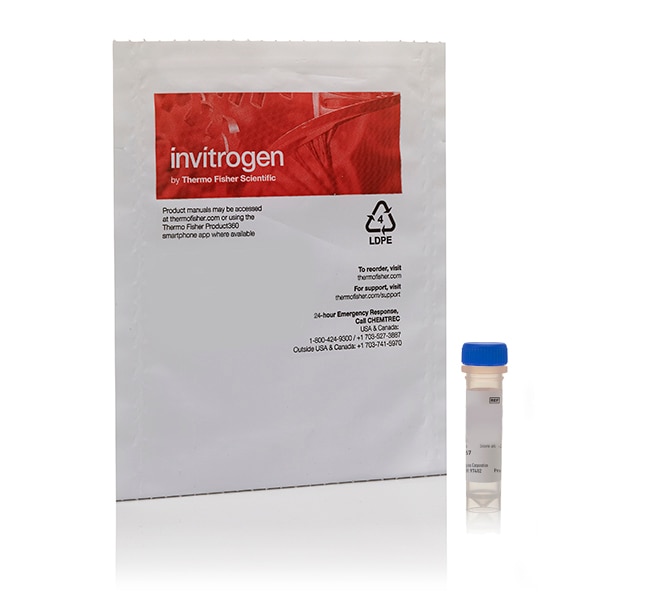
Lipopolysaccharides From Escherichia coli Serotype 055:B5, Alexa Fluor™ 488 Conjugate
This bright, green-fluorescent Alexa Fluor 488 conjugate can be used to follow lipopolysaccharide binding, transport and cell-internalization processes.Read more
| Catalog Number | Quantity |
|---|---|
| L23351 | 100 μg |
Catalog number L23351
Price (CNY)
4,026.00
Each
Quantity:
100 μg
Price (CNY)
4,026.00
Each
This bright, green-fluorescent Alexa Fluor 488 conjugate can be used to follow lipopolysaccharide binding, transport and cell-internalization processes.
For Research Use Only. Not for use in diagnostic procedures.
Specifications
Detection MethodFluorescence
Dye TypeAlexa Fluor Dyes
Excitation/Emission495/519
FormSolid
Quantity100 μg
Shipping ConditionRoom Temperature
Product LineAlexa Fluor
Product TypeLipopolysaccharide Conjugate
Unit SizeEach
Contents & Storage
Store in freezer (-5 to -30°C) and protect from light.
Citations & References (16)
Citations & References
Abstract
Surfactant protein A directly interacts with TLR4 and MD-2 and regulates inflammatory cellular response. Importance of supratrimeric oligomerization.
Journal:J Biol Chem
PubMed ID:16754682
'The purpose of the current study was to examine the binding of pulmonary surfactant protein A (SP-A) to TLR4 and MD-2, which are critical signaling receptors for lipopolysaccharides (LPSs). The direct binding of SP-A to the recombinant soluble form of extracellular TLR4 domain (sTLR4) and MD-2 was detected using solid-phase
LPS activation of Toll-like receptor 4 signals CD11b/CD18 expression in neutrophils.
Journal:Am J Physiol Lung Cell Mol Physiol
PubMed ID:15563689
We identify herein a novel signaling function of the Toll-like receptor-4 (TLR4), the lipopolysaccharide (LPS) receptor mediating the innate immune response, in inducing the expression of CD11b/CD18 integrin in polymorphonuclear leukocytes (PMNs). Studies were made in PMNs isolated from TLR4-deficient (TLR4(-/-)) and C57BL/6 [wild-type (WT)] mice. We observed increased CD11b
Activation of innate immunity in the CNS triggers neurodegeneration through a Toll-like receptor 4-dependent pathway.
Journal:Proc Natl Acad Sci U S A
PubMed ID:12824464
Innate immunity is an evolutionarily ancient system that provides organisms with immediately available defense mechanisms through recognition of pathogen-associated molecular patterns. We show that in the CNS, specific activation of innate immunity through a Toll-like receptor 4 (TLR4)-dependent pathway leads to neurodegeneration. We identify microglia as the major lipopolysaccharide (LPS)-responsive
The toll-like receptor TLR4 is necessary for lipopolysaccharide-induced oligodendrocyte injury in the CNS.
Journal:J Neurosci
PubMed ID:11923412
The immediate or innate immune response is the first line of defense against diverse microbial pathogens and requires the expression of recently discovered toll-like receptors (TLRs). TLR4 serves as a specific receptor for lipopolysaccharide (LPS) and is localized on the surface of a subset of mammalian cells. Although innate immunity
Differential type I interferon activation and susceptibility of dendritic cell populations to porcine arterivirus.
Journal:Immunology
PubMed ID:17116172
Dendritic cells (DCs) play a role in anti-viral immunity by providing early innate protection against viral replication and by presenting antigen to T cells for initiation of the adaptive immune response. Studies show the adaptive response to porcine reproductive and respiratory syndrome virus (PRRSV) is ineffective for complete viral elimination.