Search


Citations & References (48)
Invitrogen™
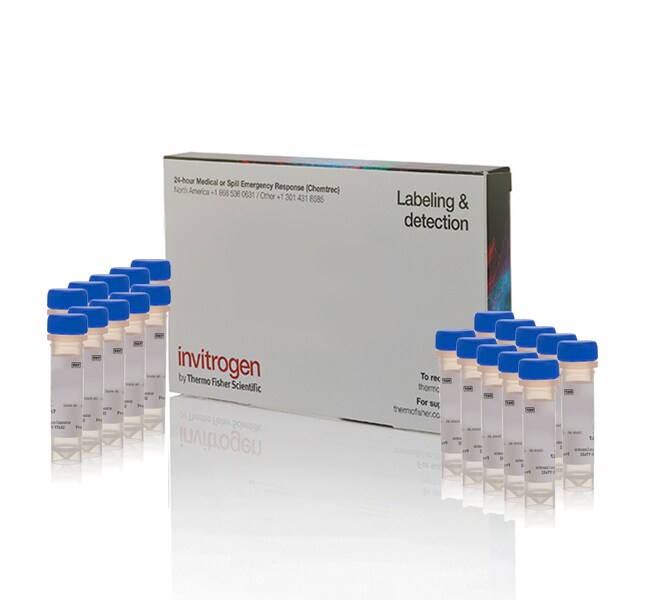
CellTracker™ CM-DiI Dye
CellTracker CM-DiI is a fluorescent dye well suited for monitoring cell movement or location. This dye is well retained, allowingRead more
Have Questions?
Change view

| Catalog Number | Quantity |
|---|---|
| C7000 | 20 x 50μg |
| C7001 | 1mg |
Catalog number C7000
Price (CNY)
4,279.00
飞享价
Ends: 31-Dec-2026
5,942.00Save 1,663.00 (28%)
Each
Quantity:
20 x 50μg
Price (CNY)
4,279.00
飞享价
Ends: 31-Dec-2026
5,942.00Save 1,663.00 (28%)
Each
CellTracker CM-DiI is a fluorescent dye well suited for monitoring cell movement or location. This dye is well retained, allowing for multigenerational tracking of cellular movements. And the red excitation/emission spectra are ideal for multiplexing with green fluorescent dyes and proteins.
Need a different emission spectrum or longer tracking? View our other mammalian cell tracking products.
• Easy to use—remove medium, add dye, incubate 30 minutes, and image cells
• Fluorescent signal retention of >72 hours (typically three to six generations)
• Red excitation/emission spectra (553/570 nm maxima) ideal for multiplexing
• Low cytotoxicity—does not affect viability or proliferation
CellTracker CM-DiI fluorescent dye has been designed to freely pass through cell membranes into cells, where it is transformed into cell membrane-impermeant reaction products. CellTracker CM-DiI dye is retained in living cells through several generations. The dye is transferred to daughter cells, but not adjacent cells in a population. CellTracker CM-DiI dye is designed to display fluorescence for at least 72 hours, and the dye exhibits ideal tracking properties: it is stable, nontoxic at working concentrations, well retained in cells, and brightly fluorescent at physiological pH. Additionally, the excitation and emission spectra of CellTracker CM-DiI dye are well separated from GFP (green fluorescent protein) spectra allowing for multiplexing.
Visualize staining your cell without wasting your reagents, antibodies, or time with our new Stain-iT Cell Staining Simulator.
Need a different emission spectrum or longer tracking? View our other mammalian cell tracking products.
• Easy to use—remove medium, add dye, incubate 30 minutes, and image cells
• Fluorescent signal retention of >72 hours (typically three to six generations)
• Red excitation/emission spectra (553/570 nm maxima) ideal for multiplexing
• Low cytotoxicity—does not affect viability or proliferation
CellTracker CM-DiI fluorescent dye has been designed to freely pass through cell membranes into cells, where it is transformed into cell membrane-impermeant reaction products. CellTracker CM-DiI dye is retained in living cells through several generations. The dye is transferred to daughter cells, but not adjacent cells in a population. CellTracker CM-DiI dye is designed to display fluorescence for at least 72 hours, and the dye exhibits ideal tracking properties: it is stable, nontoxic at working concentrations, well retained in cells, and brightly fluorescent at physiological pH. Additionally, the excitation and emission spectra of CellTracker CM-DiI dye are well separated from GFP (green fluorescent protein) spectra allowing for multiplexing.
Visualize staining your cell without wasting your reagents, antibodies, or time with our new Stain-iT Cell Staining Simulator.
For Research Use Only. Not for use in diagnostic procedures.
Specifications
ColorYellow
Detection MethodFluorescence
Excitation Wavelength Range553⁄570
For Use With (Equipment)Fluorescence Microscope
Product LineCellTracker
Quantity20 x 50μg
Shipping ConditionRoom Temperature
Label TypeFluorescent Dye
Product TypeDye
Sub Cellular LocalizationCell Membranes, Lipids
Unit SizeEach
Contents & Storage
Store in freezer -5°C to -30°C and protect from light.
Frequently asked questions (FAQs)
I want to do a cell migration study for around 4 hours and need to fluorescently label the cells with a dye. What do you recommend?
I want to perform a cell fusion assay, where one cell line is labeled with one color and the other cell line with another color, and combine with a nucleic acid stain. What do you recommend?
I need to look at live cell morphology deformation over the course of a few hours. What sort of membrane dye would be useful for this?
I labeled my cells with Calcein, AM, but when I imaged the next day, there was no fluorescence from Calcein. Why?
How do I prepare a stock solution of CellTracker CM-DiI Dye (Cat. No. C7000, C7001)?
Citations & References (48)
Citations & References
Abstract
The use of the lipophilic fluorochrome CM-DiI for tracking the migration of lymphocytes.
Journal:J Immunol Methods
PubMed ID:8765171
'In this study we examined the new cell dye CM-DiI for tracking the migration of lymphocytes from blood to lymph. This lipophilic marker intercalates in the plasma membrane like the PKH dyes and older DiI derivatives. The stability and intensity of staining achieved with these dyes is better than most
Characterization of antisera specific to NK1, NK2, and NK3 neurokinin receptors and their utilization to localize receptors in the rat gastrointestinal tract.
Journal:J Neurosci
PubMed ID:8824334
'Understanding the physiological role of tachykinins requires precise cellular and subcellular localization of their receptors. We raised antisera by immunizing rabbits with peptides corresponding to portions of the intracellular tails of the rat neurokinin 1, 2, and 3 receptors (NK1-R, NK2-R, NK3-R). Receptors were localized by immunofluorescence and confocal microscopy.
Interneuron migration from basal forebrain to neocortex: dependence on Dlx genes.
Journal:Science
PubMed ID:9334308
'Although previous analyses indicate that neocortical neurons originate from the cortical proliferative zone, evidence suggests that a subpopulation of neocortical interneurons originates within the subcortical telencephalon. For example, gamma-aminobutyric acid (GABA)-expressing cells migrate in vitro from the subcortical telencephalon into the neocortex. The number of GABA-expressing cells in neocortical slices
Analysis of vertical fluorescence resonance energy transfer from the surface of a small-diameter sphere.
Journal:Biophys J
PubMed ID:9876165
'Fluorescence resonance energy transfer (FRET) measurements have been used to analyze fluorophore separations in a number of varying geometries, including small particles and extended surfaces. This study focuses on the geometry created by a donor extended above the surface of a small sphere (radius < R0), where the acceptors are
Human mesenchymal stem cells exert potent antitumorigenic effects in a model of Kaposi's sarcoma.
Journal:J Exp Med
PubMed ID:16636132
'Emerging evidence suggests that both human stem cells and mature stromal cells can play an important role in the development and growth of human malignancies. In contrast to these tumor-promoting properties, we observed that in an in vivo model of Kaposi''s sarcoma (KS), intravenously (i.v.) injected human mesenchymal stem cells