Search




Citations & References (15)
Invitrogen™
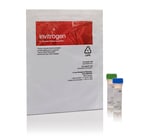
HCS CellMask™ Stains
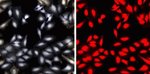
Easily visualize entire cells or individual cell structures during high-content screening (HCS) assays with HCS CellMask stains, which are available in a variety of colors for multiplexing flexibility and can be used immediately after fixation and permeabilization, or after antibody labeling.
Have Questions?
Change view

| Catalog Number | Description |
|---|---|
| H32712 | HCS CellMask™ Red Stain |
| H32720 | HCS CellMask Blue Stain |
| H32714 | HCS CellMask Green Stain |
| H32722 | HCS CellMask Near-IR Stain |
| H32713 | HCS CellMask Orange Stain |
| H32721 | HCS CellMask Deep Red Stain |
Catalog number H32712
Price (CNY)
5,760.00
Each
Description:
HCS CellMask™ Red Stain
Price (CNY)
5,760.00
Each
Identify entire cells (cytoplasm and nucleus) during high-content screening (HCS) assays with the versatile HCS CellMask Red, CellMask Orange, CellMask Green, CellMask Blue, CellMask Deep Red, and CellMask Near-IR stains, which are fluorophores that can be used immediately after fixation and permeabilization, or after antibody labeling. They are available in a variety of colors for multiplexing protocols.
The versatile HCS CellMask Red, CellMask Orange, CellMask Green, CellMask Blue, CellMask Deep Red, and CellMask Near-IR stains are cell delineation tools for high content screening (HCS) platforms, label the entire cell (cytoplasm and nucleus) and provide an accurate backdrop against which the features of interest can be assessed. The HCS CellMask Red and Blue stains replace the HCS CellMask Red cytoplasmic/nuclear (Cat. No. H32711) and HCS CellMask Blue cytoplasmic/nuclear stains (Cat. No. H34558), respectively.
HCS CellMask stains can be applied to cells immediately after fixation or in the last step of multiplexing protocols, and they are compatible with detergent-based cell permeabilization protocols. If only nuclear staining is desired, HCS NuclearMask stains can be used for measuring DNA content in addition to enabling robust cell demarcation. HCS NuclearMask stains are also available in a choice of colors for multiplexing flexibility.
HCS CellMask stains can be applied to cells immediately after fixation or in the last step of multiplexing protocols, and they are compatible with detergent-based cell permeabilization protocols. If only nuclear staining is desired, HCS NuclearMask stains can be used for measuring DNA content in addition to enabling robust cell demarcation. HCS NuclearMask stains are also available in a choice of colors for multiplexing flexibility.
For Research Use Only. Not for human or animal therapeutic or diagnostic use.
Specifications
ColorRed
DescriptionHCS CellMask™ Red Stain
Detection MethodFluorescence
EmissionVisible
Excitation Wavelength Range588/612
For Use With (Equipment)High Content Instrument
Product LineCellMask
Quantity1 Set
Shipping ConditionRoom Temperature
Label TypeFluorescent Dye
Product TypeStain
Sub Cellular LocalizationCytoplasm, Cytosol, Nucleus
Unit SizeEach
Contents & Storage
Includes 1 set of vials, providing sufficient material to stain a total of ten 96-well microplates.
Store at ≤-20°C, desiccate, and protect from light.
Store at ≤-20°C, desiccate, and protect from light.
Frequently asked questions (FAQs)
What dyes are used to make the CellMask stains?
Citations & References (15)
Citations & References
Abstract
Ebolavirus delta-peptide immunoadhesins inhibit marburgvirus and ebolavirus cell entry.
Journal:J Virol
PubMed ID:21697477
With the exception of Reston and Lloviu viruses, filoviruses (marburgviruses, ebolaviruses, and
Inhibition of Ebola virus entry by a C-peptide targeted to endosomes.
Journal:J Biol Chem
PubMed ID:21454542
Ebola virus (EboV) and Marburg virus (MarV) (filoviruses) are the causative agents of severe hemorrhagic fever. Infection begins with uptake of particles into cellular endosomes, where the viral envelope glycoprotein (GP) catalyzes fusion between the viral and host cell membranes. This fusion event is thought to involve conformational rearrangements of
Evaluation of high-throughput screening for in vitro micronucleus test using fluorescence-based cell imaging.
Journal:Mutagenesis
PubMed ID:21745803
The in vitro micronucleus (MN) test is an important component of genotoxicity screening and is used as an alternative to the in vitro chromosome aberration (CA) test. As the MN assay is more practical and simpler to use than the CA test, it is being applied as a high-throughput screening
Infectious Lassa virus, but not filoviruses, is restricted by BST-2/tetherin.
Journal:J Virol
PubMed ID:20686043
Bone marrow stromal antigen 2 (BST-2/tetherin) is a cellular membrane protein that inhibits the release of HIV-1. We show for the first time, using infectious viruses, that BST-2 also inhibits egress of arenaviruses but has no effect on filovirus replication and spread. Specifically, infectious Lassa virus (LASV) release significantly decreased
IFITM-2 and IFITM-3 but not IFITM-1 restrict Rift Valley fever virus.
Journal:
PubMed ID:23720721
We show that interferon-induced transmembrane protein 1 (IFITM-1), IFITM-2, and IFITM-3 exhibit a broad spectrum of antiviral activity against several members of the Bunyaviridae family, including Rift Valley fever virus (RVFV), La Crosse virus, Andes virus, and Hantaan virus, all of which can cause severe disease in humans and animals.