Search
Invitrogen
Connexin 43 Monoclonal Antibody (CX-1B1)
{{$productOrderCtrl.translations['antibody.pdp.commerceCard.promotion.promotions']}}
{{$productOrderCtrl.translations['antibody.pdp.commerceCard.promotion.promocode']}}: {{promo.promoCode}} {{promo.promoTitle}} {{promo.promoDescription}}. {{$productOrderCtrl.translations['antibody.pdp.commerceCard.promotion.learnmore']}}
{{$ctrl.translations['antibody.pdp.skuNotes.additionalInformation']}}:
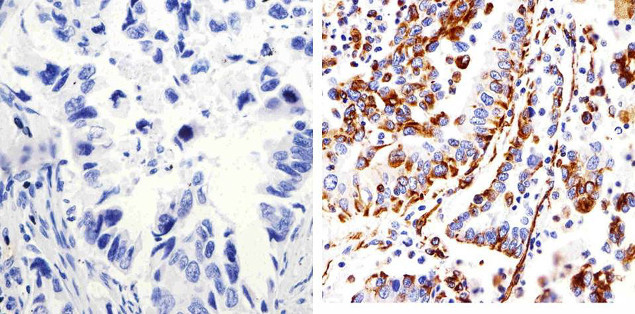
图: 1 / 88
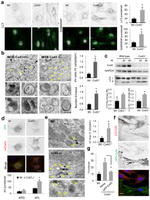
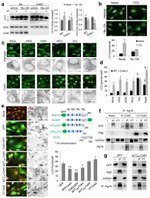
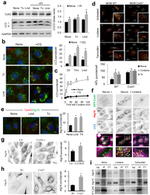
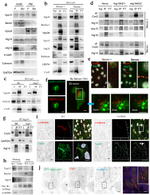
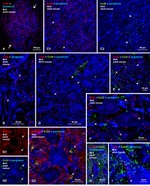
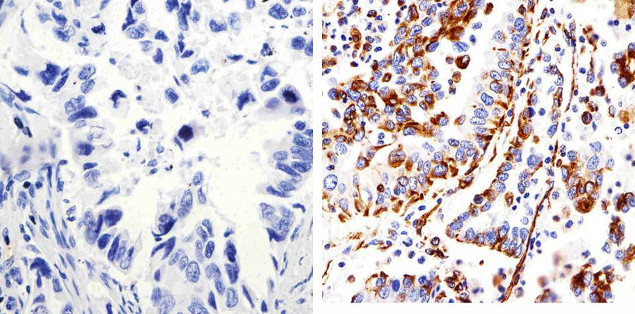
Connexin 43 Antibody (13-8300) in IHC (P)
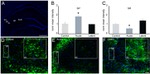
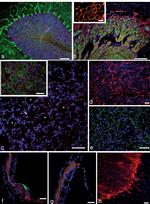
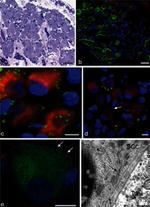
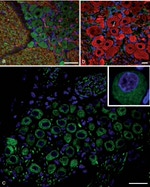
Immunohistochemistry analysis of Connexin 43 showing staining in the membrane of paraffin-embedded human lung adenocarcinoma (right) compared to a negative control without primary antibody (left). To expose target proteins, antigen retrieval was performed using 10mM sodium citrate (pH 6.0), microwaved for 8-15 min. Following antigen retrieval, tissues were blocked in 3% H2O2-methanol for 15 min at room temp... View More
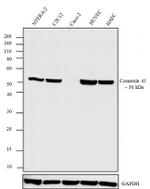
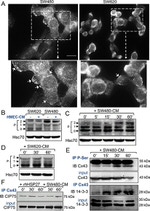
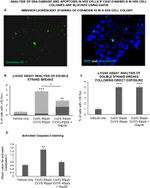
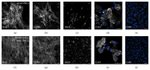
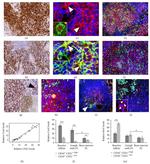
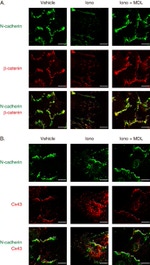
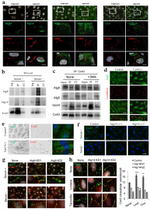
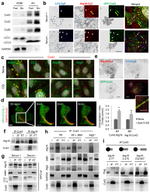
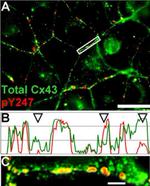
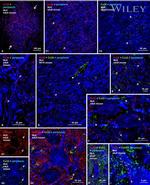
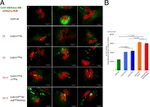
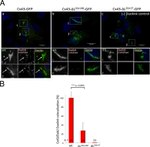
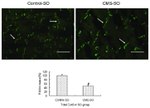
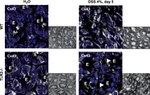
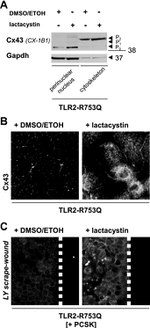
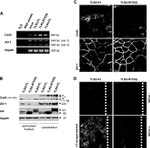
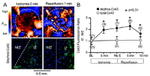
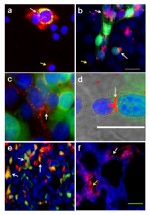
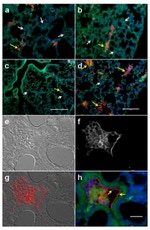
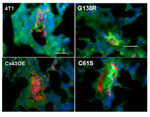
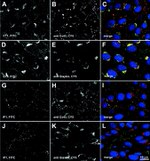
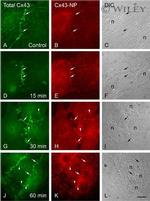
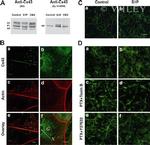
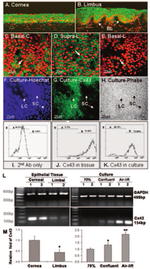
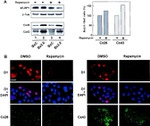
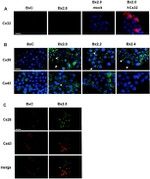
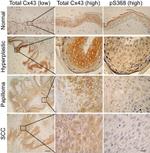
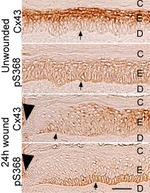
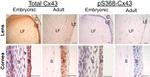
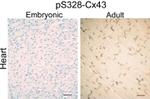
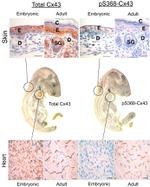
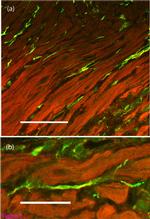
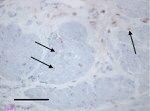
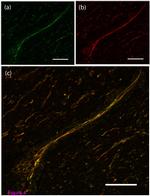
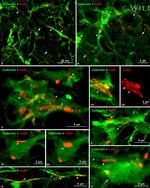
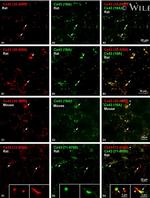
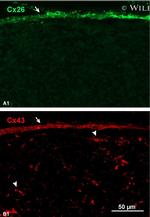
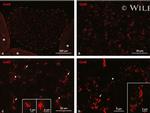
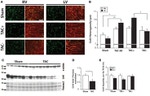
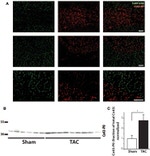
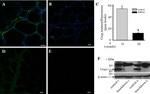
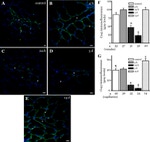
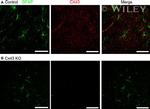
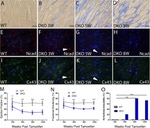
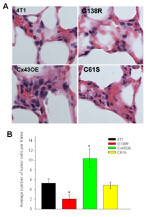
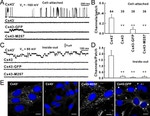
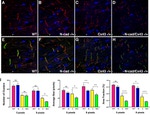
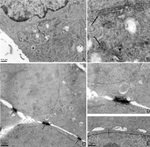
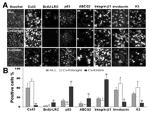
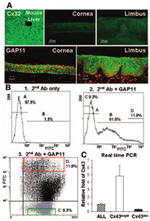
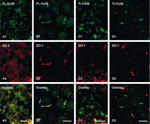
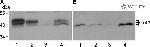
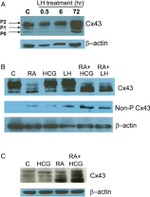
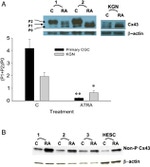
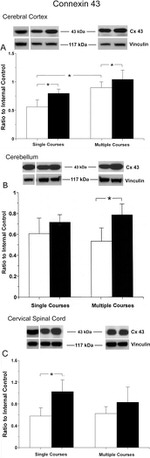
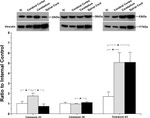
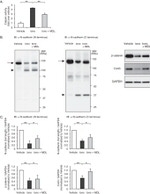
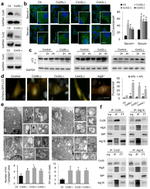
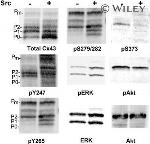
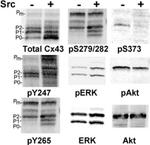
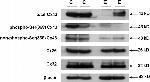
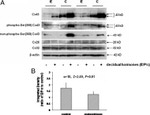
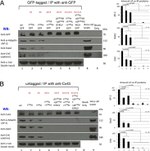
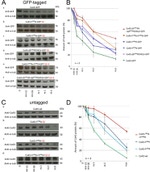
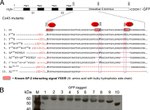
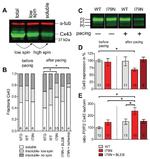
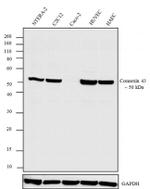
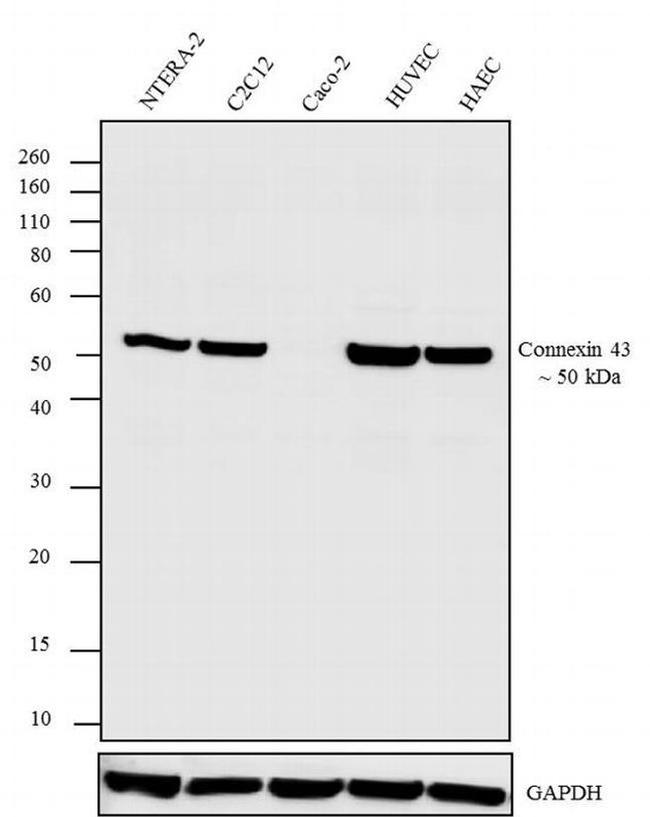
Please note: We are reviewing Western blot images included in the antibody testing data in our catalog, including those provided by third parties. Unless expressly labeled or annotated as “raw-unedited”, Western blot images included in the antibody testing data in our catalog may have been edited, optimized or otherwise adjusted for presentation.
















产品信息
13-8300
应用
建议稀释比
已发表文章
产品规格
种属反应
Dog,
Human,
Mouse,
Rat
已发表种属
Bat,
Cat,
Dog,
Hamster,
Human,
Mouse,
Pig,
Rabbit,
Rat,
Rodent,
Sheep
宿主/亚型
Mouse
/ IgG1
分类
Monoclonal
类型
Antibody
克隆号
CX-1B1
抗原
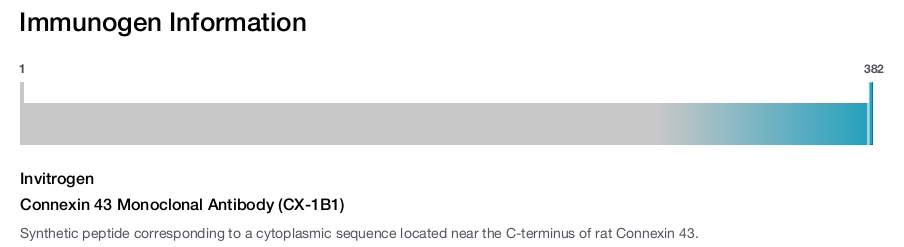
Synthetic peptide corresponding to a cytoplasmic sequence located near the C-terminus of rat Connexin 43.
偶联物
Unconjugated
Unconjugated
Unconjugated
形式
Liquid
浓度
0.5 mg/mL
规格
100 µg
纯化类型
Affinity chromatography
保存液
PBS, pH 7.4
内含物
0.1% sodium azide
保存条件
-20°C
运输条件
Ambient (domestic); Wet ice (international)
RRID
产品详细信息
CX-1B1 is specific for one of the unphosphorylated forms of Connexin 43. This antibody was at one time thought to be specific for all unphosphorlyated forms of Connexin 43, but that can no longer be claimed since it was discovered that Connexin 43 can be phosphorylated at multiple sites. Recent studies have shown that phosphorylation occurs at a serine within the epitope recognized by this antibody. CX-1B1 recognizes Connexin 43 only when the serine at residue 368 is unphosphorylated. CX-1B1 will, however, recognize Connexin 43 if it is phosphorylated at sites besides Ser368. In some cell types, cross-reactivity with a ~70 kDa protein of unknown identity has been observed. This cross-reactivity is likely due to a shared epitope.
Reactivity has been confirmed by western blot analysis of extracts derived from dog heart, human heart, mouse brain, mouse heart, rat brain, and Clone 9 (C1-9) rat liver cells. Clone 9 is the recommended positive control for CX-1B1.
This antibody has also been used in immunofluorescence applications and immunolocalization of Connexin 43, however, for immunohistochemical applications polyclonal Rabbit anti-Connexin 43 (Cat. No. 71-0700) is recommended.
靶标信息
Connexin 43 (Cx43), encoded by the GJA1 gene, is a widely expressed gap junction protein that plays an important role in direct cell-to-cell communication. Six Cx43 proteins assemble to form a connexon, or hemichannel, which can pair with a connexon on a neighboring cell to create a gap junction channel. These channels allow ions, metabolites, and small signaling molecules to pass between adjacent cells, helping coordinate processes such as electrical conduction, tissue development, wound healing, and cellular homeostasis. Cx43 is especially abundant in tissues such as the heart, brain, bone, and skin, and changes in its expression, localization, or function have been associated with cardiovascular disease, neurological disorders, impaired tissue repair, and cancer. Because of its broad role in intercellular signaling and disease biology, Cx43 is an important target for studying gap junction function and developing potential therapeutic strategies.
仅用于科研。不用于诊断过程。未经明确授权不得转售。
生物信息学
蛋白别名: alpha 1 connexin; connexin 43; connexin k1; connexin-43; Cx-43; CXA1; DFNB38; gap junction 43 kDa heart protein; gap junction membrane channel protein; gap junction membrane channel protein alpha 1; gap junction protein, alpha 1, 43kDa; gap junction protein, alpha 1, 43kDa (connexin 43); GJA1; Npm1; ODD; ODOD; SDTY3; Syndactyly type III; unnamed protein product; VEGF
基因别名: AVSD3; CMDR; Cnx43; connexin43; CX43; Cx43alpha1; Cxnk1; EKVP; EKVP3; Gja-1; GJAL; HLHS1; HSS; Npm1; ODDD; PPKCA
UniProt ID: (Human) P17302, (Mouse) P23242, (Rat) P08050
Entrez Gene ID: (Human) 2697, (Dog) 403418, (Mouse) 14609, (Rat) 24392
receptor binding
gap junction channel activity
protein binding
beta-catenin binding
ion transmembrane transporter activity
efflux transmembrane transporter activity
tubulin binding
transmembrane transporter activity
glutathione transmembrane transporter activity
alpha-tubulin binding
beta-tubulin binding
gap junction hemi-channel activity
gap junction channel activity involved in cardiac conduction electrical coupling
scaffold protein binding
gap junction channel activity involved in cell communication by electrical coupling
protein tyrosine kinase binding
channel activity
SH3 domain binding
protein domain specific binding
PDZ domain binding
connexin binding
disordered domain specific binding
gap junction
establishment of mitotic spindle orientation
cardiac conduction system development
cell communication
signal transduction
cell-cell signaling
spermatogenesis
heart development
protein localization
male gonad development
positive regulation of gene expression
cell communication by electrical coupling
glutamate secretion
gap junction assembly
negative regulation of cell growth
negative regulation of gonadotropin secretion
ion transmembrane transport
glutathione transmembrane transport
maintenance of blood-brain barrier
T cell proliferation
T cell activation
xenobiotic transport
positive regulation of I-kappaB kinase/NF-kappaB signaling
cell-cell junction organization
bone remodeling
transmembrane transport
bone development
cellular response to pH
atrial cardiac muscle cell action potential
cell communication by electrical coupling involved in cardiac conduction
microtubule-based transport
positive regulation of cold-induced thermogenesis
export across plasma membrane
negative regulation of trophoblast cell migration
regulation of blood circulation
cellular response to beta-amyloid
positive regulation of vascular smooth muscle cell proliferation
positive regulation of morphogenesis of an epithelium
positive regulation of mesodermal cell differentiation
positive regulation of stem cell proliferation
regulation of apoptotic process
osteoblast differentiation
in utero embryonic development
neuron migration
negative regulation of endothelial cell proliferation
heart looping
epithelial cell maturation
lens development in camera-type eye
chronic inflammatory response
positive regulation of glomerular filtration
atrial ventricular junction remodeling
epicardial cell to mesenchymal cell transition
positive regulation of cytosolic calcium ion concentration
adult heart development
regulation of heart contraction
negative regulation of cell proliferation
response to pH
vascular transport
negative regulation of gene expression
cell communication by chemical coupling
regulation of cell communication by electrical coupling
positive regulation of cell communication by chemical coupling
ATP transport
regulation of bone mineralization
positive regulation of insulin secretion
embryonic heart tube development
maintenance of protein localization in endoplasmic reticulum
vasodilation
embryonic digit morphogenesis
skeletal muscle tissue regeneration
positive regulation of protein catabolic process
positive regulation of meiotic nuclear division
positive regulation of striated muscle tissue development
positive regulation of vasoconstriction
regulation of bone remodeling
blood vessel morphogenesis
neuron projection morphogenesis
regulation of body fluid levels
regulation of calcium ion transport
negative regulation of cardiac muscle cell proliferation
milk ejection
regulation of ventricular cardiac muscle cell membrane repolarization
regulation of blood vessel remodeling
regulation of atrial cardiac muscle cell membrane depolarization
regulation of ventricular cardiac muscle cell membrane depolarization
cardiac conduction
establishment of epithelial cell polarity
regulation of actin filament organization
positive regulation of establishment of Sertoli cell barrier
negative regulation of DNA biosynthetic process
regulation of bicellular tight junction assembly
positive regulation of behavioral fear response
response to ischemia
endothelium development
response to wounding
response to glucose
response to estradiol
response to lipopolysaccharide
response to retinoic acid
response to fluid shear stress
cellular response to platelet-derived growth factor stimulus
response to peptide hormone
decidualization
cellular response to mechanical stimulus
cellular response to parathyroid hormone stimulus
positive regulation of smooth muscle cell chemotaxis
epididymis development
Disclaimer

Clicking the images or links will redirect you to a website hosted by BenchSci that provides third-party scientific content. Neither the content nor the BenchSci technology and processes for selection have been evaluated by us; we are providing them as-is and without warranty of any kind, including for use or application of the Thermo Fisher Scientific products presented.

