Search
Invitrogen
alpha Tubulin Monoclonal Antibody (DM1A), eBioscience™
{{$productOrderCtrl.translations['antibody.pdp.commerceCard.promotion.promotions']}}
{{$productOrderCtrl.translations['antibody.pdp.commerceCard.promotion.promocode']}}: {{promo.promoCode}} {{promo.promoTitle}} {{promo.promoDescription}}. {{$productOrderCtrl.translations['antibody.pdp.commerceCard.promotion.learnmore']}}
{{$ctrl.translations['antibody.pdp.skuNotes.additionalInformation']}}:
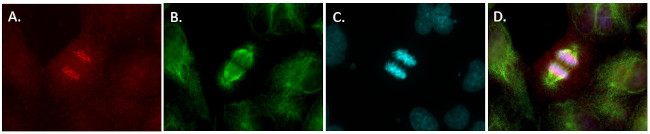
图: 1 / 13
alpha Tubulin Antibody (14-4502-82) in ICC/IF
Immunofluorescent analysis of alpha tubulin (green) in a BHP 2-7 thyroid cancer anaphase cell cultured in complete medium on a glass slide. Cells were fixed with 4% phosphate-buffered paraformaldehyde for 30 min at 37C, permeabilized with 100% ice-cold methanol for 20 min. and blocked with PBS/1% BSA/0.5% Tween 20 at 37C for 30 min. Cells were stained with monoclonal alpha tubulin antibody (Product # 14-45... View More

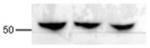
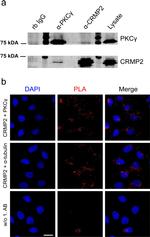
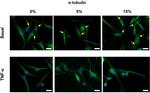
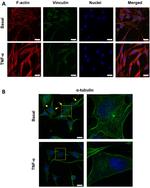
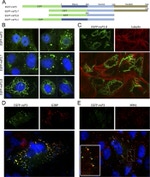
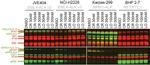
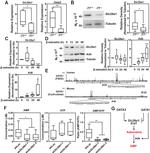
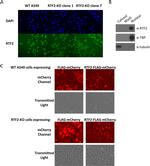
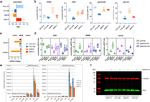
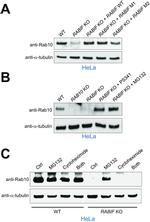
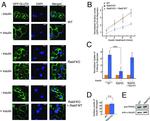
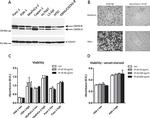
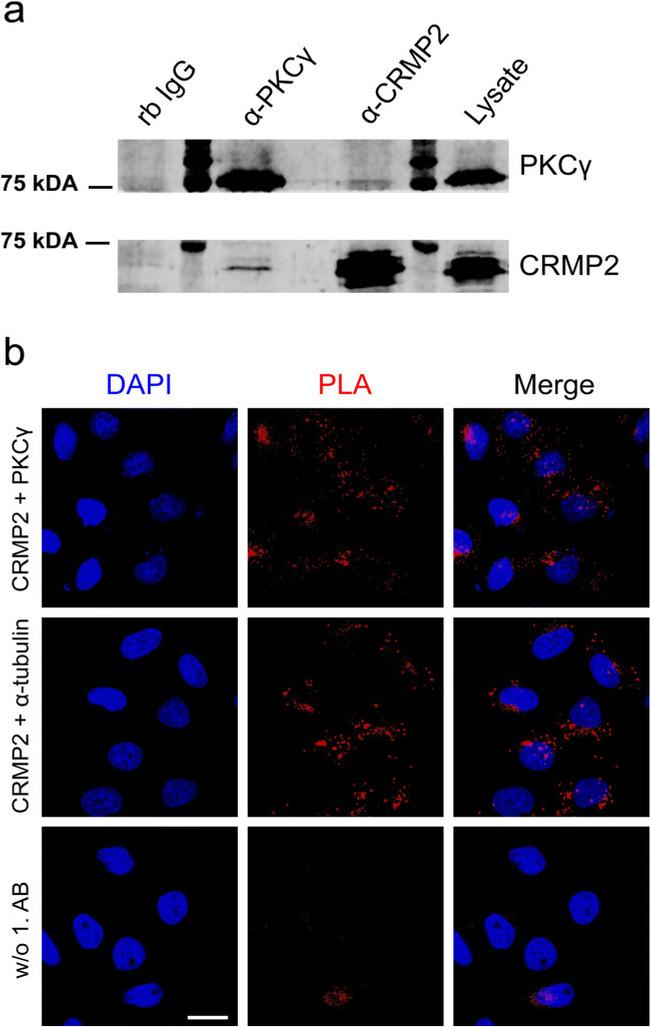
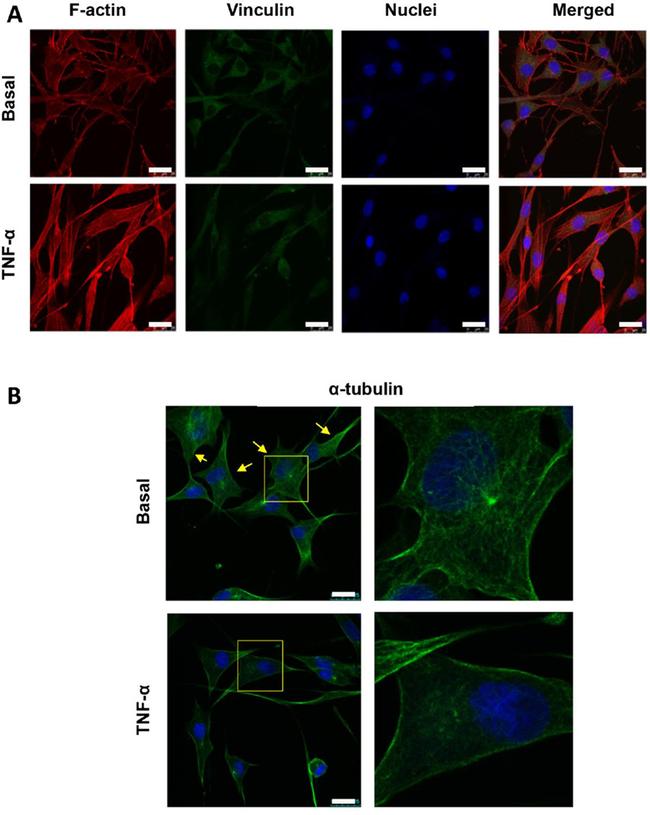
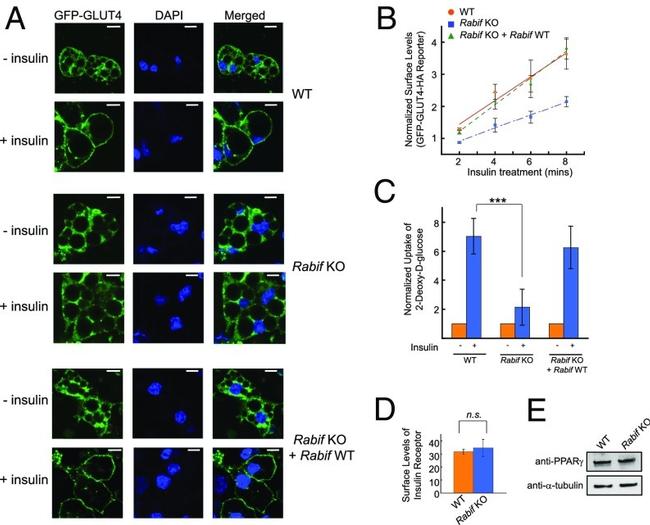
Please note: We are reviewing Western blot images included in the antibody testing data in our catalog, including those provided by third parties. Unless expressly labeled or annotated as “raw-unedited”, Western blot images included in the antibody testing data in our catalog may have been edited, optimized or otherwise adjusted for presentation.






产品信息
14-4502-82
应用
建议稀释比
已发表文章
产品规格
种属反应
Dog,
Human,
Mouse,
Non-human primate,
Pig,
Rat
已发表种属
Dog,
Human,
Mouse,
Non-human primate,
Rat
宿主/亚型
Mouse
/ IgG1, kappa
分类
Monoclonal
类型
Antibody
克隆号
DM1A
偶联物
Unconjugated
Unconjugated
Unconjugated
形式
Liquid
浓度
0.5 mg/mL
规格
100 µg
纯化类型
Affinity chromatography
保存液
PBS, pH 7.2
内含物
0.09% sodium azide
保存条件
4°C
运输条件
Ambient (domestic); Wet ice (international)
RRID
产品详细信息
Description: The monoclonal antibody DM1a recognizes the 50 kDa cytoskeletal protein alpha tubulin in a variety of species (human, mouse, rat, monkey, dog, pig, bovine, goat, hamster, guinea pig, kangaroo, amphibians, sea urchin, yeast and tobacco plants). Tubulin, the major component of microtubules, is a dimeric protein consisting of an alpha and beta subunit. Tubulin is a GTP-binding protein that can be modified by phosphorylation and acetylation resulting in assembly (polymerization) or disassembly (depolymerization). The dynamic nature of microtubules is most evident in the mitotic apparatus. The DM1a antibody recognizes the C-terminal end of the alpha tubulin isoform (amino acids 426-430).
Applications Reported: This DM1A antibody has been reported for use in immunocytochemistry, immunoprecipitation, western blotting, and immunohistochemical staining of formalin-fixed paraffin embedded tissue sections.
Applications Tested: This DM1A antibody has been tested by western blotting under reducing conditions (at 2 µg/mL) or by immunofluorescent staining of paraformaldehyde fixed and permeabilized cells.
Purity: Greater than 90%, as determined by SDS-PAGE.
Aggregation: Less than 10%, as determined by HPLC.
Filtration: 0.2 µm post-manufacturing filtered.
靶标信息
Alpha Tubulin is a part of a heterodimer consisting of alpha and beta tubulin subunits. The alpha and beta tubulins, which are each about 55 kDa MW, are homologous but not identical. Alpha-beta tubulin heterodimer is the basic building block of microtubules, and this intracellular cylindrical filamentous structure is present in almost eukaryotic cells. Microtubules serve as structural supports and lines of transport within the cell, as well as serving a key role in mitosis. Microtubules of the eukaryotic cytoskeleton perform essential and diverse functions and are composed of a heterodimer of alpha and beta tubulins. The alpha and beta tubulins represent the major components of microtubules, while gamma tubulin plays a critical role in the nucleation of microtubule assembly. There are multiple alpha and beta tubulin genes, which are highly conserved among species. The gene that encodes alpha tubulin is highly similar to the mouse and rat Tuba1 gene. Northern blotting studies have shown that the gene expression is predominantly found in morphologically differentiated neurologic cells.
仅用于科研。不用于诊断过程。未经明确授权不得转售。
生物信息学
蛋白别名: alpha tubulin; alpha-tubulin; Alpha-tubulin 1; alpha-tubulin 2; alpha-tubulin 3C; alpha-tubulin 3C/D; Alpha-tubulin 3D; alpha-tubulin 4; alpha-tubulin 6; alpha-tubulin isotype M-alpha-1; alpha-tubulin isotype M-alpha-2; alpha-tubulin isotype M-alpha-4; alpha-tubulin isotype M-alpha-6; alpha-tubulin ubiquitous; beta-tubulin T beta15 (aa 1-445); class II beta-tubulin isotype; class IIb beta-tubulin; epididymis secretory sperm binding protein; FLJ30169; gangliocyte protein related to virus stimulation; H2 ALPHA; hum-a-tub1; hum-a-tub2; MGC8685; similar to beta tubulin; t beta-15; Talpha1 alpha-tubulin; TUBA1/3/4; Tubulin alpha; tubulin alpha 3; tubulin alpha-1; Tubulin alpha-1 chain; tubulin alpha-1C chain-like; tubulin alpha-2 chain; tubulin alpha-3 chain; tubulin alpha-3C/D chain; Tubulin alpha-3D chain; tubulin alpha-4 chain; tubulin alpha-6 chain; tubulin alpha-ubiquitous chain; tubulin B-alpha-1; tubulin H2-alpha; tubulin K-alpha-1; tubulin, alpha 1; tubulin, alpha 1 (testis specific); tubulin, alpha 2; tubulin, alpha 4; tubulin, alpha 6; tubulin, alpha, brain-specific; tubulin, alpha, ubiquitous; tubulin, beta 2; tubulin, beta 2B; tubulin, beta polypeptide paralog; unnamed protein product
基因别名: 2410129E14Rik; ALS22; B-ALPHA-1; bA408E5.3; bA506K6.1; bcm948; brdp; CDCBM7; CMYO26; FTDALS9; H2-ALPHA; K-ALPHA-1; LIS3; M[a]4; M[a]6; OZEMA23; OZEMA24; PMGYSA; RGD1309427; RGD1565476; SPAX11; Tuba-1; TUBA1; TUBA1A; TUBA2; TUBA3; Tuba4; TUBA6; Tubb2
UniProt ID: (Human) Q71U36, (Human) P68363, (Pig) Q2XVP4, (Human) Q9BQE3, (Human) P0DPH7, (Human) Q6PEY2, (Human) P68366, (Human) A6NHL2, (Human) Q9BVA1, (Mouse) P68369, (Rat) P68370, (Mouse) P05213, (Rat) Q6P9V9, (Mouse) P68373, (Rat) Q6AYZ1, (Rat) Q5XIF6, (Mouse) P68368, (Mouse) Q3UX10, (Rat) Q3KRE8, (Mouse) Q9CWF2
Entrez Gene ID: (Dog) 106557476, (Pig) 100135051, (Human) 7846, (Human) 10376, (Pig) 733594, (Human) 84790, (Human) 7278, (Human) 112714, (Pig) 100151951, (Dog) 478918, (Human) 7277, (Human) 79861, (Dog) 487148, (Pig) 100623355, (Human) 347733, (Dog) 478702, (Pig) 100153507, (Mouse) 22142, (Rat) 64158, (Mouse) 22143, (Rat) 500929, (Mouse) 22146, (Rat) 300218, (Rat) 316531, (Mouse) 22145, (Rat) 291287, (Mouse) 238463, (Rat) 291081, (Mouse) 73710
GTPase activity
structural molecule activity
structural constituent of cytoskeleton
protein binding
GTP binding
microtubule binding
identical protein binding
macromolecular complex binding
protein heterodimerization activity
chaperone binding
double-stranded RNA binding
ubiquitin protein ligase binding
enzyme binding
protein kinase binding
protein domain specific binding
tubulin
microtubule cytoskeleton organization
mitotic cell cycle
neuron migration
startle response
protein folding
'de novo' protein folding
intracellular protein transport
microtubule-based process
centrosome cycle
smoothened signaling pathway
memory
locomotory behavior
adult locomotory behavior
visual learning
response to mechanical stimulus
glial cell differentiation
gene expression
dentate gyrus development
cerebellar cortex morphogenesis
hippocampus development
pyramidal neuron differentiation
cerebral cortex development
neurogenesis
neuron differentiation
sperm motility
adult behavior
cytoskeleton-dependent intracellular transport
response to tumor necrosis factor
locomotory exploration behavior
microtubule polymerization
forebrain morphogenesis
homeostasis of number of cells within a tissue
regulation of synapse organization
synapse organization
protein stabilization
cell division
neuron apoptotic process
motor behavior
cellular response to calcium ion
organelle transport along microtubule
neuron projection arborization
response to L-glutamate
cellular response to interleukin-4
cytoskeleton organization
positive regulation of axon guidance
biological_process
modulation of synaptic transmission
embryonic brain development
Disclaimer

Clicking the images or links will redirect you to a website hosted by BenchSci that provides third-party scientific content. Neither the content nor the BenchSci technology and processes for selection have been evaluated by us; we are providing them as-is and without warranty of any kind, including for use or application of the Thermo Fisher Scientific products presented.

