Search
Invitrogen
CD56 (NCAM) Recombinant Mouse Monoclonal Antibody (TULY56), Alexa Fluor™ Plus 647
{{$productOrderCtrl.translations['antibody.pdp.commerceCard.promotion.promotions']}}
{{$productOrderCtrl.translations['antibody.pdp.commerceCard.promotion.promocode']}}: {{promo.promoCode}} {{promo.promoTitle}} {{promo.promoDescription}}. {{$productOrderCtrl.translations['antibody.pdp.commerceCard.promotion.learnmore']}}
{{$ctrl.translations['antibody.pdp.skuNotes.additionalInformation']}}:
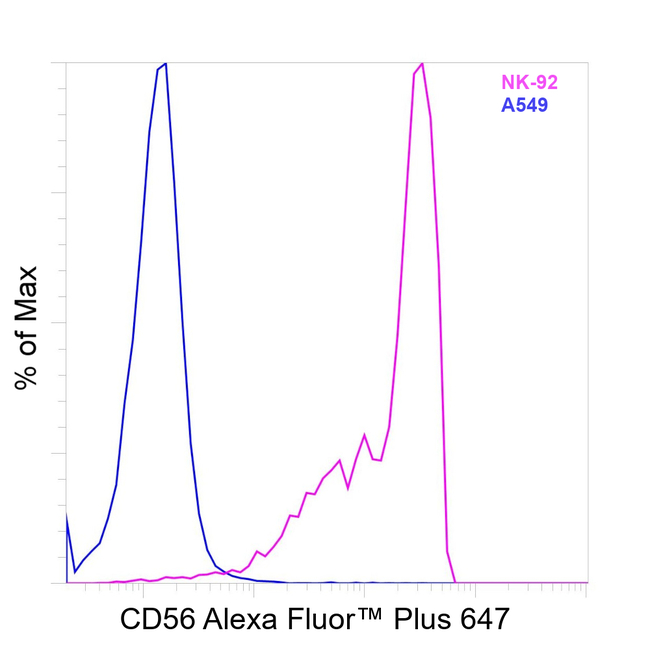
图: 1 / 3
CD56 (NCAM) Antibody (740093MP647) in Flow
Flow cytometry analysis of CD56 was performed using CD56 Recombinant Mouse Monoclonal Antibody (TULY56), Alexa Fluor™ Plus 647 (Product # 740093MP647 ) with NK-92 and A549 cells. Cells stained with 0.125 µg of the CD56 Recombinant Mouse Monoclonal Antibody (TULY56), Alexa Fluor™ Plus 647 (Product # 740093MP647). CD56 higher expression was observed in NK-92 (pink histogram) in comparison to A549 (blue histogram). Viable cells were used for analysis as determined by LIVE/DEAD™ Fixable Near IR (780) Viability Kit (Product # L34994). Flow cyto... View More
Please note: We are reviewing Western blot images included in the antibody testing data in our catalog, including those provided by third parties. Unless expressly labeled or annotated as “raw-unedited”, Western blot images included in the antibody testing data in our catalog may have been edited, optimized or otherwise adjusted for presentation.


产品信息
740093MP647
产品规格
种属反应
Human
宿主/亚型
Mouse
/ IgG1, kappa
Expression System
Expi293
分类
Recombinant Monoclonal
类型
Antibody
克隆号
TULY56
偶联物
Alexa Fluor™ Plus 647
Alexa Fluor™ Plus 647
Alexa Fluor™ Plus 647
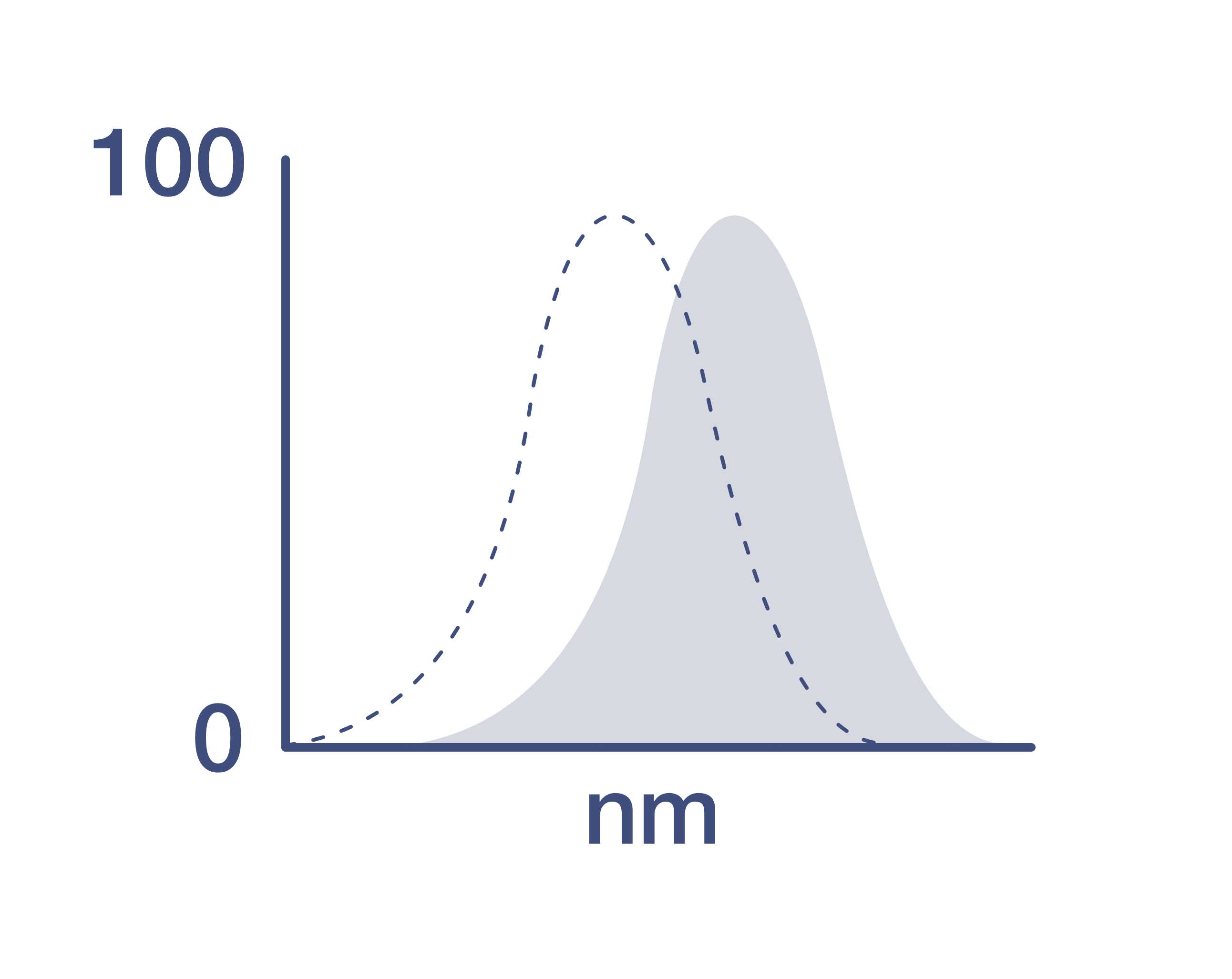
激发/发射光谱
658/675 nm
查看光谱
形式
Liquid
浓度
1 mg/mL
规格
50 µg
纯化类型
Protein A/G
保存液
proprietary buffer, pH 6.3-7.3
内含物
0.008% Bromonitrodioxane, 0.008% Methylisothiazolone
保存条件
4°C, store in dark, DO NOT FREEZE!
运输条件
Wet ice
RRID
产品详细信息
Alexa Fluor™ Plus recombinant antibodies are conjugated using new, proprietary dye chemistry so you can generate stunning data. Alexa Fluor™ Plus antibodies represent an advancement in fluorescent conjugate technology. Alexa Fluor™ Plus antibodies provide brighter signal compared to leading Alexa Fluor™ antibodies, providing you with better signal-to-noise for your critical experiments. These antibodies show better specificity and lot-to-lot consistency as these are recombinant antibodies, generated by cloning specific genes for the desired antibodies into an expression vector and expressed in vitro.
Using conjugate solutions: Centrifuge the protein conjugate solution briefly in a microcentrifuge before use; add only the supernatant to the experiment. This step will help eliminate any protein aggregates that may have formed during storage, thereby reducing nonspecific background staining.
It is recommended that the antibody be carefully titrated for optimal performance in the assay of interest.
Excitation: 658 nm; Emission: 675 nm; Laser: Red Laser
Filtration: 0.2 µm post-manufacturing filtered.
靶标信息
CD56, also known as neural cell adhesion molecule (NCAM), is a highly glycosylated transmembrane glycoprotein of the immunoglobulin family. It plays a crucial role in cell adhesion, migration, axonal growth, pathfinding, and synaptic plasticity. CD56 is ubiquitously expressed in the nervous system in isoforms ranging from 120-180 kDa and is involved in homotypic adhesion of neural cells. It mediates interactions by binding extracellular matrix components such as laminin and integrins, with polysialic modification reducing CD56-mediated adhesion. In the hematopoietic system, CD56 is expressed on natural killer (NK) cells and a subset of T cells known as NKT cells. It is also found on most neuroectodermal-derived cell lines, tissues, and neoplasms, including retinoblastoma, medulloblastoma, astrocytomas, and neuroblastoma. CD56 serves as a widely used neuroendocrine marker with high sensitivity for neuroendocrine tumors and ovarian granulosa cell tumors. Diseases associated with CD56 dysfunction include rabies and blastic plasmacytoid dendritic cell neoplasms, highlighting its importance in both neural and immune system functions.
仅用于科研。不用于诊断过程。未经明确授权不得转售。
篇参考文献 (0)
您是否在文献中引用过该产品?请点击下方按钮邮件告知我们。
生物信息学
蛋白别名: 145 kda neural cell adhesion molecule; antigen recognized by monoclonal antibody 5.1H11; CD-56; E NCAM; membrane glycoprotein; N CAM1; N-CAM; neural cell adhesion molecule; neural cell adhesion molecule secreted isoform; neural cell adhesion molecule, NCAM; sCD56; sNCAM; soluble CD56; soluble NCAM; unnamed protein product
基因别名: CD56; MSK39; NCAM
UniProt ID: (Human) P13591
Entrez Gene ID: (Human) 4684
Disclaimer

Clicking the images or links will redirect you to a website hosted by BenchSci that provides third-party scientific content. Neither the content nor the BenchSci technology and processes for selection have been evaluated by us; we are providing them as-is and without warranty of any kind, including for use or application of the Thermo Fisher Scientific products presented.

