Search
Agrisera
AP2/Floral homeotic protein APETALA 2 Polyclonal Antibody
{{$productOrderCtrl.translations['antibody.pdp.commerceCard.promotion.promotions']}}
{{$productOrderCtrl.translations['antibody.pdp.commerceCard.promotion.viewpromo']}}
{{$productOrderCtrl.translations['antibody.pdp.commerceCard.promotion.promocode']}}: {{promo.promoCode}} {{promo.promoTitle}} {{promo.promoDescription}}. {{$productOrderCtrl.translations['antibody.pdp.commerceCard.promotion.learnmore']}}
Additional Information:
{{banner.description}}
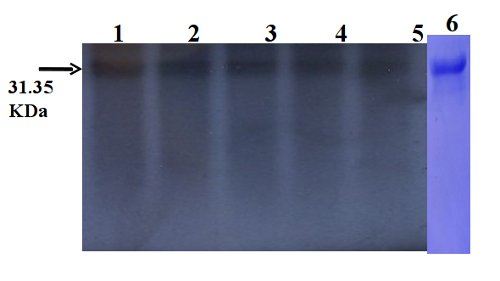
图: 1 / 1
AP2/Floral homeotic protein APETALA 2 Antibody (AS12-2609) in WB
1 µg of total protein from Oryza sativa lines grown under drought stress conditions and over expressing protein DREB (AP 2 domain, 285 aa, 31.35 k Da) (lines 1-5) and purified 100 ng of DREB (line 6), were separated on 12.5% SDS-PAGE and blotted 4 h to Nitrocellulose membrane. Blots were blocked with blocking agent 5% BSA or 1 X TBS, 0.1% Tween-20 with 5% w/v non-fat dry milk for 1 h at room temperature (RT... View More

产品信息
AS12-2609
产品规格
种属反应
Plant
宿主/亚型
Rabbit
分类
Polyclonal
类型
Antibody
抗原
KLH-conjugated synthetic peptide derived from AP2 sequence of Arabidopsis thaliana.
偶联物
形式
Lyophilized
规格
50 µg
纯化类型
Antigen affinity chromatography
保存液
PBS, pH 7.4
内含物
no preservative
保存条件
-20°C, Avoid Freeze/Thaw Cycles
运输条件
Ambient (domestic); Wet ice (international)
产品详细信息
Store lyophilized/reconstituted at -20°C; once reconstituted make aliquots to avoid repeated freeze-thaw cycles. Please remember to spin the tubes briefly prior to opening them to avoid any losses that might occur from material adhering to the cap or sides of the tube.
For reconstitution add 50 µL of sterile water.
Specific Species Reactivity: Arabidopsis thaliana, Brassica napus, Oryza sativa
靶标信息
AP2 is a plant transcription factor belonging to the AP2 ERF superfamily and is defined by the AP2 DNA binding domain that recognizes GC rich elements in promoters. Classic AP2 genes in Arabidopsis function in floral organ identity, seed development, and growth regulation by integrating developmental cues and hormone signals. AP2 acts mainly as a transcriptional regulator that can repress or activate target genes, and it often interacts with microRNA pathways, notably miR172, which downregulates AP2 during phase transitions and flower development. Members of the broader AP2 ERF family respond to environmental stresses and hormones such as ethylene, abscisic acid, and jasmonate, coordinating gene expression for adaptation. AP2 proteins show diverse domain architectures and regulatory motifs that confer specificity across tissues and stages, and genetic studies reveal roles in meristem maintenance, organ size, maturation, and stress responsive transcriptional programs.
仅用于科研。不用于诊断过程。未经明确授权不得转售。
篇参考文献 (0)
您是否在文献中引用过该产品?请点击下方按钮邮件告知我们。
生物信息学
蛋白别名: AP22.49; AP22_49; APETALA 2; AtAP2; FL1; FLO2; FLORAL HOMEOTIC PROTEIN APETALA 2; FLORAL MUTANT 2; FLOWER 1
Disclaimer

Clicking the images or links will redirect you to a website hosted by BenchSci that provides third-party scientific content. Neither the content nor the BenchSci technology and processes for selection have been evaluated by us; we are providing them as-is and without warranty of any kind, including for use or application of the Thermo Fisher Scientific products presented.

