Search
Invitrogen
Bcl-2 Monoclonal Antibody (Bcl-2-100), Alexa Fluor™ Plus 594
{{$productOrderCtrl.translations['antibody.pdp.commerceCard.promotion.promotions']}}
{{$productOrderCtrl.translations['antibody.pdp.commerceCard.promotion.promocode']}}: {{promo.promoCode}} {{promo.promoTitle}} {{promo.promoDescription}}. {{$productOrderCtrl.translations['antibody.pdp.commerceCard.promotion.learnmore']}}
{{$ctrl.translations['antibody.pdp.skuNotes.additionalInformation']}}:
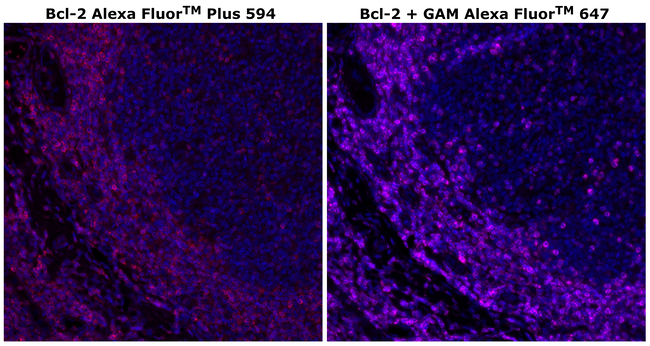
图: 1 / 4
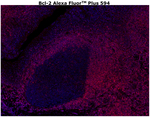
Bcl-2 Antibody (755-8800-94) in IHC (P)
Immunohistochemical analysis of Bcl-2 was performed on FFPE human Tonsil tissue. To expose the target protein, HIER was performed on de-paraffinized sections using BOND Epitope Retrieval Solution 2 (pH 9) for 20-mins, followed by a 5-min cool down, a 1-min wash with ddH2O, and then transferred to 1X PBS. Tissues were then blocked with 3% BSA/5% normal goat serum in 1X PBS for 1-hr at RT. Following blocking ... View More
Please note: We are reviewing Western blot images included in the antibody testing data in our catalog, including those provided by third parties. Unless expressly labeled or annotated as “raw-unedited”, Western blot images included in the antibody testing data in our catalog may have been edited, optimized or otherwise adjusted for presentation.


产品信息
755-8800-94
产品规格
种属反应
Human
宿主/亚型
Mouse
/ IgG1, kappa
分类
Monoclonal
类型
Antibody
克隆号
Bcl-2-100
抗原
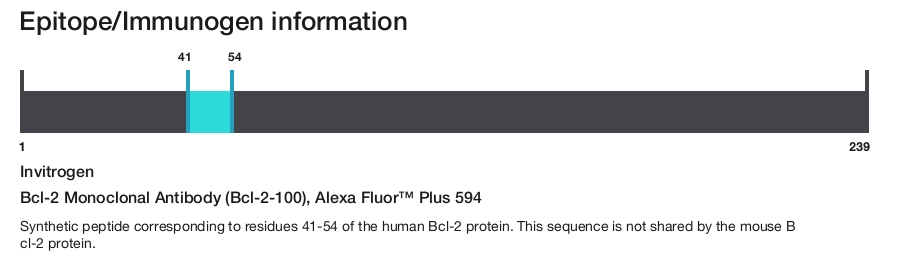
Synthetic peptide corresponding to residues 41-54 of the human Bcl-2 protein. This sequence is not shared by the mouse Bcl-2 protein.
偶联物
Alexa Fluor™ Plus 594
Alexa Fluor™ Plus 594
Alexa Fluor™ Plus 594
激发/发射光谱
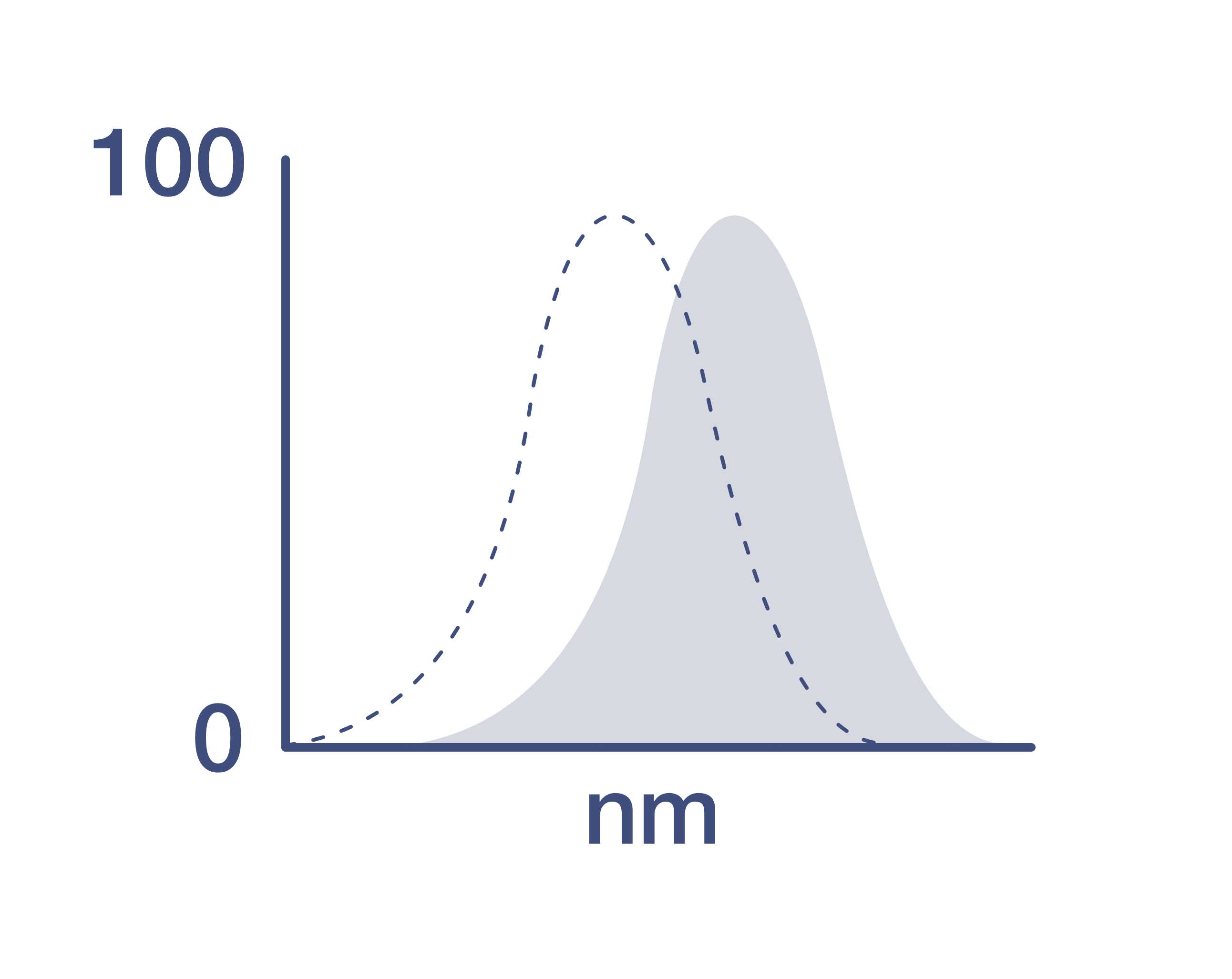
590/618 nm
查看光谱
形式
Liquid
浓度
0.2 mg/mL
规格
100 µg
纯化类型
Affinity chromatography
保存液
PBS, pH 7.2, with 0.5% BSA, 10% proprietary stabilizer
内含物
0.05% sodium azide
保存条件
4°C, store in dark
运输条件
Wet ice
产品详细信息
Description: This Bcl-2-100 monoclonal antibody reacts to human Bcl-2 (B-cell Lymphoma 2), the founding member of a family of pro-apoptotic proteins which includes Bcl-XL, Bcl-w, and Mcl-1. Bcl-2 plays a role in protecting against apoptosis-inducing insults such as dexamethasone and staurosporine, as well as irradiation and cytokine withdrawal. The mechanism is thought to include regulation of mitochondrial membrane permeability, resulting in sequestration of caspase proforms, or by preventing the release of apoptosis-mediating mitochondrial factors, such as cytochrome c and AIF (apoptosis-inducing factor), into the cytoplasm. Bcl-2 is localized to the cytoplasmic side of the mitochondrial membrane, the nuclear envelope, and the endoplasmic reticulum. Interestingly Bcl-2 does not play a role in preventing cell death of autoreactive T cells in the thymus or Fas-mediated apoptosis. Two isoforms, termed alpha and beta of Bcl-2 have been identified and are a result of alternative splicing at the C-terminus.
Applications Reported: This Bcl-2-100 antibody has been reported for use in immunoblotting (WB), immunohistochemistry, immunocytochemistry and flow cytometry.
Applications Tested: This Bcl-2-100 antibody has been tested by immunohistochemistry of formalin-fixed paraffin embedded tissue using high pH antigen retrieval and can be used at 8 µg/mL. It is recommended that the antibody be carefully titrated for optimal performance in the assay of interest.
Using conjugate solutions: Centrifuge the protein conjugate solution briefly in a microcentrifuge before use; add only the supernatant to the experiment. This step will help eliminate any protein aggregates that may have formed during storage, thereby reducing nonspecific background staining.
靶标信息
BCL-2 is a key regulator of apoptosis that functions to either inhibit or promote cell death. The BCL-2 family members are also characterized by dimerizing to further modulate apoptosis. Bag1, for example, has been found to form a heterodimer with BCL-2 resulting in the enhancement of the anti-apoptotic effect of BCL-2. Bax and Bak have been shown to play a critical role in cytochrome c release from mitochondria and thus initiate apoptosis. Bax exerts a pro-apoptotic rather than an anti-apoptotic effect on cells. Constitutive expression of BCL2, such as in the case of translocation of BCL2 to Ig heavy chain locus, is thought to be the cause of follicular lymphoma. In most follicular lymphomas, neoplastic germinal centers express high levels of BCL-2 alpha protein, whereas the normal or hyperplastic germinal centers are negative. Two transcript variants of BCL-2, produced by alternate splicing, differ in their C-terminal ends. The overexpression of BCL-2 has been linked to human cancers such as B-cell lymphoma and prostate cancer.
仅用于科研。不用于诊断过程。未经明确授权不得转售。
篇参考文献 (0)
您是否在文献中引用过该产品?请点击下方按钮邮件告知我们。
生物信息学
蛋白别名: B-cell CLL/lymphoma 2; Bcl 2; bcl-2 protein; bcl2-alpha protein; bcl2-beta protein; bcl2-Ig fusion gene; OTTHUMP00000163680; protein phosphatase 1, regulatory subunit 50
基因别名: Bcl-2; PPP1R50
UniProt ID: (Human) P10415
Entrez Gene ID: (Human) 596
protease binding
protein binding
channel activity
channel inhibitor activity
protein phosphatase binding
ubiquitin protein ligase binding
identical protein binding
sequence-specific DNA binding
protein heterodimerization activity
BH3 domain binding
protein phosphatase 2A binding
binding, bridging
DNA-binding transcription factor binding
protein polyubiquitination
release of cytochrome c from mitochondria
apoptotic process
humoral immune response
cellular response to DNA damage stimulus
female pregnancy
positive regulation of cell proliferation
extrinsic apoptotic signaling pathway via death domain receptors
intrinsic apoptotic signaling pathway in response to DNA damage
response to radiation
response to xenobiotic stimulus
response to toxic substance
response to iron ion
regulation of autophagy
negative regulation of autophagy
programmed cell death
positive regulation of cell growth
positive regulation of B cell proliferation
hair follicle morphogenesis
endoplasmic reticulum calcium ion homeostasis
response to cytokine
response to nicotine
B cell proliferation
regulation of apoptotic process
positive regulation of apoptotic process
negative regulation of apoptotic process
pigmentation
regulation of neuron apoptotic process
negative regulation of neuron apoptotic process
regulation of viral genome replication
regulation of mitochondrial membrane permeability
B cell receptor signaling pathway
neuron apoptotic process
defense response to virus
regulation of mitochondrial membrane potential
negative regulation of mitochondrial depolarization
regulation of calcium ion transport
transmembrane transport
intrinsic apoptotic signaling pathway in response to endoplasmic reticulum stress
extrinsic apoptotic signaling pathway in absence of ligand
negative regulation of intrinsic apoptotic signaling pathway in response to DNA damage by p53 class mediator
regulation of intracellular signal transduction
negative regulation of anoikis
regulation of apoptotic signaling pathway
negative regulation of apoptotic signaling pathway
negative regulation of extrinsic apoptotic signaling pathway in absence of ligand
negative regulation of intrinsic apoptotic signaling pathway
Disclaimer

Clicking the images or links will redirect you to a website hosted by BenchSci that provides third-party scientific content. Neither the content nor the BenchSci technology and processes for selection have been evaluated by us; we are providing them as-is and without warranty of any kind, including for use or application of the Thermo Fisher Scientific products presented.

