Search
Additional Information:
{{banner.description}}
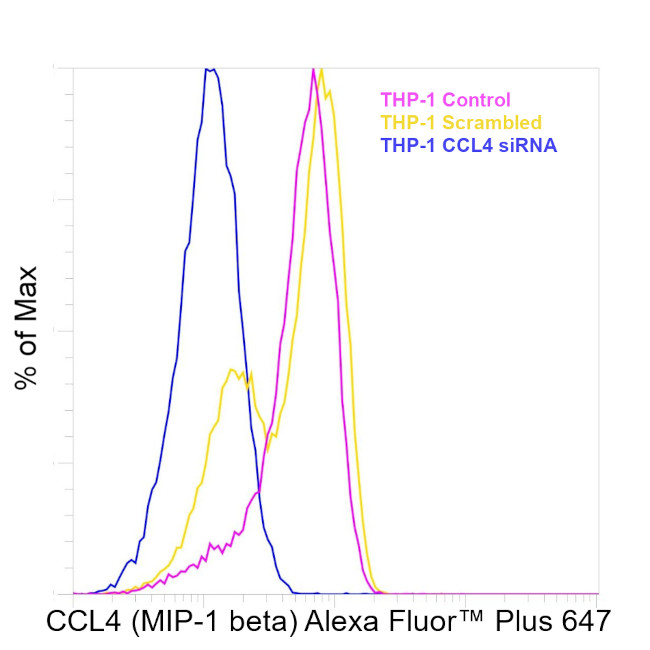
图: 1 / 3
CCL4 Antibody (740064MP647) in Flow
Flow cytometry analysis of CCL4 (MIP-1 beta) Recombinant Mouse Monoclonal Antibody (FL34Z3L), Alexa Fluor™ Plus 647 (Product # 740064MP647) was performed on CCL4 knockdown THP-1 cells, non-specific scrambled siRNA transfected THP-1 cells, and untransfected THP-1 cells. Knockdown of CCL4 was achieved by transfecting THP-1 cells with CCL4 specific siRNA (Silencer® select Product # s18364 & Product # s194790). Cells were fixed with Foxp3 / Transcription Factor Staining Buffer Set (Product # 00-5523-00), permeabilized and stained intracellular... View More
Please note: We are reviewing Western blot images included in the antibody testing data in our catalog, including those provided by third parties. Unless expressly labeled or annotated as “raw-unedited”, Western blot images included in the antibody testing data in our catalog may have been edited, optimized or otherwise adjusted for presentation.


产品信息
740064MP647
产品规格
种属反应
Human
宿主/亚型
Mouse
/ IgG2a, kappa
Expression System
Expi293
分类
Recombinant Monoclonal
类型
Antibody
克隆号
FL34Z3L
偶联物
Alexa Fluor™ Plus 647
Alexa Fluor™ Plus 647
Alexa Fluor™ Plus 647
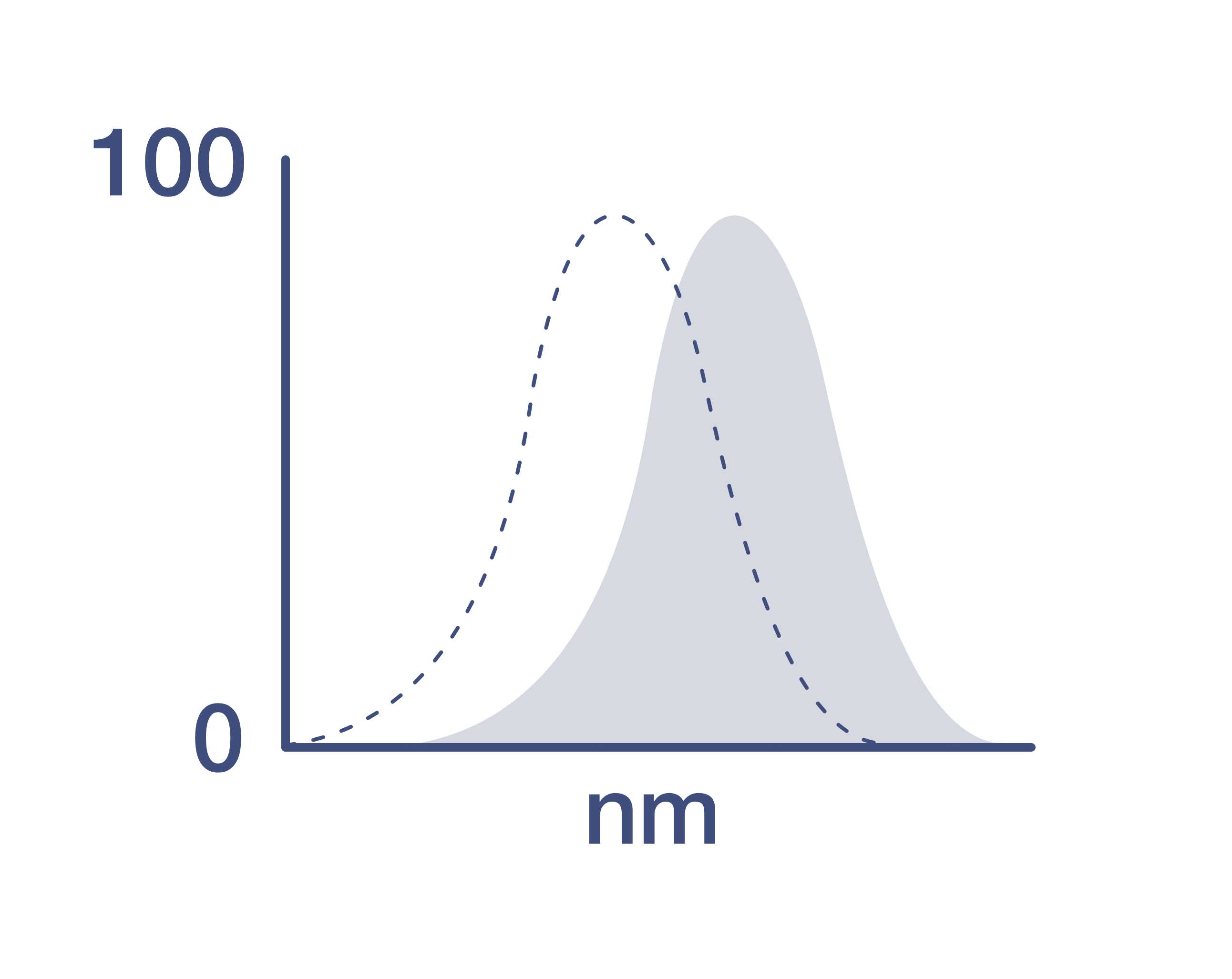
激发/发射光谱
658/675 nm
查看光谱
形式
Liquid
浓度
1 mg/mL
规格
50 µg
纯化类型
Protein A/G
保存液
proprietary buffer, pH 6.3-7.3
内含物
0.008% Bromonitrodioxane, 0.008% Methylisothiazolone
保存条件
4°C, store in dark, DO NOT FREEZE!
运输条件
Wet ice
RRID
产品详细信息
Alexa Fluor™ Plus recombinant antibodies are conjugated using new, proprietary dye chemistry so you can generate stunning data. Alexa Fluor™ Plus antibodies represent an advancement in fluorescent conjugate technology. Alexa Fluor™ Plus antibodies provide brighter signal compared to leading Alexa Fluor™ antibodies, providing you with better signal-to-noise for your critical experiments. These antibodies show better specificity and lot-to-lot consistency as these are recombinant antibodies, generated by cloning specific genes for the desired antibodies into an expression vector and expressed in vitro.
Using conjugate solutions: Centrifuge the protein conjugate solution briefly in a microcentrifuge before use; add only the supernatant to the experiment. This step will help eliminate any protein aggregates that may have formed during storage, thereby reducing nonspecific background staining.
It is recommended that the antibody be carefully titrated for optimal performance in the assay of interest.
Excitation: 658 nm; Emission: 675 nm; Laser: Red Laser
Filtration: 0.2 µm post-manufacturing filtered.
靶标信息
CCL4 (macrophage inflammatory protein 1-beta, MIP1B) belongs to the intercrine beta (chemokine CC) family. Functionally, CCL4 is involved in chemotactic and proinflammatory effects, and homeostasis. CCL4 is produced by macrophages upon stimulation by bacterial endotoxins. CCL4 recruits and stimulates various inflammatory cells at sites of inflammation. CCL4 is produced by lymphocytes, macrophages and dendritic cells. Both CCL4 and the related protein CCL3 participate in the host response to invading bacterial, viral, parasite and fungal pathogens by regulating the trafficking and activation state of selected subgroups of inflammatory cells. While both CCL4 and CCL3 exert similar effects on monocytes, their effect on lymphocytes differ, with CCL4 selectively attracting CD4+ lymphocytes and CCL3 selectively attracting CD8+ lymphocytes. Additionally, both have been shown to be potent chemoattractants for B cells, eosinophils and dendritic cells. The processed form of CCL4 can induce down-modulation of surface expression of the chemokine receptor CCR5, thus inhibiting the CCR5-mediated entry of HIV-1 in T cells. CCL4 binds with high affinity to CCR5 receptors.
仅用于科研。不用于诊断过程。未经明确授权不得转售。
篇参考文献 (0)
您是否在文献中引用过该产品?请点击下方按钮邮件告知我们。
生物信息学
蛋白别名: ACT-2; C-C motif chemokine 4; G-26 T-lymphocyte-secreted protein; HC21; LAG-1; Lymphocyte activation gene 1 protein; Macrophage inflammatory protein 1-beta; MGC104418; MGC126025; MGC126026; MIP-1-beta; MIP-1-beta(1-69); MIP1-beta; MIP1beta; PAT 744; Protein H400; RP23-320E6.8; SIS-gamma; Small-inducible cytokine A4; T-cell activation protein 2
基因别名: CCL4; LAG1; MIP1B; SCYA4
Entrez Gene ID: (Human) 6351
Disclaimer

Clicking the images or links will redirect you to a website hosted by BenchSci that provides third-party scientific content. Neither the content nor the BenchSci technology and processes for selection have been evaluated by us; we are providing them as-is and without warranty of any kind, including for use or application of the Thermo Fisher Scientific products presented.

