Search
Invitrogen
CD14 Monoclonal Antibody (TüK4), Qdot™ 605
{{$productOrderCtrl.translations['antibody.pdp.commerceCard.promotion.promotions']}}
{{$productOrderCtrl.translations['antibody.pdp.commerceCard.promotion.promocode']}}: {{promo.promoCode}} {{promo.promoTitle}} {{promo.promoDescription}}. {{$productOrderCtrl.translations['antibody.pdp.commerceCard.promotion.learnmore']}}
{{$ctrl.translations['antibody.pdp.skuNotes.additionalInformation']}}:
Please note: We are reviewing Western blot images included in the antibody testing data in our catalog, including those provided by third parties. Unless expressly labeled or annotated as “raw-unedited”, Western blot images included in the antibody testing data in our catalog may have been edited, optimized or otherwise adjusted for presentation.


产品信息
Q10013
应用
建议稀释比
已发表文章
产品规格
种属反应
Human
已发表种属
Human,
Rhesus monkey
宿主/亚型
Mouse
/ IgG2a
分类
Monoclonal
类型
Antibody
克隆号
TüK4
抗原
The CD14 antigen
偶联物
Qdot™ 605
Qdot™ 605
Qdot™ 605
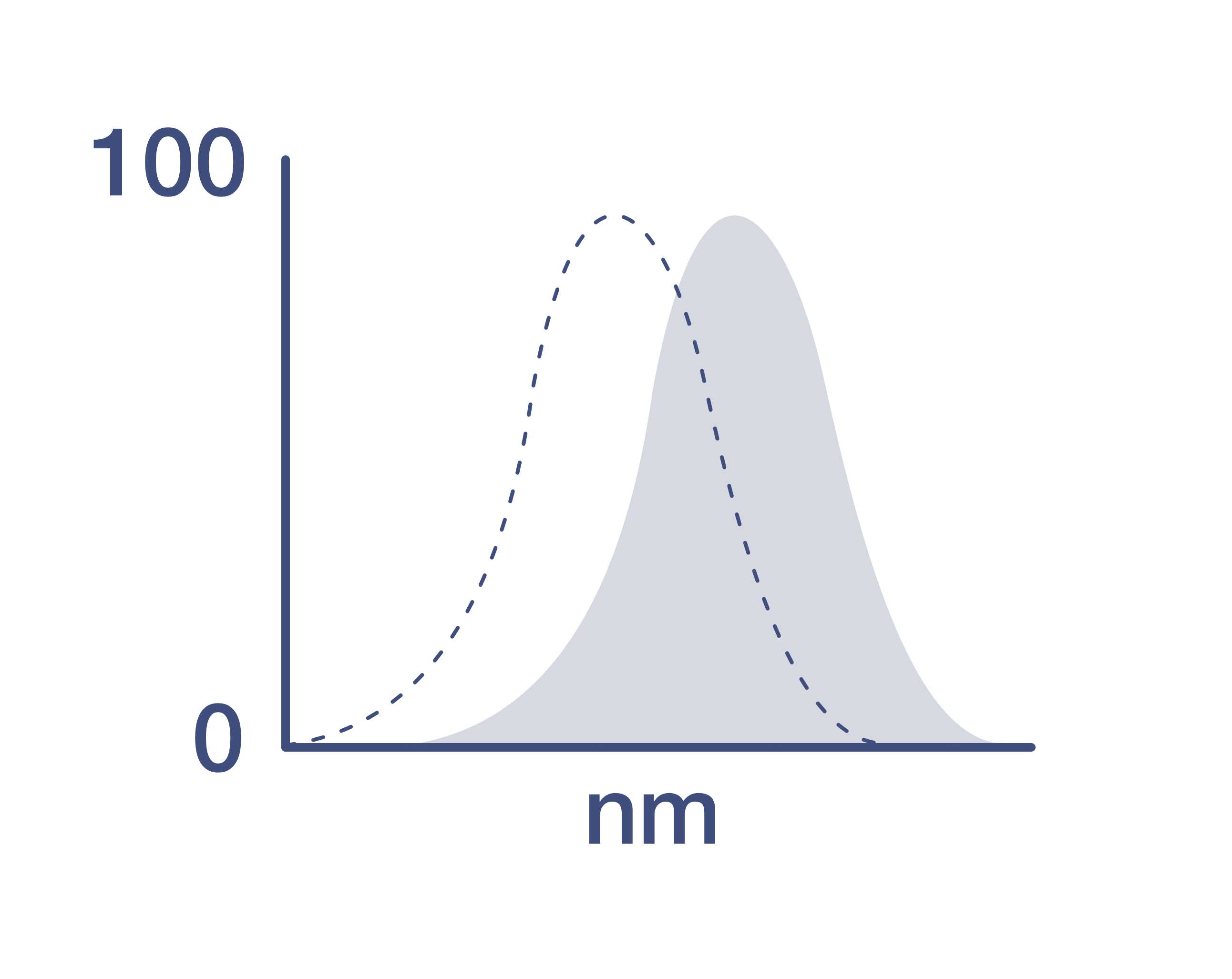
激发/发射光谱
300/603 nm
查看光谱
形式
Liquid
纯化类型
purified
保存液
0.05M borate, pH 8.3, with 1M betaine
内含物
0.05% sodium azide
保存条件
4°C
运输条件
Ambient (domestic); Wet ice (international)
RRID
产品详细信息
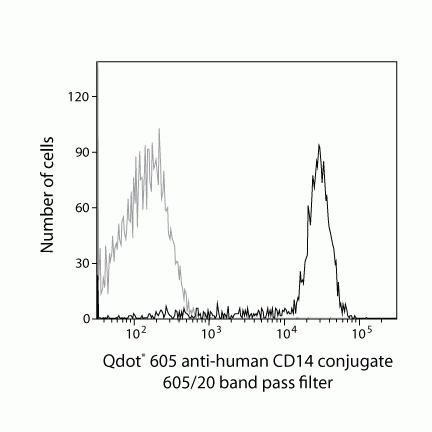
Qdot™ Antibody (Ab) conjugates possess a bright fluorescence emission that makes them well suited for the detection of low-abundance extracellular proteins. Approximately the same size as R-phycoerythrin (R-PE) and compatible with existing organic fluorophore conjugates, Qdot™ Ab conjugates can be excited with any wavelength below their emission maximum, but are best excited by UV or violet light. The narrow, symmetric emission profiles of Qdot Ab conjugates allow for minimal compensation when using a single excitation source, and the very long stoke shifts enable better, more efficient multicolor assays using the 405 nm violet laser. Available in multiple colors for use in flow cytometry, these advantages make Qdot Ab conjugates powerful tools for antibody labeling and staining. Staining: Stain cells in any standard staining buffer, such as phosphate buffered saline (PBS) with 1% bovine serum albumin (BSA). We recommend analysis of cells within 18 hours of staining. If dilute reagent is used, dilute only the quantity of reagent to be used within one day. Qdot Ab conjugates may be mixed with other antibodies, but use the diluted conjugates on the day of dilution. Qdot Ab conjugates can be used for surface staining applications with most conventional sample preparation reagents, such as Cal-Lyse™ Lysing Solution and FIX & PERM™ reagents, with minimal effect on fluorescence. We have observed some batches of BD FACS™ Lysing Solution to interfere with Qdot Ab conjugate fluorescence. Each lot has been tested by flow cytometry using human peripheral blood leukocytes. The isotype control for this antibody is mouse IgG2a, Cat. No. Q10014.
Instrument setup: Qdot Ab conjugates are excited optimally with UV or 405 nm light, although excitation can be obtained with any wavelength below the emission maximum of a given Qdot™ nanocrystal, such as with a 488-nm laser. Qdot Ab conjugates can be used on cytometers that do not have UV or violet excitation sources as long as they have appropriate emission filters. Make sure the cytometer has an appropriate emission filter for the Qdot Ab conjugate being used; alternate filters can be used as long as they capture the emission maximum, but filter width impacts spectral overlap corrections. And be sure to check for Qdot Ab conjugate emission in any channel that can capture nanocrystal emission off of other lasers on the cytometer. For Cat. No. Q10013: peak excitation 405 (488) nm/peak emission 605 nm; recommended filter 605/20 nm.
Store reagents at 2-8°C in the dark. Do not freeze. Because Qdot nanocrystals are conjugated to biological materials, some loss of activity may be observed with prolonged storage. When stored as instructed, expires six months from date of receipt unless otherwise indicated on product label. Qdot Ab conjugates are photostable, and do not need to be protected from light. However, if using Qdot Ab conjugates in combination with conventional fluorochrome conjugated antibodies, minimize light exposure during handling, incubation with cells, and prior to analysis. The Qdot Ab conjugates contain cadmium and selenium in an inorganic crystalline form. Dispose of the material in compliance with all applicable local, state, and federal regulations for disposal of these classes of material. For more information on the composition of these materials, consult the Safety Data Sheets (SDSs).
靶标信息
CD14 is a 55 kDa GPI-anchored glycoprotein that is constitutively expressed on the surface of mature monocytes, macrophages, and neutrophils. CD14 also serves as a multifunctional lipopolysaccharide receptor, and is released to the serum both as a secreted and enzymatically cleaved GPI-anchored form. CD14 binds lipopolysaccharide molecule in a reaction catalyzed by lipopolysaccharide-binding protein (LBP), an acute phase serum protein. The soluble sCD14 can discriminate slight structural differences between lipopolysaccharides and is important for neutralization of serum allochthonous lipopolysaccharides by reconstituted lipoprotein particles. Further, CD14 has been shown to bind apoptotic cells, and can affect allergic, inflammatory and infectious processes. Alternative splicing results in multiple transcript variants encoding the same CD14 isoform. Diseases associated with CD14 dysfunction include mycobacterium chelonae infection and Croup.
仅用于科研。不用于诊断过程。未经明确授权不得转售。
How to use the Panel Builder
Watch the video to learn how to use the Invitrogen Flow Cytometry Panel Builder to build your next flow cytometry panel in 5 easy steps.
生物信息学
蛋白别名: CD 14; cd14 monocyte; LPSR antibody; my23 antigen; myeloid cell-specific leucine-rich glycoprotein; sCD14; soluble CD14; unnamed protein product
UniProt ID: (Human) P08571
Entrez Gene ID: (Human) 929
positive regulation of cytokine production
response to molecule of bacterial origin
cell surface pattern recognition receptor signaling pathway
receptor-mediated endocytosis
phagocytosis
apoptotic process
cell surface receptor signaling pathway
response to bacterium
lipopolysaccharide-mediated signaling pathway
positive regulation of lipopolysaccharide-mediated signaling pathway
positive regulation of type I interferon production
positive regulation of interferon-gamma production
positive regulation of interleukin-8 production
positive regulation of tumor necrosis factor production
toll-like receptor 4 signaling pathway
positive regulation of toll-like receptor 4 signaling pathway
positive regulation of endocytosis
cellular response to molecule of bacterial origin
cellular response to lipopolysaccharide
cellular response to lipoteichoic acid
cellular response to diacyl bacterial lipopeptide
cellular response to triacyl bacterial lipopeptide
Disclaimer

Clicking the images or links will redirect you to a website hosted by BenchSci that provides third-party scientific content. Neither the content nor the BenchSci technology and processes for selection have been evaluated by us; we are providing them as-is and without warranty of any kind, including for use or application of the Thermo Fisher Scientific products presented.

