Search
Invitrogen
CD196 (CCR6) Monoclonal Antibody (sirx6), eFluor™ 660, eBioscience™
{{$productOrderCtrl.translations['antibody.pdp.commerceCard.promotion.promotions']}}
{{$productOrderCtrl.translations['antibody.pdp.commerceCard.promotion.promocode']}}: {{promo.promoCode}} {{promo.promoTitle}} {{promo.promoDescription}}. {{$productOrderCtrl.translations['antibody.pdp.commerceCard.promotion.learnmore']}}
{{$ctrl.translations['antibody.pdp.skuNotes.additionalInformation']}}:
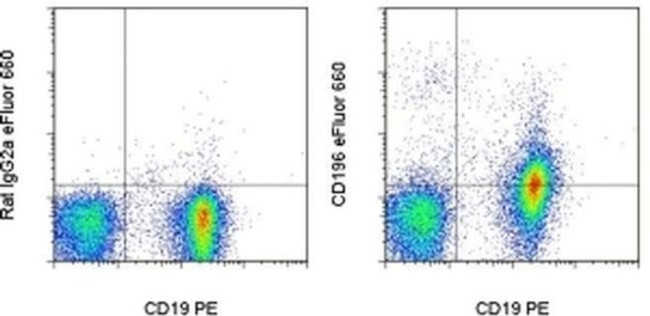
图: 1 / 2
CD196 (CCR6) Antibody (50-7196-82) in Flow
Staining of BALB/c splenocytes with Anti-Mouse CD19 PE (Product # 12-0193-82) and 0.5 µg of Rat IgG2a K Isotype Control eFluor® 660 (Product # 50-4321-82) (left) or 0.5 µg of Anti-Mouse CD196 (CCR6) eFluor® 660 (right). Cells in the lymphocyte gate were used for analysis.

Please note: We are reviewing Western blot images included in the antibody testing data in our catalog, including those provided by third parties. Unless expressly labeled or annotated as “raw-unedited”, Western blot images included in the antibody testing data in our catalog may have been edited, optimized or otherwise adjusted for presentation.


产品信息
50-7196-82
产品规格
种属反应
Mouse
已发表种属
Mouse
宿主/亚型
Rat
/ IgG2a, kappa
分类
Monoclonal
类型
Antibody
克隆号
sirx6
抗原
N-terminal extracellular domain of mouse CCR6
偶联物
eFluor™ 660
eFluor™ 660
eFluor™ 660
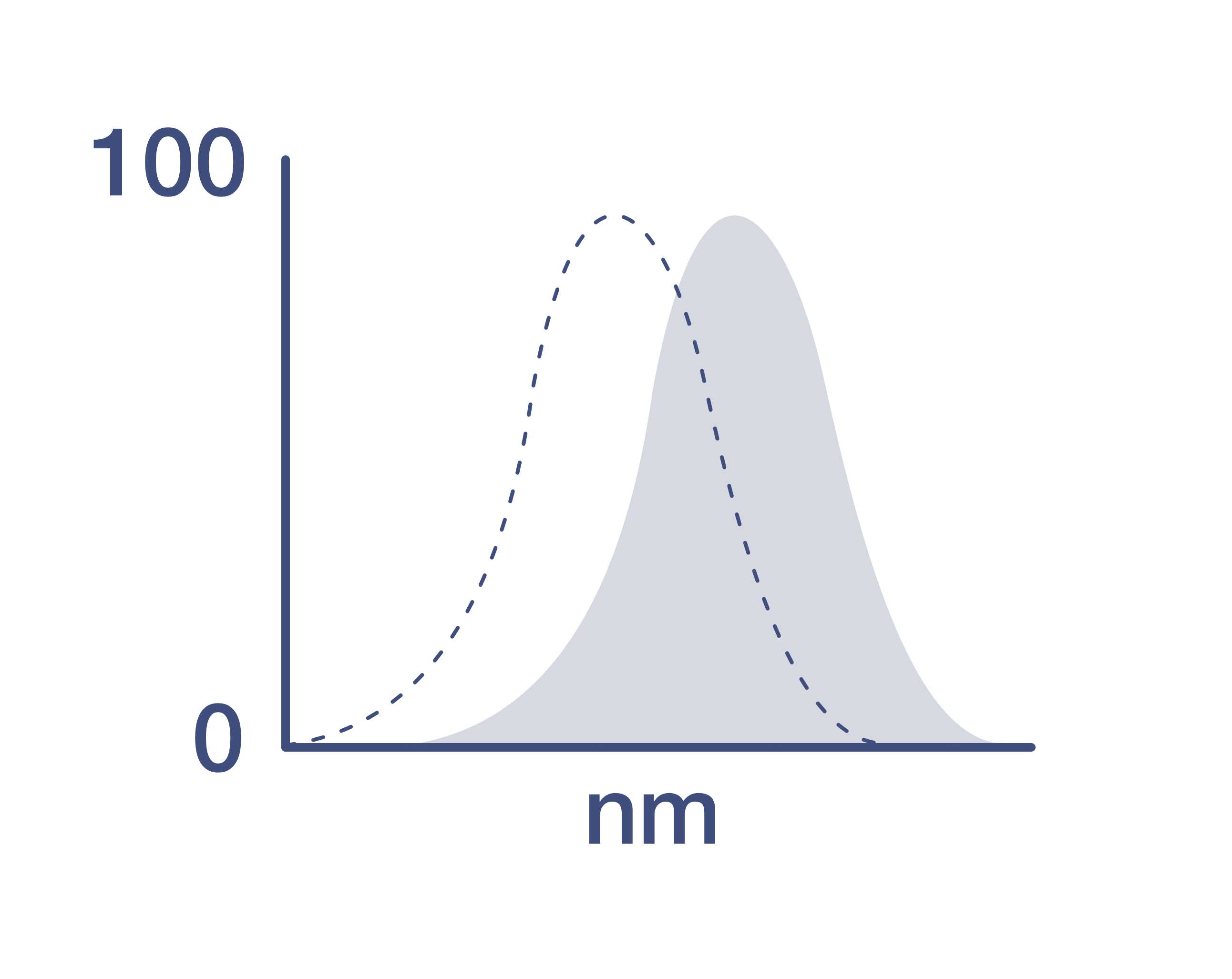
激发/发射光谱
651/668 nm
查看光谱
形式
Liquid
浓度
0.2 mg/mL
规格
100 µg
纯化类型
Affinity chromatography
保存液
PBS, pH 7.2
内含物
0.09% sodium azide
保存条件
4°C, store in dark, DO NOT FREEZE!
运输条件
Ambient (domestic); Wet ice (international)
RRID
产品详细信息
Description: The sirx6 monoclonal antibody reacts with mouse CD196 (CCR6). CD196 is a seven transmembrane G protein-coupled receptor expressed on T, B, dendritic, NK and Langerhans cells. This CC chemokine receptor uniquely binds MIP3a/CCL20, a chemoattractant for dendritic cells, effector/memory T cells, and B cells. CD196 is also involved in host defense and inflammation at epithelial sites. Furthermore, this receptor has been implicated in Th17 differentiation and CD4+FoxP3+ regulatory T cell development.
Due to expression characteristics of some chemokine receptors (shedding, surface cleavage or intracellular cycling), we recommend a fixation step after surface staining. Refer to Applications Tested for more information.
Applications Reported: This sirx6 antibody has been reported for use in flow cytometric analysis.
Applications Tested: This sirx6 antibody has been tested by flow cytometric analysis of mouse splenocytes. Cells are surface stained, then washed with Flow Cytometry Staining Buffer, immediately fixed with IC Fixation Buffer for 20-30 minutes, and then washed with Flow Cytometry Staining Buffer prior to analysis. This can be used at less than or equal to 1 µg per test. A test is defined as the amount (µg) of antibody that will stain a cell sample in a final volume of 100 µL. Cell number should be determined empirically but can range from 10^5 to 10^8 cells/test. It is recommended that the antibody be carefully titrated for optimal performance in the assay of interest.
eFluor® 660 is a replacement for Alexa Fluor® 647. eFluor® 660 emits at 659 nm and is excited with the red laser (633 nm). Please make sure that your instrument is capable of detecting this fluorochome.
Excitation: 633-647 nm; Emission: 668 nm; Laser: Red Laser.
Filtration: 0.2 µm post-manufacturing filtered.
靶标信息
CD196, also known as CCR6, is a member of the beta chemokine receptor family and is characterized by a seven transmembrane structure similar to G protein-coupled receptors. This receptor uniquely binds to macrophage inflammatory protein 3 alpha (MIP-3alpha/CCL20), which acts as a chemoattractant for dendritic cells, effector/memory T cells, and B cells. CCR6 is preferentially expressed by immature dendritic cells and memory T cells, playing a crucial role in host defense and inflammation at epithelial sites. It is important for B-lineage maturation and antigen-driven B-cell differentiation, and it regulates the migration and recruitment of dendritic and T cells during inflammatory and immunological responses. Additionally, CCR6 has been implicated in the differentiation of Th17 cells and the development of CD4+FoxP3+ regulatory T cells, highlighting its role in immune regulation. Alternatively spliced transcript variants encoding the same protein have been described for this gene, further emphasizing its functional diversity in immune processes.
仅用于科研。不用于诊断过程。未经明确授权不得转售。
How to use the Panel Builder
Watch the video to learn how to use the Invitrogen Flow Cytometry Panel Builder to build your next flow cytometry panel in 5 easy steps.
生物信息学
蛋白别名: chemokine (C-C motif) receptor 6; CKR6; DRY-6; unnamed protein product
基因别名: CC-CKR-6; CCR-6; Cmkbr6; KY411
UniProt ID: (Mouse) O54689
Entrez Gene ID: (Mouse) 12458
leukocyte migration involved in inflammatory response
chemotaxis
immune response
G-protein coupled receptor signaling pathway
positive regulation of cytosolic calcium ion concentration
positive regulation of epithelial cell migration
calcium-mediated signaling
isotype switching to IgA isotypes
cell chemotaxis
positive regulation of sperm motility involved in capacitation
chemokine-mediated signaling pathway
lymphocyte migration
T cell migration
thymocyte migration
DN2 thymocyte differentiation
DN3 thymocyte differentiation
regulation of T-helper 17 cell differentiation
regulation of T cell migration
positive regulation of dendritic cell chemotaxis
Disclaimer

Clicking the images or links will redirect you to a website hosted by BenchSci that provides third-party scientific content. Neither the content nor the BenchSci technology and processes for selection have been evaluated by us; we are providing them as-is and without warranty of any kind, including for use or application of the Thermo Fisher Scientific products presented.

