Search
NeoBiotechnologies
CD202b/TIE2/TEK (Tyrosine Kinase with Ig and EGF Homology Domains 2) Monoclonal Antibody (TEK/9411)
{{$productOrderCtrl.translations['antibody.pdp.commerceCard.promotion.promotions']}}
{{$productOrderCtrl.translations['antibody.pdp.commerceCard.promotion.promocode']}}: {{promo.promoCode}} {{promo.promoTitle}} {{promo.promoDescription}}. {{$productOrderCtrl.translations['antibody.pdp.commerceCard.promotion.learnmore']}}
{{$ctrl.translations['antibody.pdp.skuNotes.additionalInformation']}}:
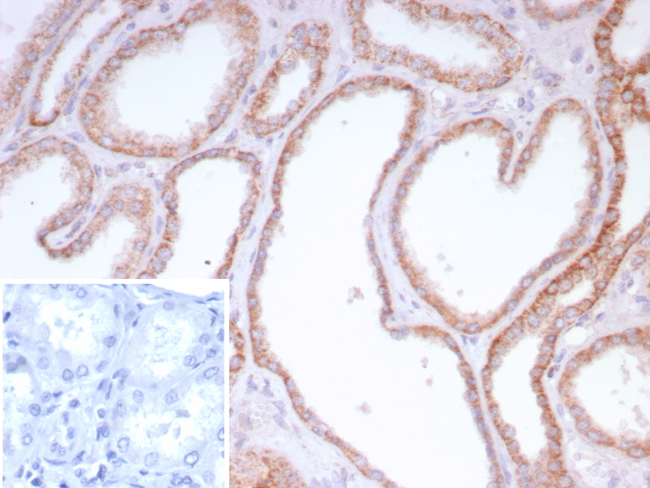
图: 1 / 3
CD202b/TIE2/TEK (Tyrosine Kinase with Ig and EGF Homology Domains 2) Antibody (7010-MSM10-P1ABX) in IHC (P)
Formalin-fixed, paraffin-embedded human renal cell carcinoma stained with TEK Mouse Monoclonal Antibody (TEK/9411). Inset: PBS instead of primary antibody; secondary only negative control.
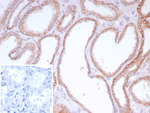
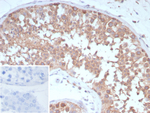
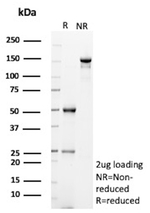
Please note: We are reviewing Western blot images included in the antibody testing data in our catalog, including those provided by third parties. Unless expressly labeled or annotated as “raw-unedited”, Western blot images included in the antibody testing data in our catalog may have been edited, optimized or otherwise adjusted for presentation.


产品信息
7010-MSM10-P1ABX
产品规格
种属反应
Human
宿主/亚型
Mouse
/ IgG1, kappa
分类
Monoclonal
类型
Antibody
克隆号
TEK/9411
抗原
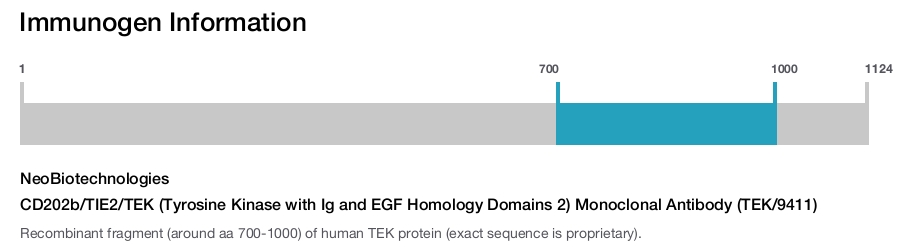
Recombinant fragment (around aa 700-1000) of human TEK protein (exact sequence is proprietary).
偶联物
Unconjugated
Unconjugated
Unconjugated
形式
Liquid
浓度
200 µg/mL
规格
100 µg
纯化类型
Protein G
保存液
PBS
内含物
no preservative
保存条件
-20°C or -80°C if preferred
运输条件
Ambient (domestic); Wet ice (international)
产品详细信息
Product cellular localization: Cell membrane, Cytoplasm, Secreted.
Positive control: Human lung, placenta or spleen.
Tissue specificity: Detected in umbilical vein endothelial cells. Proteolytic processing gives rise to a soluble extracellular domain that is detected in blood plasma (at protein level). Predominantly expressed in endothelial cells and their progenitors, the angioblasts. Has been directly found in placenta and lung, with a lower level in umbilical vein endothelial cells, brain and kidney.
靶标信息
The TEK receptor tyrosine kinase is expressed almost exclusively in endothelial cells. TEK signaling appears to be critical for endothelial cell-smooth muscle cell communication in venous morphogenesis, and defects in TEK are associated with inherited venous malformations. The ligand angiopoietin-1 binds to this receptor and mediates a signaling pathway that functions in embryonic vascular development. Immunoblotting showed that TIE2 expression was increased by thyroid-stimulating hormone and agents that increased intracellular cAMP. HSCs expressing the receptor tyrosine kinase TIE2 are quiescent and antiapoptotic and comprise a side population of HSCs that adhere to osteoblasts in the bone marrow niche.
仅用于科研。不用于诊断过程。未经明确授权不得转售。
篇参考文献 (0)
您是否在文献中引用过该产品?请点击下方按钮邮件告知我们。
生物信息学
蛋白别名: CD202b antigen; EC 2.7.10; EC 2.7.10.1; endothelial tyrosine kinase; TEK tyrosine kinase, endothelial; TEKT1; Tektin-1; tunica interna endothelial cell kinase; tyrosine kinase with Ig and EGF homology domains-2; tyrosine-protein kinase receptor TEK; tyrosine-protein kinase receptor TIE-2; unnamed protein product
基因别名: CD202B; GLC3E; TIE-2; TIE2; VMCM; VMCM1
UniProt ID: (Human) Q02763
Entrez Gene ID: (Human) 7010
angiogenesis
endothelial cell proliferation
regulation of endothelial cell proliferation
positive regulation of endothelial cell proliferation
sprouting angiogenesis
cell surface receptor signaling pathway
transmembrane receptor protein tyrosine kinase signaling pathway
cell-cell signaling
heart development
positive regulation of signal transduction
positive regulation of endothelial cell migration
negative regulation of angiogenesis
hemopoiesis
regulation of cell migration
cell-substrate adhesion
regulation of establishment or maintenance of cell polarity
substrate adhesion-dependent cell spreading
positive regulation of Rac protein signal transduction
positive regulation of Rho protein signal transduction
negative regulation of apoptotic process
regulation of vascular permeability
positive regulation of MAPK cascade
regulation of angiogenesis
positive regulation of angiogenesis
positive regulation of cell adhesion
Tie signaling pathway
negative regulation of inflammatory response
positive regulation of multicellular organismal process
positive regulation of focal adhesion assembly
positive regulation of protein kinase B signaling
definitive hemopoiesis
heart trabecula formation
positive regulation of ERK1 and ERK2 cascade
cellular response to mechanical stimulus
glomerulus vasculature development
regulation of intracellular signal transduction
positive regulation of intracellular signal transduction
regulation of endothelial cell apoptotic process
negative regulation of endothelial cell apoptotic process
Disclaimer

Clicking the images or links will redirect you to a website hosted by BenchSci that provides third-party scientific content. Neither the content nor the BenchSci technology and processes for selection have been evaluated by us; we are providing them as-is and without warranty of any kind, including for use or application of the Thermo Fisher Scientific products presented.

