Search
Invitrogen
CD40 Monoclonal Antibody (1C10), eBioscience™
{{$productOrderCtrl.translations['antibody.pdp.commerceCard.promotion.promotions']}}
{{$productOrderCtrl.translations['antibody.pdp.commerceCard.promotion.viewpromo']}}
{{$productOrderCtrl.translations['antibody.pdp.commerceCard.promotion.promocode']}}: {{promo.promoCode}} {{promo.promoTitle}} {{promo.promoDescription}}. {{$productOrderCtrl.translations['antibody.pdp.commerceCard.promotion.learnmore']}}
Additional Information:
{{banner.description}}
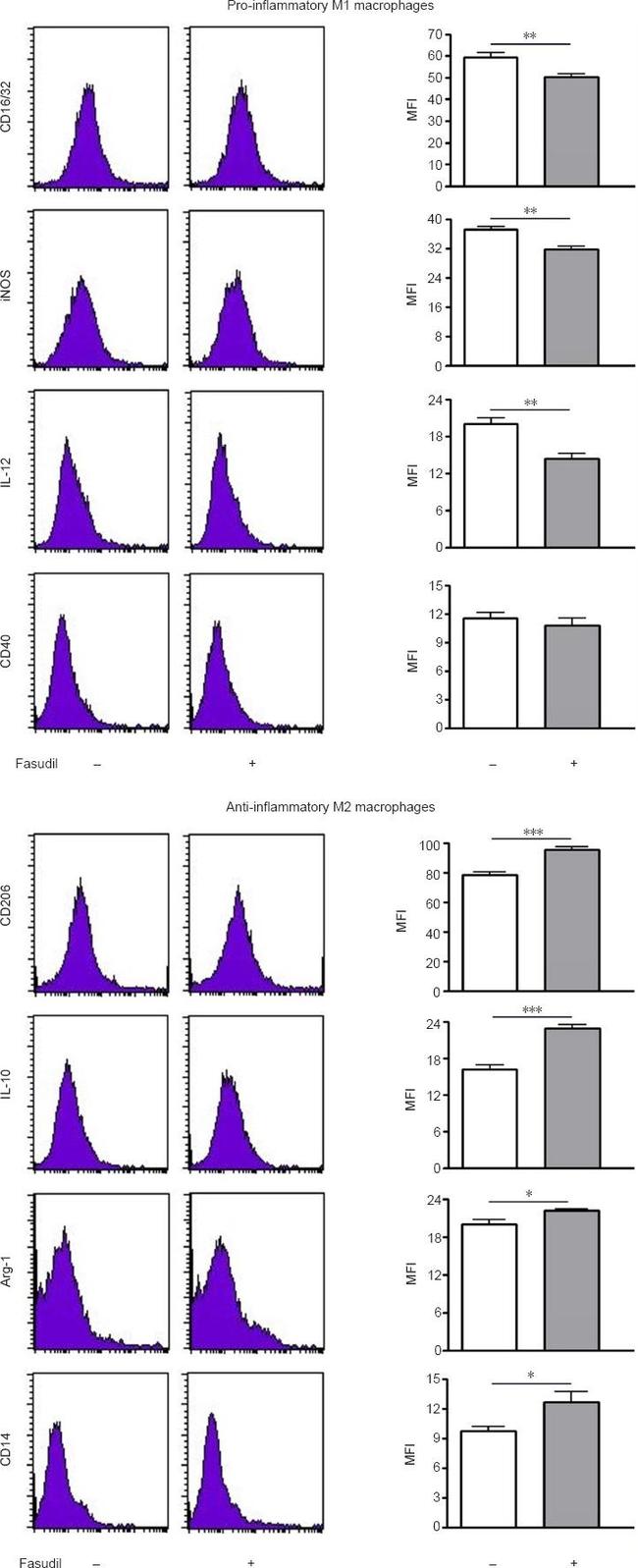
图: 1 / 31
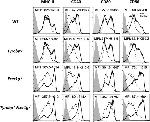
CD40 Antibody (14-0401-81) in Flow
Neural regeneration research 2024 -
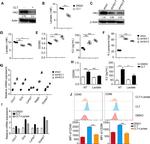
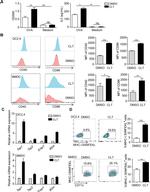
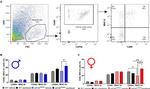
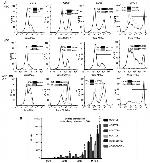
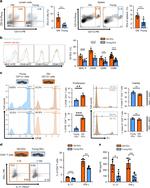
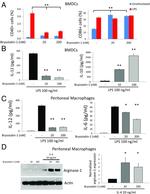
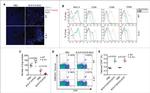
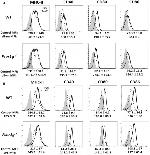
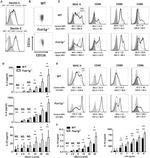
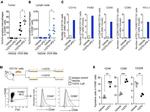
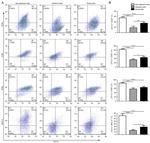
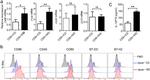
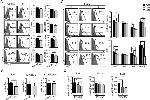
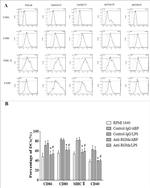
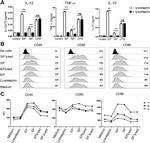
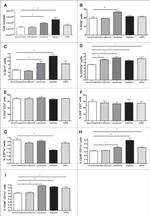
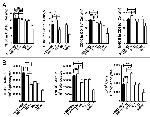
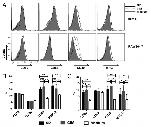
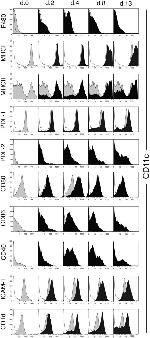
Fasudil affects macrophage polarization in vitro. A mouse model of chronic EAE was induced by subcutaneous injection of myelin oligodendrocyte glycoprotein peptde 35-55. Macrophages from EAE mice isolated with magnetic beads were treated with 15 mug/mL of Fasudil at 37degC in 5% CO 2 atmosphere for 72 hours. Cells were labeled with antibodies to CD16/32, iNOS, IL-12, CD40, CD206, IL-10, Arg-1, and CD14 and ... View More


产品信息
14-0401-81
应用
建议稀释比
已发表文章
产品规格
种属反应
Mouse
已发表种属
Mouse
宿主/亚型
Rat
/ IgG2a, kappa
分类
Monoclonal
类型
Antibody
克隆号
1C10
偶联物
Unconjugated
Unconjugated
Unconjugated
形式
Liquid
浓度
0.5 mg/mL
规格
50 µg
纯化类型
Affinity chromatography
保存液
PBS, pH 7.2
内含物
0.09% sodium azide
保存条件
4°C
运输条件
Ambient (domestic); Wet ice (international)
RRID
产品详细信息
Description: The 1C10 monoclonal antibody reacts with mouse CD40, a 45-50 kDa type I transmembrane glycoprotein. CD40 is a member of the TNFR family and is expressed by mouse B lymphocytes, follicular dendritic cells, thymic epithelium, and a subset of peripheral T cells. CD40 regulates B cell development/maturation by inducing Ig isotype switching and in combination with other signals such as IL-4, protects B cells from surface Ig-induced apoptosis and promotes proliferation. Interaction of CD40 with CD154 (gp39), its ligand on T cells, is important in T-B cell crosstalk and plays a role in costimulation and immune regulation.
The monoclonal antibody 1C10 is reported to have agonistic activity in vitro and in vivo.
Applications Reported: This 1C10 antibody has been reported for use in flow cytometric analysis, immunoprecipitation, and immunohistochemical staining of frozen tissue sections. (Please use Functional Grade purified 1C10, Product # 16-0401-82 , in functional assays).
Applications Tested: The 1C10 antibody has been tested by flow cytometric analysis of mouse splenocytes. This can be used at less than or equal to 1 µg per test. A test is defined as the amount (µg) of antibody that will stain a cell sample in a final volume of 100 µL. Cell number should be determined empirically but can range from 10^5 to 10^8 cells/test. It is recommended that the antibody be carefully titrated for optimal performance in the assay of interest.
Purity: Greater than 90%, as determined by SDS-PAGE.
Aggregation: Less than 10%, as determined by HPLC.
Filtration: 0.2 µm post-manufacturing filtered.
靶标信息
CD40 is a single-chain glycoprotein and a member of the tumor necrosis factor receptor (TNFR) family, exhibiting significant homology to the Hodgkin's disease-associated antigen, CD30. It is expressed by B lymphocytes, follicular dendritic cells, thymic epithelium, and a subset of peripheral T cells, as well as some epithelial cells, carcinomas, and lymphoid dendritic cells. Notably, CD40 is present on all B cells except plasma cells. CD40 plays a crucial role in regulating B cell development and maturation, inducing immunoglobulin isotype-switching, and protecting B cells from surface Ig-induced apoptosis when combined with other signals such as IL-4. It promotes proliferation and is essential for T cell-dependent immunoglobulin class switching, memory B cell development, and germinal center formation. The interaction between CD40 and its ligand CD154 (gp39) on T cells is vital for T-B cell crosstalk, costimulation, and immune regulation. Adaptor protein TNFR2 interacts with CD40, mediating signal transduction, while the AT-hook transcription factor AKNA is reported to regulate CD40 expression, which may be important for homotypic cell interactions. Additionally, the interaction between CD40 and its ligand is necessary for amyloid-beta-induced microglial activation, suggesting a role in the early pathogenesis of Alzheimer's disease. Two alternatively spliced transcript variants encoding distinct isoforms of CD40 have been identified. Diseases associated with CD40 dysfunction include Type 3 Hyper-IgM immunodeficiency and CD40 ligand deficiency, highlighting its importance in immune and inflammatory responses.
仅用于科研。不用于诊断过程。未经明确授权不得转售。
生物信息学
蛋白别名: B-cell surface antigen CD40; Bp50; CD antigen CD40; CD40; CD40L receptor; Immunoglobulin M; ImmunoglobulinM; MGC9013; sCD40; soluble CD40; T-cell differentiation antigen; Tumor necrosis factor receptor superfamily member 5; tumor necrosis factor receptor superfamily, member 5
基因别名: AI326936; Bp50; Cd40; GP39; HIGM1; IGM; IMD3; p50; T-BAM; Tnfrsf5; TRAP
UniProt ID: (Mouse) P27512
Entrez Gene ID: (Mouse) 21939
positive regulation of protein phosphorylation
immune system process
immune response-regulating cell surface receptor signaling pathway
cellular calcium ion homeostasis
inflammatory response
positive regulation of B cell proliferation
positive regulation of interleukin-12 production
B cell activation
positive regulation of tyrosine phosphorylation of Stat1 protein
defense response to protozoan
positive regulation of MAP kinase activity
protein kinase B signaling
positive regulation of GTPase activity
positive regulation of transcription from RNA polymerase II promoter
positive regulation of isotype switching to IgG isotypes
regulation of immune response
regulation of immunoglobulin secretion
positive regulation of NF-kappaB transcription factor activity
defense response to virus
positive regulation of protein kinase C signaling
positive regulation of endothelial cell apoptotic process
Disclaimer

Clicking the images or links will redirect you to a website hosted by BenchSci that provides third-party scientific content. Neither the content nor the BenchSci technology and processes for selection have been evaluated by us; we are providing them as-is and without warranty of any kind, including for use or application of the Thermo Fisher Scientific products presented.

