Search
Invitrogen
CD61 (Integrin beta 3) Monoclonal Antibody (2C9.G3), Functional Grade, eBioscience™
{{$productOrderCtrl.translations['antibody.pdp.commerceCard.promotion.promotions']}}
{{$productOrderCtrl.translations['antibody.pdp.commerceCard.promotion.promocode']}}: {{promo.promoCode}} {{promo.promoTitle}} {{promo.promoDescription}}. {{$productOrderCtrl.translations['antibody.pdp.commerceCard.promotion.learnmore']}}
{{$ctrl.translations['antibody.pdp.skuNotes.additionalInformation']}}:
-Functional-Grade-Flow-20170216130641.jpg?time=20240507 "CD61 (Integrin beta 3) Antibody in Flow Cytometry (Flow)")
-Functional-Grade-Flow-20170216130641.jpg?time=20240507)
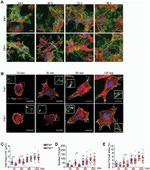
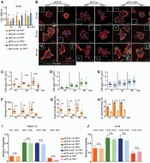
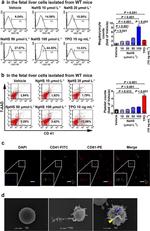
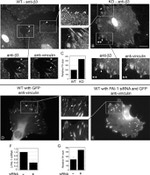

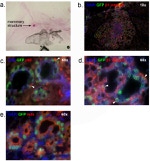
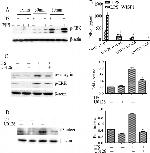
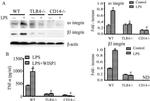
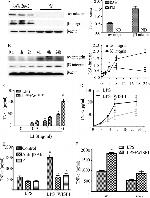
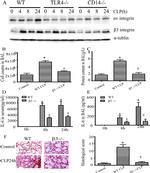
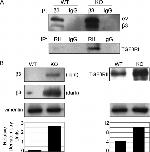
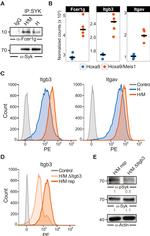
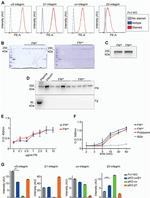
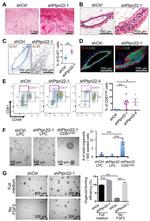
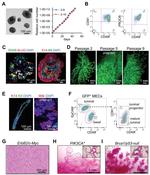
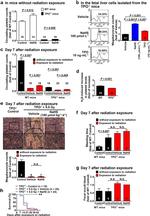
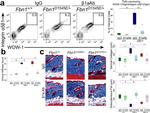
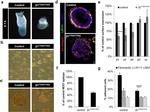
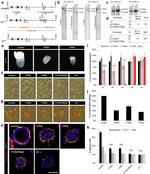
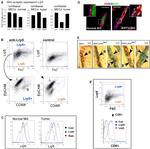
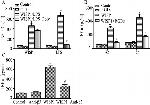
Please note: We are reviewing Western blot images included in the antibody testing data in our catalog, including those provided by third parties. Unless expressly labeled or annotated as “raw-unedited”, Western blot images included in the antibody testing data in our catalog may have been edited, optimized or otherwise adjusted for presentation.
-Functional-Grade-Flow-20170216130641.jpg?time=20240507?time=20240507 "CD61 (Integrin beta 3) Antibody (16-0611-82) in Flow")




产品信息
16-0611-82
应用
建议稀释比
已发表文章
产品规格
种属反应
Mouse,
Rat
已发表种属
Human,
Mouse
宿主/亚型
Armenian hamster
/ IgG
分类
Monoclonal
类型
Antibody
克隆号
2C9.G3
偶联物
Functional Grade
Functional Grade
Functional Grade
形式
Liquid
浓度
1 mg/mL
规格
100 µg
纯化类型
Affinity chromatography
保存液
PBS, pH 7.2
内含物
no preservative
保存条件
4°C
运输条件
Ambient (domestic); Wet ice (international)
RRID
产品详细信息
Description: The 2C9.G3 (HMb3-1) monoclonal antibody reacts with mouse and rat CD61, also known as the integrin beta3. CD61 is expressed by activated T cells, granulocytes, and platelet. CD61 associates non-covalently with two integrin alpha subunits; alphaV (CD51) to form Vitronectin Receptor and alphaIib (CD41) to form gpIIb/IIIa. These heterodimeric complexes are responsible for adhesion to extracellular matrix components including fibrinogen, fibronectin, fibronectin, vitronectin, thrombospondin and von Willebrand factor.
Applications Reported: The 2C9.G3 antibody has been reported for use in flow cytometric analysis. 2C9.G3 has also been reported in blocking of ligand binding and some adhesive processes.
Applications Tested: The 2C9.G3 antibody has been tested by flow cytometric analysis of mouse splenocytes and bone marrow cells. This can be used at less than or equal to 0.5 µg per test. A test is defined as the amount (µg) of antibody that will stain a cell sample in a final volume of 100 µL. Cell number should be determined empirically but can range from 10^5 to 10^8 cells/test. It is recommended that the antibody be carefully titrated for optimal performance in the assay of interest.
Storage and handling: Use in a sterile environment.
Filtration: 0.2 µm post-manufacturing filtered.
Purity: Greater than 90%, as determined by SDS-PAGE.
Endotoxin Level: Less than 0.001 ng/µg antibody, as determined by LAL assay.
Aggregation: Less than 10%, as determined by HPLC.
靶标信息
CD61, also known as GPIIIa or ITGB3, is a 105 kDa glycoprotein expressed on activated T cells, granulocytes, megakaryocytes, platelets, and their precursors. It plays a crucial role in platelet aggregation and functions as a receptor for fibrinogen, fibronectin, von Willebrand factor, vitronectin, and thrombospondin. CD61 forms heterodimeric complexes by associating non-covalently with integrin alpha subunits: alphaV (CD51) to create the Vitronectin Receptor and alphaIIb (CD41) to form gpIIb/IIIa. These complexes are responsible for adhesion to extracellular matrix components, facilitating cell adhesion and cell-surface mediated signaling. CD61 is expressed on platelets and megakaryocytes in association with CD41, and on endothelial cells, monocytes, and osteoclasts in association with CD51. The protein product of CD61 is composed of an alpha chain and a beta chain, which can combine with multiple partners to form different integrins. Its involvement in cell adhesion and signaling underscores its importance in normal physiological processes. Dysfunction of CD61 is associated with diseases such as Glanzmann Thrombasthenia and Platelet type-16 Bleeding Disorder, highlighting its critical role in hemostasis and platelet function.
仅用于科研。不用于诊断过程。未经明确授权不得转售。
生物信息学
蛋白别名: GPIIIa; integrin beta 3 (Cd61); integrin, beta 3; platelet glycoprotein IIIa (GP3A); platelet gpIIIa; platelet membrane glycoprotein IIIa; unnamed protein product
基因别名: CD61; GP3A; GPIIIa; INGRB3
UniProt ID: (Rat) Q8R2H2, (Mouse) O54890
Entrez Gene ID: (Rat) 29302, (Mouse) 16416
fibronectin binding
protease binding
protein disulfide isomerase activity
obsolete cell adhesion receptor activity
protein kinase C binding
integrin binding
protein binding
fibroblast growth factor binding
enzyme binding
C-X3-C chemokine binding
insulin-like growth factor I binding
neuregulin binding
identical protein binding
vascular endothelial growth factor receptor 2 binding
cell adhesion molecule binding
extracellular matrix binding
fibrinogen binding
positive regulation of endothelial cell proliferation
positive regulation of cell-matrix adhesion
positive regulation of leukocyte migration
cell-substrate junction assembly
cell adhesion
cell-matrix adhesion
integrin-mediated signaling pathway
embryo implantation
regulation of G-protein coupled receptor protein signaling pathway
positive regulation of cell proliferation
positive regulation of endothelial cell migration
positive regulation of gene expression
negative regulation of macrophage derived foam cell differentiation
positive regulation of fibroblast migration
negative regulation of lipid storage
negative regulation of low-density lipoprotein particle clearance
response to activity
smooth muscle cell migration
positive regulation of smooth muscle cell migration
cell migration
platelet activation
regulation of cell migration
positive regulation of cell migration
cell-substrate adhesion
negative regulation of lipid transport
regulation of protein localization
regulation of actin cytoskeleton organization
cell adhesion mediated by integrin
positive regulation of cell adhesion mediated by integrin
cell-cell adhesion mediated by integrin
positive regulation of osteoblast proliferation
heterotypic cell-cell adhesion
substrate adhesion-dependent cell spreading
response to platelet-derived growth factor
cellular response to platelet-derived growth factor stimulus
apolipoprotein A-I-mediated signaling pathway
apoptotic cell clearance
positive regulation of angiogenesis
positive regulation of bone resorption
positive regulation of cell adhesion
viral entry into host cell
platelet-derived growth factor receptor signaling pathway
positive regulation of fibroblast proliferation
mesodermal cell differentiation
positive regulation of smooth muscle cell proliferation
negative regulation of lipoprotein metabolic process
regulation of developmental process
negative chemotaxis
regulation of transport
regulation of multicellular organismal process
regulation of release of sequestered calcium ion into cytosol
regulation of serotonin uptake
regulation of protein tyrosine kinase activity
positive regulation of ERK1 and ERK2 cascade
platelet aggregation
cellular response to mechanical stimulus
cellular response to xenobiotic stimulus
positive regulation of glomerular mesangial cell proliferation
blood coagulation, fibrin clot formation
maintenance of postsynaptic specialization structure
regulation of postsynaptic neurotransmitter receptor internalization
regulation of postsynaptic neurotransmitter receptor diffusion trapping
positive regulation of substrate adhesion-dependent cell spreading
positive regulation of adenylate cyclase-inhibiting opioid receptor signaling pathway
positive regulation of vascular endothelial growth factor signaling pathway
regulation of extracellular matrix organization
cellular response to insulin-like growth factor stimulus
negative regulation of endothelial cell apoptotic process
positive regulation of T cell migration
positive regulation of osteoclast differentiation
cell projection morphogenesis
regulation of neurotransmitter uptake
Disclaimer

Clicking the images or links will redirect you to a website hosted by BenchSci that provides third-party scientific content. Neither the content nor the BenchSci technology and processes for selection have been evaluated by us; we are providing them as-is and without warranty of any kind, including for use or application of the Thermo Fisher Scientific products presented.

