Search
Invitrogen
CD66e/CD3 (Cibisatamab Biosimilar) Recombinant Human Monoclonal Antibody
{{$productOrderCtrl.translations['antibody.pdp.commerceCard.promotion.promotions']}}
{{$productOrderCtrl.translations['antibody.pdp.commerceCard.promotion.promocode']}}: {{promo.promoCode}} {{promo.promoTitle}} {{promo.promoDescription}}. {{$productOrderCtrl.translations['antibody.pdp.commerceCard.promotion.learnmore']}}
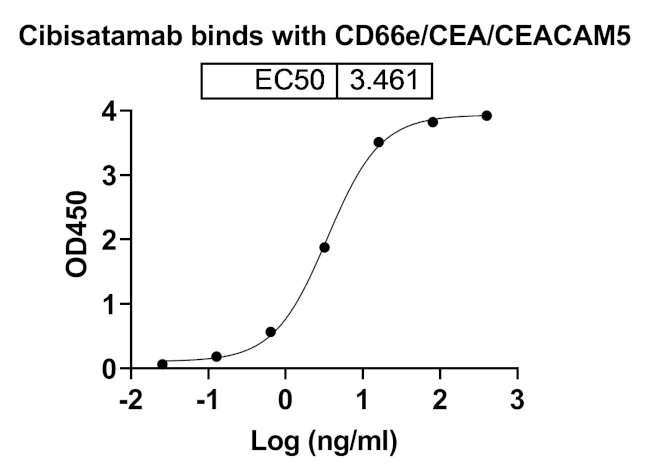
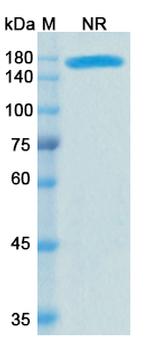
Please note: We are reviewing Western blot images included in the antibody testing data in our catalog, including those provided by third parties. Unless expressly labeled or annotated as “raw-unedited”, Western blot images included in the antibody testing data in our catalog may have been edited, optimized or otherwise adjusted for presentation.


产品信息
MA5-42186
产品规格
种属反应
Human
宿主/亚型
Human
/ IgG1, kappa/IgG1, lambda
Expression System
CHO cells
分类
Recombinant Monoclonal
类型
Antibody
抗原
Human CD3E/CEACAM5
偶联物
Unconjugated
Unconjugated
Unconjugated
形式
Liquid
浓度
2.54 mg/mL
规格
100 µg
纯化类型
Protein A/G
保存液
PBS, pH 7.4
内含物
no preservative
保存条件
-20°C, Avoid Freeze/Thaw Cycles
运输条件
Ambient (domestic); Wet ice (international)
RRID
产品详细信息
Endotoxin level < 0.01EU/µg by LAL method
Use a manual defrost freezer and avoid repeated freeze thaw cycles. Store at 2 to 8 °C for one week. Store at -20 to -80 °C for twelve months from the date of receipt.
This product is a Humanized mouse antibody.
靶标信息
CEA (Carcinoembryonic Antigen, CD66e) is a glycoprotein normally produced during fetal development in the gastrointestinal tract and re-expressed at high levels in many cancers, particularly colorectal and other adenocarcinomas. It belongs to the immunoglobulin superfamily and contains one variable-like N domain and six constant-like domains (A1-A3, B1-B3). CEA is widely used as a tumor marker, especially for adenocarcinomas of the digestive tract. It is helpful in identifying the origin of metastatic adenocarcinomas and in distinguishing pulmonary adenocarcinoma (often CEA-positive) from pleural mesothelioma (rarely CEA-positive). The CEA gene family, including CEA cell adhesion molecules and pregnancy-specific glycoproteins, is clustered on chromosome 19 and includes several pseudogenes. Originally identified as a biliary glycoprotein, CEA is now recognized as a cell adhesion molecule expressed on epithelial, endothelial, and some immune cells. It mediates homophilic and heterophilic cell adhesion and has been implicated in tissue organization, angiogenesis, apoptosis, metastasis, tumor progression, and modulation of immune responses. Multiple transcript variants exist, though not all are fully characterized.
CD3 is a multi-subunit complex (gamma, delta, epsilon, and zeta) essential for assembly and surface expression of the T cell receptor (TCR). These immunoglobulin superfamily proteins are encoded by closely linked genes on chromosome 11 and are expressed on thymocytes and all mature T cells, but not on B or NK cells. CD3 transduces antigen-recognition signals into T cells through tyrosine-based motifs in its cytoplasmic tails. TCR engagement activates signaling pathways that drive T cell activation, proliferation, survival, or growth arrest. CD3 defects cause immunodeficiency, underscoring its critical role in immune regulation.
仅用于科研。不用于诊断过程。未经明确授权不得转售。
篇参考文献 (0)
您是否在文献中引用过该产品?请点击下方按钮邮件告知我们。
Disclaimer

Clicking the images or links will redirect you to a website hosted by BenchSci that provides third-party scientific content. Neither the content nor the BenchSci technology and processes for selection have been evaluated by us; we are providing them as-is and without warranty of any kind, including for use or application of the Thermo Fisher Scientific products presented.

