Search
Invitrogen
Caspase 1 Monoclonal Antibody (14F468)
{{$productOrderCtrl.translations['antibody.pdp.commerceCard.promotion.promotions']}}
{{$productOrderCtrl.translations['antibody.pdp.commerceCard.promotion.promocode']}}: {{promo.promoCode}} {{promo.promoTitle}} {{promo.promoDescription}}. {{$productOrderCtrl.translations['antibody.pdp.commerceCard.promotion.learnmore']}}
{{$ctrl.translations['antibody.pdp.skuNotes.additionalInformation']}}:
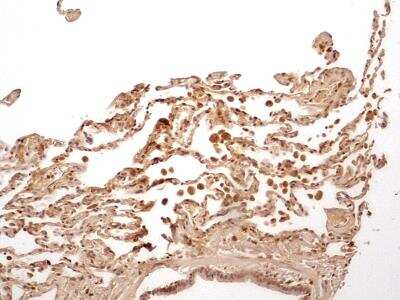
图: 1 / 12
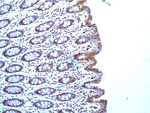
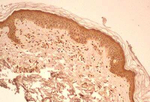
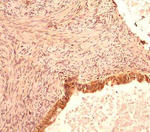
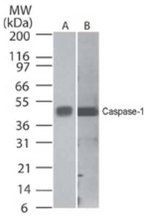
Caspase 1 Antibody (MA5-16215) in IHC (P)
Immunohistochemistry analysis of Caspase 1 in normal lung from human. Samples were incubated with Caspase 1 monoclonal antibody (Product # MA5-16215) using a dilution of 5 µg/mL. In this representative lung section, different type of cells including pseudostratified columnar epithelium of bronchiole and the simple squamous epithelium of alveoli may be seen to develop immunoreactivity for Caspase 1. [10X Mag... View More
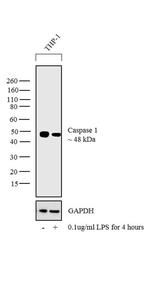

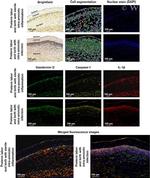
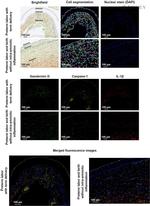
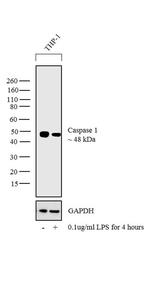
Please note: We are reviewing Western blot images included in the antibody testing data in our catalog, including those provided by third parties. Unless expressly labeled or annotated as “raw-unedited”, Western blot images included in the antibody testing data in our catalog may have been edited, optimized or otherwise adjusted for presentation.


产品信息
MA5-16215
应用
建议稀释比
已发表文章
产品规格
种属反应
Human,
Mouse,
Rat
已发表种属
Human,
Rat
宿主/亚型
Mouse
/ IgG1, kappa
分类
Monoclonal
类型
Antibody
克隆号
14F468
抗原
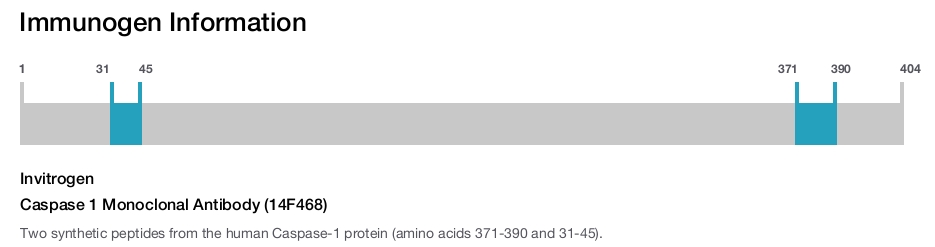
Two synthetic peptides from the human Caspase-1 protein (amino acids 371-390 and 31-45).
偶联物
Unconjugated
Unconjugated
Unconjugated
形式
Liquid
浓度
1.0 mg/mL
规格
100 µg
纯化类型
Protein G
保存液
PBS
内含物
0.02% sodium azide
保存条件
Store at 4°C short term. For long term storage, store at -20°C, avoiding freeze/thaw cycles.
运输条件
Ambient (domestic); Wet ice (international)
RRID
产品详细信息
Suggested positive control: 3T3 whole cell lysate, antigen standard for CASP1 (transient overexpression lysate), HeLa or NIH-3T3, Hela whole cell lysate.
Immunogen's sequence similarity with other species: Porcine/Pig (85%), Equine/Horse (80%), Canine (70%).
Staining of formalin-fixed tissues is enhanced by boiling tissue sections in 10 mM sodium citrate buffer, pH 6.0 for 10-20 min followed by cooling at RT for 20 min.
靶标信息
Caspases are a family of cysteine proteases that can be divided into the apoptotic and inflammatory caspase subfamilies. Unlike the apoptotic caspases, members of the inflammatory subfamily are generally not involved in cell death but are associated with the immune response to microbial pathogens. Members of this subfamily include caspase-1, -4, -5, and -12 and can activate proinflammatory cytokines such as IL-1-b and IL-18. Caspase-1 was initially identified as an IL-1-b-converting enzyme; later experiments revealed it to be a mammalian homolog of the C. elegans cell death gene ced-3 whose overexpression can induce apoptosis in fibroblasts.
仅用于科研。不用于诊断过程。未经明确授权不得转售。
生物信息学
蛋白别名: CASP-1; caspase 1, apoptosis-related cysteine peptidase; Caspase I; Caspase1; cysteine protease; IL-1 beta-converting enzyme; IL-1B converting enzyme; IL-1BC; IL1B-convertase; interleukin 1, beta, convertase; interleukin 1-B converting enzyme; Interleukin 1beta converting enzyme; interleukin-1 beta convertase; interleukin-1 beta-converting enzyme; p45; unnamed protein product
基因别名: ICE; IL1BC; P45
UniProt ID: (Human) P29466, (Mouse) P29452
Entrez Gene ID: (Human) 834, (Mouse) 12362, (Rat) 25166
endopeptidase activity
cysteine-type endopeptidase activity
protein binding
cysteine-type peptidase activity
cysteine-type endopeptidase activator activity involved in apoptotic process
enzyme binding
kinase binding
cytokine binding
identical protein binding
CARD domain binding
peptidase activity
scaffold protein binding
negative regulation of transcription from RNA polymerase II promoter
response to hypoxia
microglial cell activation
plasma membrane repair
positive regulation of cytokine production
pattern recognition receptor signaling pathway
proteolysis
inflammatory response
osmosensory signaling pathway
myoblast fusion
memory
protein secretion
response to xenobiotic stimulus
response to bacterium
regulation of autophagy
programmed cell death
protein processing
protein autoprocessing
protein catabolic process
response to lipopolysaccharide
positive regulation of interleukin-1 alpha production
positive regulation of interleukin-1 beta production
positive regulation of interleukin-18 production
response to ATP
interleukin-18-mediated signaling pathway
defense response to bacterium
regulation of apoptotic process
positive regulation of apoptotic process
positive regulation of I-kappaB kinase/NF-kappaB signaling
positive regulation of circadian sleep/wake cycle, non-REM sleep
ceramide biosynthetic process
regulation of inflammatory response
positive regulation of inflammatory response
defense response to Gram-negative bacterium
protein maturation
defense response to virus
mitochondrial depolarization
membrane hyperpolarization
protein poly-ADP-ribosylation
pyroptosis
interleukin-1-mediated signaling pathway
cellular response to lipopolysaccharide
cellular response to interferon-gamma
programmed necrotic cell death
cytokine precursor processing
signaling receptor ligand precursor processing
AIM2 inflammasome complex assembly
pyroptotic cell death
positive regulation of NLRP3 inflammasome complex assembly
response to paraquat
positive regulation of tumor necrosis factor-mediated signaling pathway
apoptotic process
signal transduction
positive regulation of neuron apoptotic process
icosanoid biosynthetic process
cellular response to mechanical stimulus
positive regulation of release of cytochrome c from mitochondria
midgut development
response to toxic substance
lung development
animal organ development
system development
Disclaimer

Clicking the images or links will redirect you to a website hosted by BenchSci that provides third-party scientific content. Neither the content nor the BenchSci technology and processes for selection have been evaluated by us; we are providing them as-is and without warranty of any kind, including for use or application of the Thermo Fisher Scientific products presented.

