Search
Invitrogen
Cullin 4A/4B Recombinant Rabbit Monoclonal Antibody (K01_1P95)
{{$productOrderCtrl.translations['antibody.pdp.commerceCard.promotion.promotions']}}
{{$productOrderCtrl.translations['antibody.pdp.commerceCard.promotion.promocode']}}: {{promo.promoCode}} {{promo.promoTitle}} {{promo.promoDescription}}. {{$productOrderCtrl.translations['antibody.pdp.commerceCard.promotion.learnmore']}}
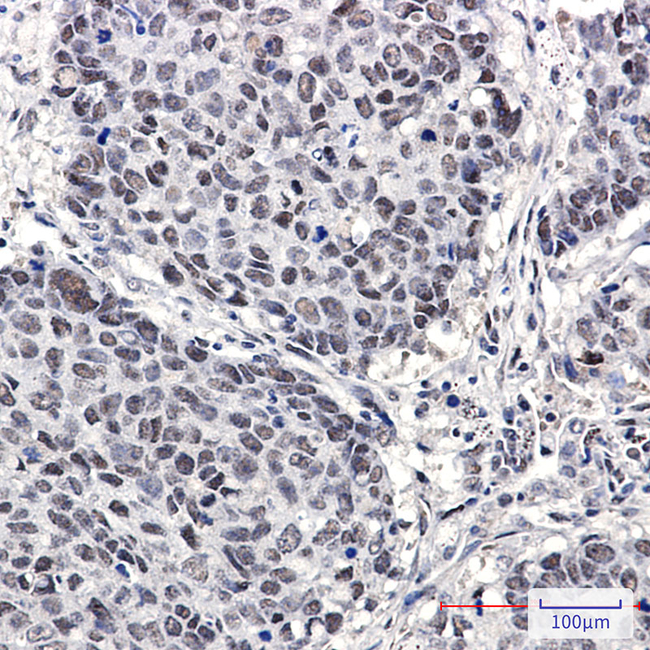
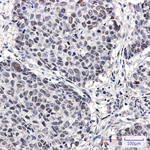
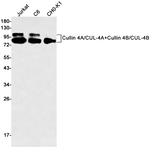
Please note: We are reviewing Western blot images included in the antibody testing data in our catalog, including those provided by third parties. Unless expressly labeled or annotated as “raw-unedited”, Western blot images included in the antibody testing data in our catalog may have been edited, optimized or otherwise adjusted for presentation.


产品信息
MA567853
产品规格
种属反应
Hamster,
Human,
Rat
宿主/亚型
Rabbit
/ IgG
Expression System
HEK293F
分类
Recombinant Monoclonal
类型
Antibody
克隆号
K01_1P95
抗原
A synthetic peptide of human Cullin 4B.
偶联物
Unconjugated
Unconjugated
Unconjugated
形式
Liquid
浓度
1 mg/mL
规格
100 µg
纯化类型
Protein A/G
保存液
50mM tris glycine, pH 7.4, with 0.05% BSA, 150mM NaCl, 40% glycerol
内含物
0.01% sodium azide
保存条件
Store at 4°C short term. For long term storage, store at -20°C, avoiding freeze/thaw cycles.
运输条件
Ambient (domestic); Wet ice (international)
靶标信息
Cullin 4A and Cullin 4B, encoded by CUL4A and CUL4B, are scaffold proteins that assemble cullin RING E3 ubiquitin ligase complexes known as CRL4. These complexes typically pair CUL4A or CUL4B with the adaptor DDB1 and diverse DCAF substrate receptors to target numerous proteins for ubiquitination, thereby controlling DNA replication licensing through CDT1 turnover, nucleotide excision repair via regulation of DDB2 and XPC, chromatin dynamics, cell cycle progression, and signal transduction. CUL4A is frequently amplified or overexpressed in several cancers and has been linked to increased proliferation and therapy resistance, while CUL4B mutations cause an X linked intellectual disability syndrome with developmental anomalies, reflecting nonredundant functions and distinct subcellular localization patterns. CRL4 activity is regulated by NEDD8 conjugation known as neddylation, by deneddylation through the COP9 signalosome, and by availability of DCAF receptors, making the pathway sensitive to small molecule neddylation inhibitors such as MLN4924 also known as pevonedistat. Experimental interrogation of CUL4 biology includes proteomics to map DCAF interactions, ubiquitinome profiling to define substrates, and genetic perturbation to dissect isoform specific roles in genome integrity and oncogenesis.
仅用于科研。不用于诊断过程。未经明确授权不得转售。
篇参考文献 (0)
您是否在文献中引用过该产品?请点击下方按钮邮件告知我们。
生物信息学
蛋白别名: CUL-4A; cullin 4A; cullin 4B; DDB1-CUL4A complex subunit; ubiquitin E3 ligase; unnamed protein product
基因别名: CUL-4B; Cullin-4A; Cullin-4B; I79_011074; I79_016255; MRXHF2; MRXS15; MRXSC; RGD1563853; RGD1564494; SFM2
UniProt ID: (Human) Q13619, (Human) Q13620
Entrez Gene ID: (Human) 8451, (Human) 8450, (Rat) 361181, (Chinese hamster) 100760883, (Chinese hamster) 100763989, (Rat) 302502
G1/S transition of mitotic cell cycle
in utero embryonic development
nucleotide-excision repair
ubiquitin-dependent protein catabolic process
cellular response to DNA damage stimulus
spermatogenesis
cell proliferation
regulation of autophagy
protein ubiquitination
regulation of DNA-dependent DNA replication initiation
replication fork processing
developmental process
regulation of natural killer cell activation
cellular response to UV
regulation of gene expression, epigenetic
T cell activation
regulation of cell proliferation
ribosome biogenesis
regulation of apoptotic process
proteasome-mediated ubiquitin-dependent protein catabolic process
positive regulation of protein catabolic process
regulation of embryonic development
regulation of protein metabolic process
regulation of gene silencing by miRNA
regulation of cellular response to stress
intrinsic apoptotic signaling pathway
ubiquitin-dependent protein catabolic process via the C-end degron rule pathway
regulation of cell cycle phase transition
regulation of mitotic cytokinesis
negative regulation of adipose tissue development
regulation of stem cell population maintenance
protein polyubiquitination
gene expression
proteasomal protein catabolic process
astrocyte differentiation
UV-damage excision repair
positive regulation of cell proliferation
hemopoiesis
negative regulation of granulocyte differentiation
somatic stem cell population maintenance
positive regulation of G1/S transition of mitotic cell cycle
regulation of DNA damage checkpoint
regulation of nucleotide-excision repair
neuron projection development
Disclaimer

Clicking the images or links will redirect you to a website hosted by BenchSci that provides third-party scientific content. Neither the content nor the BenchSci technology and processes for selection have been evaluated by us; we are providing them as-is and without warranty of any kind, including for use or application of the Thermo Fisher Scientific products presented.

