Search
Abnova
FADD Polyclonal Antibody, MaxPab™
{{$productOrderCtrl.translations['antibody.pdp.commerceCard.promotion.promotions']}}
{{$productOrderCtrl.translations['antibody.pdp.commerceCard.promotion.promocode']}}: {{promo.promoCode}} {{promo.promoTitle}} {{promo.promoDescription}}. {{$productOrderCtrl.translations['antibody.pdp.commerceCard.promotion.learnmore']}}
{{$ctrl.translations['antibody.pdp.skuNotes.additionalInformation']}}:
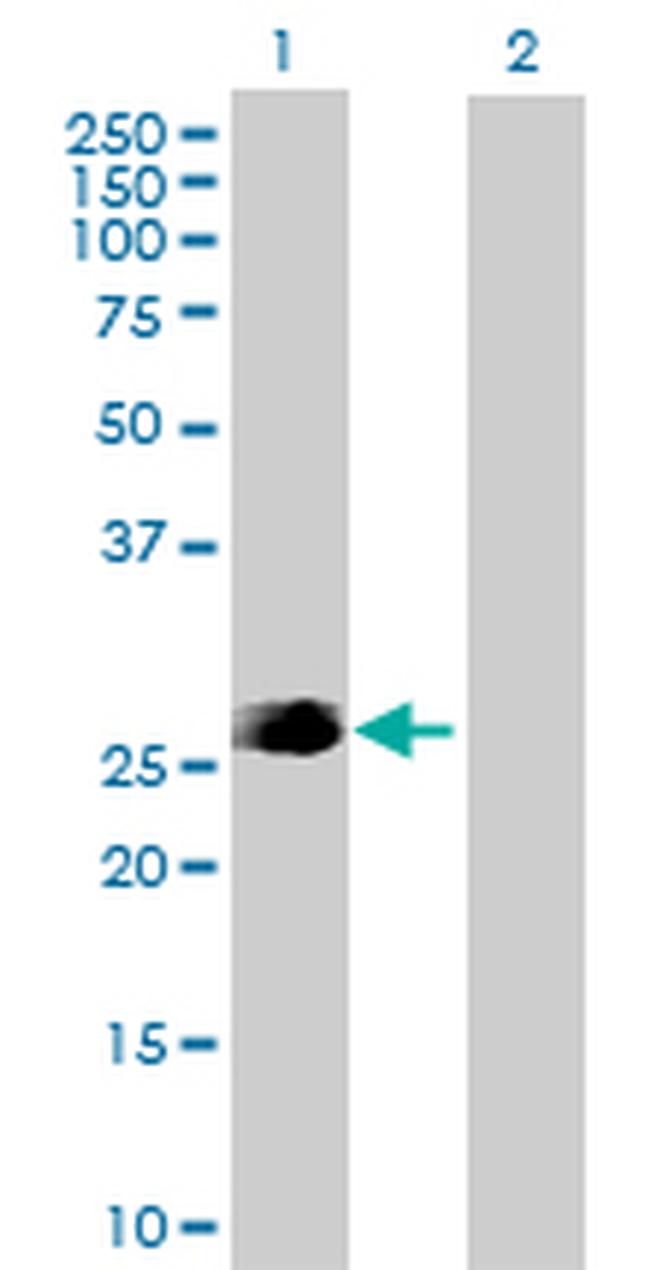
图: 1 / 3
FADD Antibody (H00008772-D01P) in WB
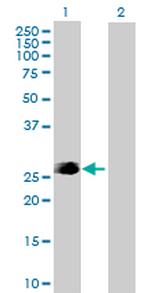
Western Blot analysis of FADD expression in transfected 293T cell line (H00008772-T01) by FADD MaxPab polyclonal antibody.
Lane 1: FADD transfected lysate(23.30 KDa).
Lane 2: Non-transfected lysate.
Lane 1: FADD transfected lysate(23.30 KDa).
Lane 2: Non-transfected lysate.
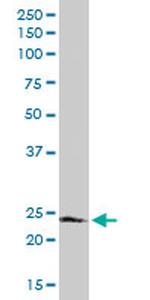
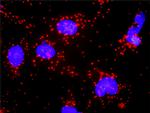
Please note: We are reviewing Western blot images included in the antibody testing data in our catalog, including those provided by third parties. Unless expressly labeled or annotated as “raw-unedited”, Western blot images included in the antibody testing data in our catalog may have been edited, optimized or otherwise adjusted for presentation.


产品信息
H00008772-D01P
产品规格
种属反应
Human
宿主/亚型
Rabbit
/ IgG
分类
Polyclonal
类型
Antibody
抗原
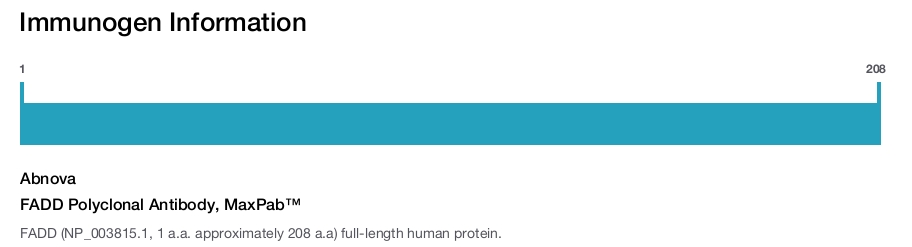
FADD (NP_003815.1, 1 a.a. approximately 208 a.a) full-length human protein.
偶联物
Unconjugated
Unconjugated
Unconjugated
形式
Liquid
浓度
See Label
规格
100 µg
纯化类型
Affinity chromatography
保存液
PBS, pH 7.4
内含物
no preservative
保存条件
-20°C, Avoid Freeze/Thaw Cycles
运输条件
Ambient (domestic); Wet ice (international)
产品详细信息
Sequence of this protein is as follows: MDPFLVLLHS VSSSLSSSEL TELKFLCLGR VGKRKLERVQ SGLDLFSMLL EQNDLEPGHT ELLRELLASL RRHDLLRRVD DFEAGAAAGA APGEEDLCAA FNVICDNVGK DWRRLARQLK VSDTKIDSIE DRYPRNLTER VRESLRIWKN TEKENATVAH LVGALRSCQM NLVADLVQEV QQARDLQNRS GAMSPMSWNS DASTSEAS
靶标信息
The protein encoded by this gene is an adaptor molecule that interacts with various cell surface receptors and mediates cell apoptotic signals. Through its C-terminal death domain, this protein can be recruited by TNFRSF6/Fas-receptor, tumor necrosis factor receptor, TNFRSF25, and TNFSF10/TRAIL-receptor, and thus it participates in the death signaling initiated by these receptors. Interaction of this protein with the receptors unmasks the N-terminal effector domain of this protein, which allows it to recruit caspase-8, and thereby activate the cysteine protease cascade. Knockout studies in mice also suggest the importance of this protein in early T cell development.
仅用于科研。不用于诊断过程。未经明确授权不得转售。
篇参考文献 (0)
您是否在文献中引用过该产品?请点击下方按钮邮件告知我们。
生物信息学
蛋白别名: FADD; Fas (TNFRSF6)-associated via death domain; Fas-associating death domain-containing protein; Fas-associating protein with death domain; GIG3; growth-inhibiting gene 3 protein; mediator of receptor-induced toxicity; MGC8528; unnamed protein product
基因别名: GIG3; IMD90; MORT1
UniProt ID: (Human) Q13158
Entrez Gene ID: (Human) 8772
protease binding
death receptor binding
protein binding
protein binding, bridging
tumor necrosis factor receptor superfamily binding
receptor serine/threonine kinase binding
signaling adaptor activity
death effector domain binding
identical protein binding
macromolecular complex binding
caspase binding
positive regulation of cytokine production
kidney development
positive regulation of T cell mediated cytotoxicity
positive regulation of adaptive immune response
apoptotic process
defense response
signal transduction
extrinsic apoptotic signaling pathway via death domain receptors
positive regulation of interferon-gamma production
positive regulation of interleukin-8 production
positive regulation of tumor necrosis factor production
T cell differentiation in thymus
TRAIL-activated apoptotic signaling pathway
positive regulation of activated T cell proliferation
response to cocaine
regulation of apoptotic process
T cell homeostasis
positive regulation of apoptotic process
positive regulation of I-kappaB kinase/NF-kappaB signaling
positive regulation of innate immune response
positive regulation of macrophage differentiation
positive regulation of proteolysis
positive regulation of transcription from RNA polymerase II promoter
behavioral response to cocaine
lymph node development
spleen development
thymus development
positive regulation of immune response
defense response to virus
response to other organism
positive regulation of type I interferon-mediated signaling pathway
regulation of necroptotic process
negative regulation of activation-induced cell death of T cells
cellular response to mechanical stimulus
death-inducing signaling complex assembly
apoptotic signaling pathway
extrinsic apoptotic signaling pathway
necroptotic signaling pathway
positive regulation of execution phase of apoptosis
positive regulation of CD8-positive, alpha-beta cytotoxic T cell extravasation
positive regulation of extrinsic apoptotic signaling pathway
Disclaimer

Clicking the images or links will redirect you to a website hosted by BenchSci that provides third-party scientific content. Neither the content nor the BenchSci technology and processes for selection have been evaluated by us; we are providing them as-is and without warranty of any kind, including for use or application of the Thermo Fisher Scientific products presented.

