Search
Invitrogen
FOXP3 Monoclonal Antibody (150D/E4), eBioscience™
{{$productOrderCtrl.translations['antibody.pdp.commerceCard.promotion.promotions']}}
{{$productOrderCtrl.translations['antibody.pdp.commerceCard.promotion.promocode']}}: {{promo.promoCode}} {{promo.promoTitle}} {{promo.promoDescription}}. {{$productOrderCtrl.translations['antibody.pdp.commerceCard.promotion.learnmore']}}
{{$ctrl.translations['antibody.pdp.skuNotes.additionalInformation']}}:
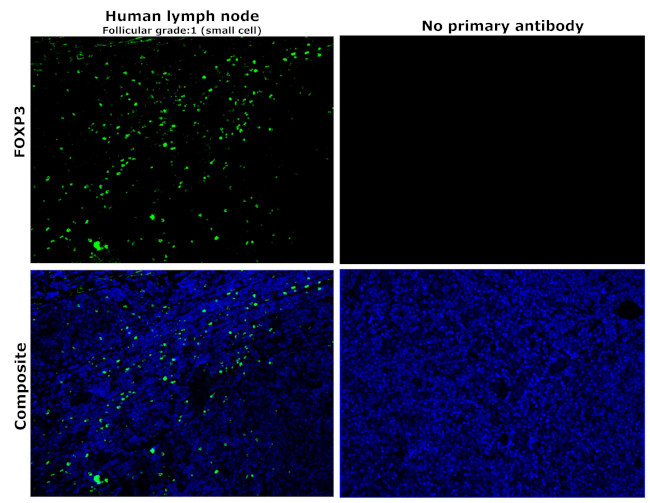
图: 1 / 30
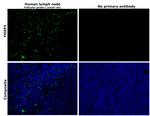
FOXP3 Antibody (14-4774-82) in IHC (P)
Immunohistochemical analysis of FOXP3 was performed using formalin-fixed paraffin-embedded human lymph node [Follicular Grade: I (small cell)] tissue sections. To expose the target protein, heat-induced epitope retrieval was performed on de-paraffinized sections using eBioscience™ IHC Antigen Retrieval Solution - High pH (10X) (Product # 00-4956-58) diluted to 1X solution in water in a decloaking chamber at... View More
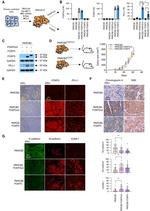
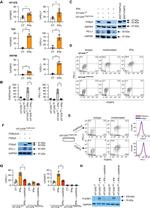
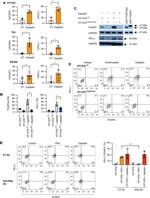
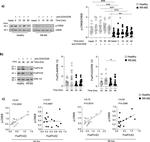
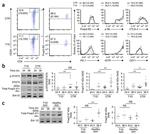
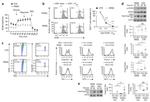
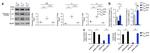
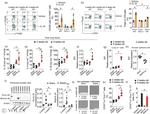
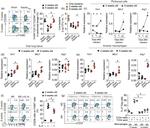
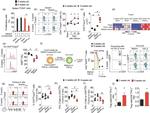
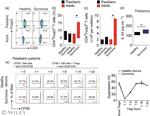
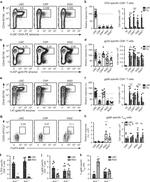
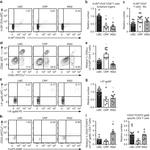
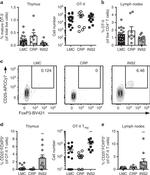
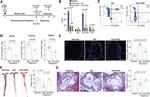
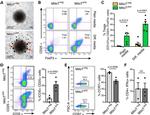
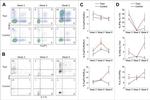
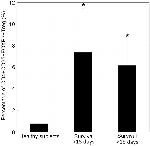
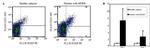
Please note: We are reviewing Western blot images included in the antibody testing data in our catalog, including those provided by third parties. Unless expressly labeled or annotated as “raw-unedited”, Western blot images included in the antibody testing data in our catalog may have been edited, optimized or otherwise adjusted for presentation.





产品信息
14-4774-82
应用
建议稀释比
已发表文章
产品规格
种属反应
Human,
Mouse,
Rat
已发表种属
Human,
Mouse
宿主/亚型
Mouse
/ IgG1, kappa
分类
Monoclonal
类型
Antibody
克隆号
150D/E4
偶联物
Unconjugated
Unconjugated
Unconjugated
形式
Liquid
浓度
0.5 mg/mL
规格
100 µg
纯化类型
Affinity chromatography
保存液
PBS, pH 7.2
内含物
0.09% sodium azide
保存条件
4°C
运输条件
Ambient (domestic); Wet ice (international)
RRID
产品详细信息
Description: eBioscience offers a panel of monoclonal antibodies to different epitopes of human/primate and mouse/rat Foxp3 protein, providing useful tools for investigating the complete expression pattern of Foxp3 at the protein level, and discerning the precise subsets of Foxp3+ cells. Other antibodies to Foxp3 available from eBioscience, which have been used significantly in scientific literature, include the anti-human Foxp3 PCH101 (Product # 72-5776) and ebio7979 (Product # 12-7979), and the anti-mouse/rat Foxp3 FJK-16s (Product # 72-5775). The 150D/E4 has been mapped to the splice region in Exon 2 found in human cells. The splicing of this region has not been shown to occur in mouse. Characterization of this antibody to the splice variant has been limited to epitope mapping. It should be noted that other antibodies such as PCH101 and 236A/E7 will recognize both the spliced and full length forms of the Foxp3 protein and stain more intensely than 150D/E4 and FJK-16s in human cells.
The 150D/E4 antibody reacts with mouse/rat/human Foxp3 also known as FORKHEAD BOX P3, SCURFIN, and JM2. Cross reactivity of this antibody to other proteins has not been determined. Foxp3, a 49-55 kDa protein, is a member of the forkhead/winged-helix family of transcriptional regulators, and was identified as the gene defective in 'scurfy' (sf) mice. Constitutive high expression of FoxP3 mRNA has been shown in CD4+CD25+ regulatory T cells (Treg cells), and ectopic expression of Foxp3 in CD4+CD25- cells imparts a Treg phenotype in these cells.
Applications Reported: This 150D/E4 antibody has been reported for use in immunoblotting (WB), and immunohistochemical staining.
Applications Tested: This 150D/E4 antibody has been tested by immunoblotting of recombinant mouse and human Foxp3 protein.
The purified format is not recommended for intracellular staining and flow cytometric analysis.
Purity: Greater than 90%, as determined by SDS-PAGE.
Aggregation: Less than 10%, as determined by HPLC.
Filtration: 0.2 µm post-manufacturing filtered.
靶标信息
FOXP3 (Forkhead box protein 3) is a member of the forkhead/winged-helix family of transcriptional regulators, highly conserved across mammals, and essential for normal immune homeostasis. FOXP3 is 381 amino acids long, stably and constitutively expressed at a high level in CD25 + CD4 positive regulatory T cells, a low level in CD4-positive/CD25-negative cells, and is absent in CD4-negative/CD8-positive T cells. FOXP3 may be a master regulatory gene, and a more specific marker of regulatory T cells. Defects in the gene encoding FOXP3 protein cause the scurfy phenotype in mice. In humans FOXP3 defects play a role in IPEX syndrome (immune dysfunction, polyendocrinopathy, enteropathy, X-linked syndrome), also known as X-linked autoimmunity-allergic dysregulation (XLAAD) syndrome. Transcript variants of FOXP3 encoding different isoforms have been identified. In human breast and colon cancer cells, expression of FOXP3 is regulated by p53 in response to the DNA damage.
仅用于科研。不用于诊断过程。未经明确授权不得转售。
生物信息学
蛋白别名: forkhead box P3; forkhead box P3 transcript variant; FOXP3delta7; immune dysregulation, polyendocrinopathy, enteropathy, X-linked; immunodeficiency, polyendocrinopathy, enteropathy, X-linked; JM2; MGC141961; MGC141963; RP23-54C14.1; scurfy; unnamed protein product
基因别名: AIID; DIETER; IPEX; JM2; PIDX; RGD1562112; scurfin; sf; XPID
UniProt ID: (Human) Q9BZS1, (Mouse) Q99JB6
Entrez Gene ID: (Human) 50943, (Mouse) 20371, (Rat) 317382
RNA polymerase II core promoter proximal region sequence-specific DNA binding
RNA polymerase II transcription factor activity, sequence-specific DNA binding
transcriptional repressor activity, RNA polymerase II transcription regulatory region sequence-specific binding
transcriptional activator activity, RNA polymerase II transcription regulatory region sequence-specific binding
DNA binding
transcription factor activity, sequence-specific DNA binding
transcription cofactor activity
transcription corepressor activity
protein binding
histone acetyltransferase binding
identical protein binding
protein homodimerization activity
histone deacetylase binding
sequence-specific DNA binding
NF-kappaB binding
NFAT protein binding
sequence-specific double-stranded DNA binding
negative regulation of transcription from RNA polymerase II promoter
response to reactive oxygen species
negative regulation of cytokine production
CD4-positive, CD25-positive, alpha-beta regulatory T cell lineage commitment
regulation of T cell anergy
negative regulation of T cell cytokine production
chromatin remodeling
regulation of transcription, DNA-templated
regulation of transcription from RNA polymerase II promoter
negative regulation of cell proliferation
response to virus
establishment of endothelial blood-brain barrier
response to lipopolysaccharide
negative regulation of interferon-gamma production
negative regulation of interleukin-10 production
negative regulation of interleukin-17 production
negative regulation of interleukin-2 production
negative regulation of interleukin-4 production
positive regulation of CD4-positive, CD25-positive, alpha-beta regulatory T cell differentiation
T cell activation
negative regulation of T cell proliferation
T cell homeostasis
regulatory T cell differentiation
positive regulation of regulatory T cell differentiation
negative regulation of transcription, DNA-templated
positive regulation of transcription, DNA-templated
positive regulation of transcription from RNA polymerase II promoter
negative regulation of activated T cell proliferation
negative regulation of defense response to virus
negative regulation of immune response
response to rapamycin
negative regulation of T-helper 17 cell differentiation
B cell homeostasis
myeloid cell homeostasis
T cell mediated immunity
tolerance induction
tolerance induction to self antigen
regulation of immunoglobulin production
positive regulation of T cell tolerance induction
positive regulation of T cell anergy
negative regulation of chronic inflammatory response
positive regulation of peripheral T cell tolerance induction
gene expression
positive regulation of gene expression
negative regulation of gene expression
negative regulation of interleukin-5 production
negative regulation of interleukin-6 production
negative regulation of tumor necrosis factor production
positive regulation of interleukin-4 production
positive regulation of transforming growth factor beta1 production
positive regulation of immature T cell proliferation in thymus
negative regulation of isotype switching to IgE isotypes
regulation of isotype switching to IgG isotypes
negative regulation of lymphocyte proliferation
negative regulation of inflammatory response
T cell receptor signaling pathway
CD4-positive, CD25-positive, alpha-beta regulatory T cell differentiation
Disclaimer

Clicking the images or links will redirect you to a website hosted by BenchSci that provides third-party scientific content. Neither the content nor the BenchSci technology and processes for selection have been evaluated by us; we are providing them as-is and without warranty of any kind, including for use or application of the Thermo Fisher Scientific products presented.

