Search
Invitrogen
Fluorescein/Oregon Green Polyclonal Antibody, HRP
{{$productOrderCtrl.translations['antibody.pdp.commerceCard.promotion.promotions']}}
{{$productOrderCtrl.translations['antibody.pdp.commerceCard.promotion.promocode']}}: {{promo.promoCode}} {{promo.promoTitle}} {{promo.promoDescription}}. {{$productOrderCtrl.translations['antibody.pdp.commerceCard.promotion.learnmore']}}
{{$ctrl.translations['antibody.pdp.skuNotes.additionalInformation']}}:
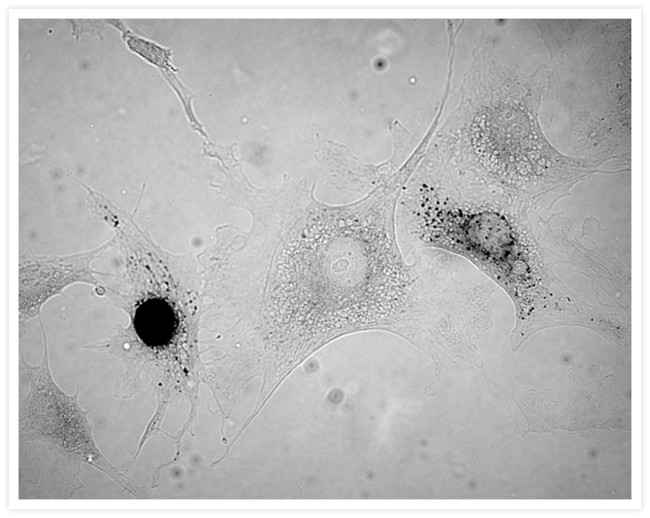
图: 1 / 3
Fluorescein/Oregon Green Antibody (A-21253) in ICC/IF
Nuclear and nonnuclear incorporation of 5-bromo-2'-deoxyuridine in live cells. Bovine pulmonary arterial endothelial (BPAE) cells were labeled with 5-bromo-2'-deoxyuridine (BrdU, Product # B23151) applied at a concentration of 10 µM for 30 minutes. After fixation with 4% formaldehyde in phosphate-buffered saline for 30 minutes, chromatin was denatured by treatment with 2 M HCl for 20 minutes. Incorporated B... View More
Please note: We are reviewing Western blot images included in the antibody testing data in our catalog, including those provided by third parties. Unless expressly labeled or annotated as “raw-unedited”, Western blot images included in the antibody testing data in our catalog may have been edited, optimized or otherwise adjusted for presentation.


产品信息
A-21253
应用
建议稀释比
已发表文章
产品规格
种属反应
Chemical
已发表种属
Chemical
宿主/亚型
Rabbit
/ IgG
分类
Polyclonal
类型
Antibody
抗原
Fluorescein/Oregon Green
偶联物
HRP
HRP
HRP
形式
Lyophilized
规格
500 µg
纯化类型
IgG fraction
保存液
0.1M potassium phosphate, pH 8
内含物
no preservative
保存条件
-20°C
运输条件
Ambient (domestic); Wet ice (international)
RRID
产品详细信息
Storage and reconstitution: The formulation of this antibody was updated from PBS with 0.02% thimerosal to PBS without thimerosal on 31/Mar/2024, any lots produced after this date will not contain thimerosal. Lot numbers greater than 2855945 will not have thimerosal.
Store product at -20°C until opened. Reconstitute using 0.5 mL PBS, pH 7.2, to yield a 1 mg/mL stock solution. After reconstitution in buffer without a stabilizer like thimerosal, the product is stable for approximately three months at 4°C. For prolonged storage after reconstitution in buffers without a stabilizer, add glycerol to a final concentration of 50% (v/v), aliquot, and store at -20°C. The antibody will be stable for up to one year stored in this manner.
Alternatively, if the product is reconstituted in a buffer containing a preservative, for example, in PBS, pH 7.2, containing 0.02% thimerosal, the product will be stable for up to one year when stored at 4°C.
靶标信息
Anti-fluorescent dye antibodies recognize specific fluorophores and, in most cases, quench their fluorescence. Thus many anti-dye antibodies, including those that recognize fluorescein, can serve as cell-impermeant probes for determining whether fluorescent dye-conjugated ligands, proteins, bacteria or other biomolecules have been internalized by endocytic or pinocytic processes.
仅用于科研。不用于诊断过程。未经明确授权不得转售。
生物信息学
蛋白别名: FITC
Disclaimer

Clicking the images or links will redirect you to a website hosted by BenchSci that provides third-party scientific content. Neither the content nor the BenchSci technology and processes for selection have been evaluated by us; we are providing them as-is and without warranty of any kind, including for use or application of the Thermo Fisher Scientific products presented.

