Search
Invitrogen
GFP Polyclonal Antibody, Alexa Fluor™ 647
{{$productOrderCtrl.translations['antibody.pdp.commerceCard.promotion.promotions']}}
{{$productOrderCtrl.translations['antibody.pdp.commerceCard.promotion.promocode']}}: {{promo.promoCode}} {{promo.promoTitle}} {{promo.promoDescription}}. {{$productOrderCtrl.translations['antibody.pdp.commerceCard.promotion.learnmore']}}
{{$ctrl.translations['antibody.pdp.skuNotes.additionalInformation']}}:
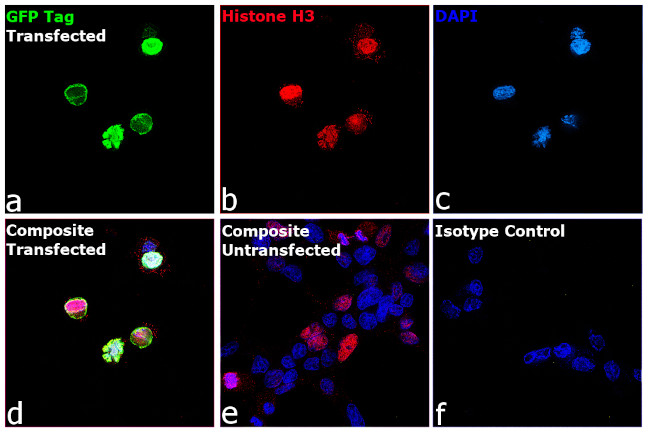
图: 1 / 24
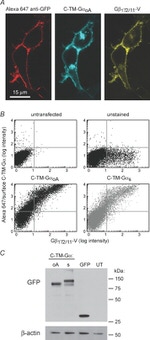
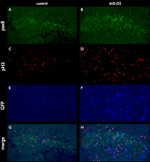
GFP Antibody (A-31852) in ICC/IF
Immunofluorescent analysis of GFP Tag was performed using H3-GFP Tag transfected HEK-293 cells. The cells were fixed with 4% paraformaldehyde for 10 minutes, permeabilized with 0.1% Triton™ X-100 for 15 minutes and blocked with 2% BSA for 1 hour at room temperature. The cells were labeled with GFP Polyclonal Antibody, Alexa Fluor 647 (Product # A-31852) at 2.5 µg/mL and Histone H3 Monoclonal Antibody (865R2) Product # AHO1432) at 1:200 dilution in 0.1% BSA, incubated at 4 degree celsius overnight and then labeled with Goat anti-Mouse IgG (... View More
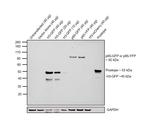
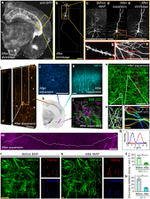
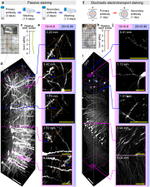
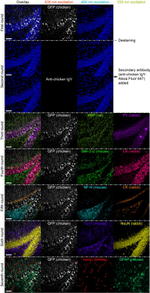
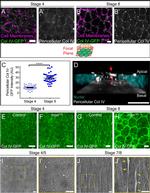
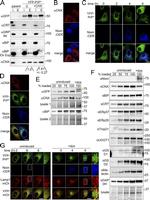
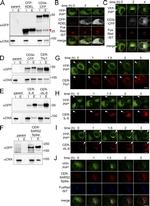
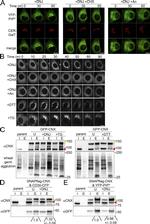
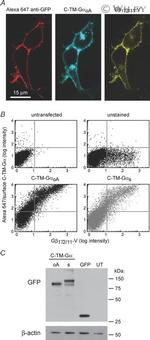
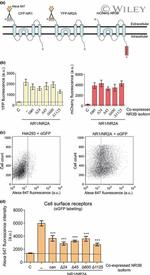
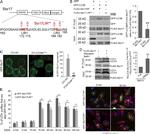

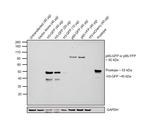
Please note: We are reviewing Western blot images included in the antibody testing data in our catalog, including those provided by third parties. Unless expressly labeled or annotated as “raw-unedited”, Western blot images included in the antibody testing data in our catalog may have been edited, optimized or otherwise adjusted for presentation.


产品信息
A-31852
应用
建议稀释比
已发表文章
产品规格
种属反应
Tag
已发表种属
Tag
宿主/亚型
Rabbit
/ IgG
分类
Polyclonal
类型
Antibody
抗原
The GFP was isolated directly from the jellyfish Aequorea victoria.
偶联物
Alexa Fluor™ 647
Alexa Fluor™ 647
Alexa Fluor™ 647
激发/发射光谱
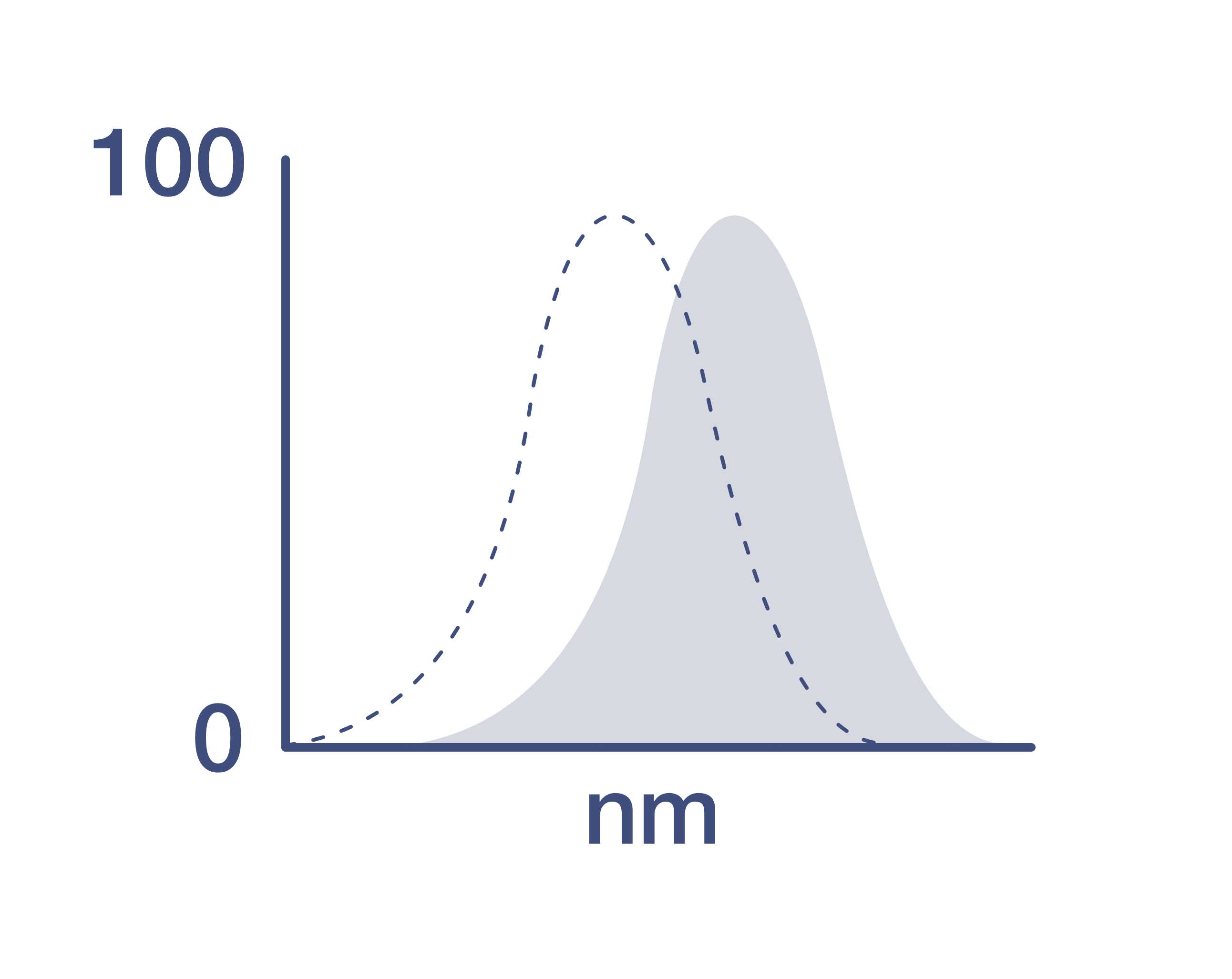
650/671 nm
查看光谱
形式
Liquid
浓度
2 mg/mL
规格
200 µg
纯化类型
IgG fraction
保存液
PBS, pH 7.5
内含物
5mM sodium azide
保存条件
4°C, store in dark
运输条件
Ambient (domestic); Wet ice (international)
RRID
产品详细信息
The Alexa Fluor™ dyes provide for extraordinarily bright antibody conjugates. At the time of preparation, the products are certified to be free of unconjugated dyes and are tested in a cytological experiment to ensure low nonspecific staining. For Alexa Fluor™ 647 the approximate fluorescence excitation (Ex) and emission (Em) maxima, in nm: Ex 650/Em 668.
It is a good practice to centrifuge the protein conjugate solutions briefly in a microcentrifuge before use; add only the supernatant to the experiment. This step eliminates any protein aggregates that may have formed during storage, thereby reducing nonspecific background staining.
靶标信息
The jellyfish Aequorea victoria contains green fluorescent protein (GFP Tag) that emits light in the bioluminescence reaction of the animal. GFP has been used widely as a reporter protein for gene expression in eukaryotic and prokaryotic organisms, and as a protein tag in cell culture and in multicellular organisms. As a fusion tag, GFP can be used to localize proteins, to study their movement or to research the dynamics of the subcellular compartments where these proteins are targeted. GFP technology has revealed considerable new insights in the physiological activities of living cells. GFP is a 27 kDa monomeric protein, which autocatalytically forms a fluorescent pigment. The wild type protein absorbs blue light (maximally at 395nm) and emits green light (peak emission 508nm) in the absence of additional proteins, substrates, or co-factors. GFP fluorescence is stable, species independent and is suitable for a variety of applications. GFP has been used extensively as a fluorescent tag to monitor gene expressin and protein localization. Moreover, other applications for GFP include its use in assessing protein protein interactions in the yeast two hybrid system, and in measuring distances between proteins in fluorescence energy transfer (FRET) experiments.
仅用于科研。不用于诊断过程。未经明确授权不得转售。
生物信息学
蛋白别名: GFP tag; GFP2; green fluorescence; green fluorescent; Turbo eGFP
Disclaimer

Clicking the images or links will redirect you to a website hosted by BenchSci that provides third-party scientific content. Neither the content nor the BenchSci technology and processes for selection have been evaluated by us; we are providing them as-is and without warranty of any kind, including for use or application of the Thermo Fisher Scientific products presented.

