Search
Disclaimer

Clicking the images or links will redirect you to a website hosted by BenchSci that provides third-party scientific content. Neither the content nor the BenchSci technology and processes for selection have been evaluated by us; we are providing them as-is and without warranty of any kind, including for use or application of the Thermo Fisher Scientific products presented.
Invitrogen
Goat anti-Mouse IgG2b Recombinant Secondary Antibody, PE
{{$productOrderCtrl.translations['antibody.pdp.commerceCard.promotion.promotions']}}
{{$productOrderCtrl.translations['antibody.pdp.commerceCard.promotion.viewpromo']}}
{{$productOrderCtrl.translations['antibody.pdp.commerceCard.promotion.promocode']}}: {{promo.promoCode}} {{promo.promoTitle}} {{promo.promoDescription}}. {{$productOrderCtrl.translations['antibody.pdp.commerceCard.promotion.learnmore']}}
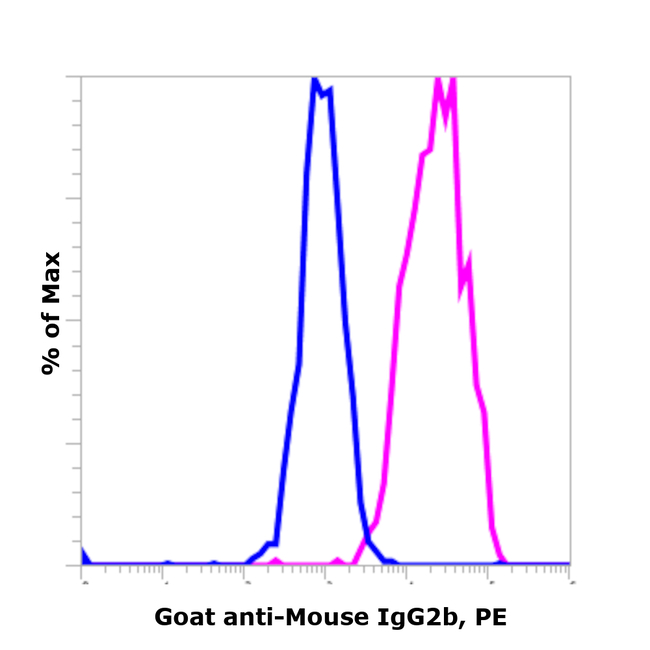
图: 1 / 2
Mouse IgG2b Secondary Antibody (SA5-10371-PE) in Flow
HeLa cells were fixed using IC Fixation buffer (Product # 00-8222-49), Fc block was performed using Fc Receptor Binding Inhibitor Polyclonal Antibody, eBioscience™ (Product # 14-9161-73). Cells were permeabilized using permeabilization buffer (Product # 00-8333-56) and processed using the same permeabilization buffer and stained without (blue histogram) or with TUBB4 Monoclonal Antibody (OTI5C1), TrueMAB™ (... View More


产品信息
SA5-10371-PE
应用
建议稀释比
流式细胞分析 (Flow)
0.5 µg/test
产品规格
种属反应
Mouse
宿主/亚型
Goat
/ IgG
Expression System
Expi293
分类
Recombinant Monoclonal
类型
Secondary Antibody
克隆号
27H27L7
抗原
Purified Mouse IgG
偶联物
激发/发射光谱
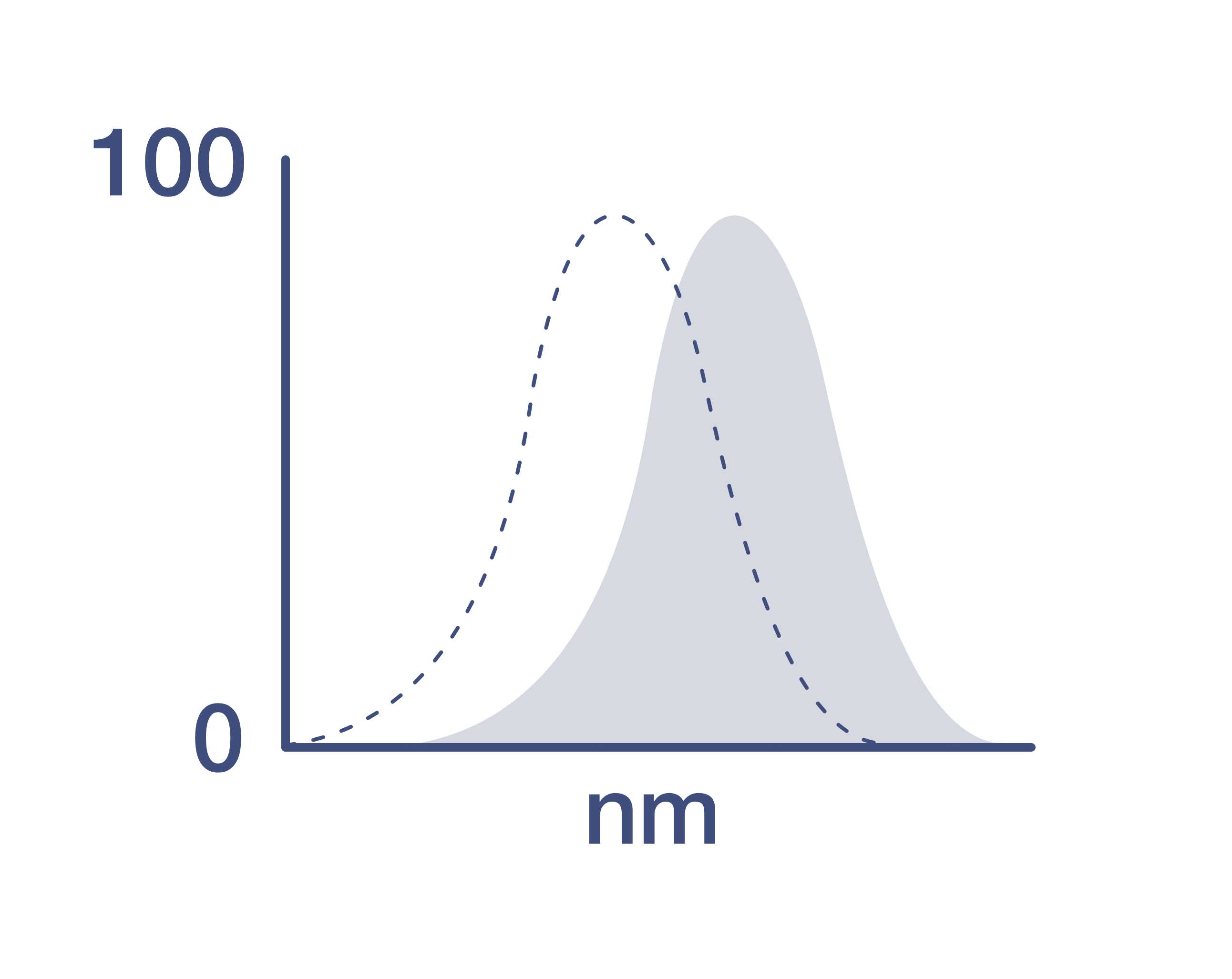
565/576 nm
查看光谱
形式
Liquid
浓度
0.2 mg/mL
纯化类型
Affinity chromatography
保存液
PBS, pH 7.4
内含物
5mM sodium azide
保存条件
4°C, store in dark, DO NOT FREEZE!
运输条件
Wet ice
靶标
IgG2b
抗体形式
Whole Antibody
产品详细信息
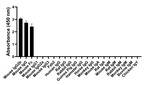
This Goat anti-Mouse IgG2b, Recombinant Secondary Antibody, PE is specific is very specific to mouse IgG2b with no cross-reactivity towards Mouse IgM or IgA or various species of immunoglobulins tested.
Recombinant antibodies are produced using specific genes that code for the desired antibodies. These genes are cloned into an expression vector and expressed in vitro. The advantages of recombinant antibodies include: better specificity, animal origin-free formulation, and lot-to-lot consistency.
R-phycoerythrin (R-PE) is an intensely bright phycobiliprotein isolated from red algae that exhibits extremely bright red-orange fluorescence with high quantum yields. In practical applications, the sensitivity of R-PE conjugates is usually 5 to 10 times greater than those of the corresponding fluorescein conjugates. R-PE is a large molecule used for fluorescence-based detection, primarily in flow cytometry, microarray assays, ELISAs, and other applications that require high sensitivity, but not photostability.
It is recommended that the antibody be carefully titrated for optimal performance in the assay of interest.
靶标信息
Anti-Mouse secondary antibodies are affinity-purified antibodies with well-characterized specificity for mouse immunoglobulins and are useful in the detection, sorting or purification of its specified target. Secondary antibodies offer increased versatility enabling users to use many detection systems (e.g. HRP, AP, fluorescence). They can also provide greater sensitivity through signal amplification as multiple secondary antibodies can bind to a single primary antibody. Most commonly, secondary antibodies are generated by immunizing the host animal with a pooled population of immunoglobulins from the target species and can be further purified and modified (i.e. immunoaffinity chromatography, antibody fragmentation, label conjugation, etc.) to generate highly specific reagents.
仅用于科研。不用于诊断过程。未经明确授权不得转售。

