Search
Invitrogen
HPV Type 16 E7 Monoclonal Antibody (8C9)
{{$productOrderCtrl.translations['antibody.pdp.commerceCard.promotion.promotions']}}
{{$productOrderCtrl.translations['antibody.pdp.commerceCard.promotion.promocode']}}: {{promo.promoCode}} {{promo.promoTitle}} {{promo.promoDescription}}. {{$productOrderCtrl.translations['antibody.pdp.commerceCard.promotion.learnmore']}}
{{$ctrl.translations['antibody.pdp.skuNotes.additionalInformation']}}:
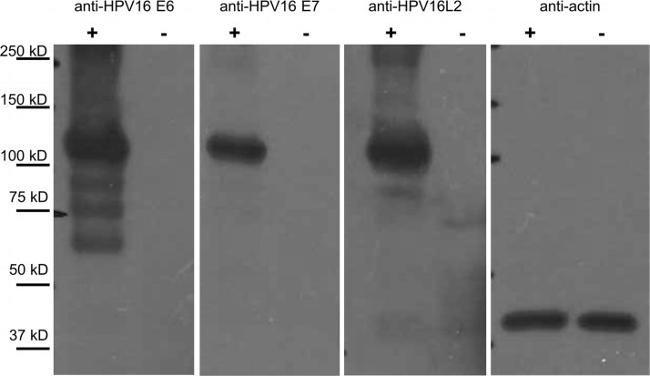
图: 1 / 8
HPV Type 16 E7 Antibody (28-0006) in WB
Journal of virology 2017 -
FIG 6 Confirmation of HPV16 E6, E7, and L2 protein expression by the hCRT-HPV16E6E7L2 vaccine. 293TT cells were transiently transfected by using the clinical-grade DNA vaccine hCRT-HPV16E6E7L2, harvested, and probed with monoclonal antibodies specific for HPV16 E6, E7, or L2 by Western blot analysis. Transfected cells (+), but not control cells (-), were reactive to antibodies against all three HPV16 anti... View More
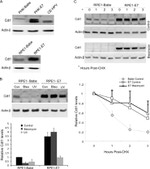
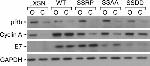
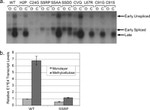
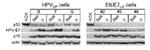
Please note: We are reviewing Western blot images included in the antibody testing data in our catalog, including those provided by third parties. Unless expressly labeled or annotated as “raw-unedited”, Western blot images included in the antibody testing data in our catalog may have been edited, optimized or otherwise adjusted for presentation.


产品信息
28-0006
应用
建议稀释比
已发表文章
产品规格
种属反应
Virus
已发表种属
Virus
宿主/亚型
Mouse
/ IgG1
分类
Monoclonal
类型
Antibody
克隆号
8C9
抗原
Bacterially derived fusion protein containing the human papillomavirus tp 16 early protein E7 open reading frame.
偶联物
Unconjugated
Unconjugated
Unconjugated
形式
Lyophilized
浓度
50 µg/mL once reconstituted
规格
50 µg
纯化类型
HPLC
保存液
PBS with 1% BSA
内含物
0.1% sodium azide
保存条件
4°C
运输条件
Ambient (domestic); Wet ice (international)
RRID
产品详细信息
In Western blot against the HPV16-E7 bacterially derived fusion protein, the antibody detects a 52 kD band which is composed of the HPV16-E7 protein (15 kDa) and the trpE protein (37 kDa). Positive reactivity for the 15 kDa HPV16-E7 expressed protein was shown with CaSki (HPV16 DNA-containing cell line) cells by Western blot. The antibody has also been shown to immunoprecipitate and immunocytochemically stain the HPV16-E7 expressed protein from the CaSki cell line. Negative reactivity by Western blot was shown with a series of other HPV fusion proteins including: HPV16-E2, HPV16-E4, HPV16-E6, HPV18-E7, HPV6-E7, HPV6-E4, and HPV6-L1. The antibody failed to react with HeLa (HPV18 DNA-containing cell line) cells and other HPV DNA negative cervical carcinoma cell lines, HT-3 and C-33A, by Western blot, by immunoprecipitation or by immunocytochemical staining analyses.
Reconstitute the lyophilized material with 1 mL of deionized or distilled water for a final concentration of 50 µg/mL.
靶标信息
The HPV E7 proteins are small (HPV16 E7 comprising 98 amino acids, 15kDa), zinc binding phosphoproteins which are localised in the nucleus. They are structurally and functionally similar to the E1A protein of subgenus C adenoviruses. The first 16 amino-terminal amino acids of HPV16 E7 contain a region homologous to a segment of the conserved region 1 (CR1) of the E1A protein of subgenus C adenoviruses. The next domain, up to amino acid 37, is homologous to the entire region 2 (CR2) of E1A. Genetic studies have established that these domains are required for cell transformation in vitro, suggesting similarities in the mechanism of transformation by these viruses. The CR2 homology region contains the LXCXE motif (residues 22-26) involved in binding to the tumour suppressor protein pRb.
仅用于科研。不用于诊断过程。未经明确授权不得转售。
生物信息学
蛋白别名: HPV 16-E7; HPV16E7; human papillomavirus
Disclaimer

Clicking the images or links will redirect you to a website hosted by BenchSci that provides third-party scientific content. Neither the content nor the BenchSci technology and processes for selection have been evaluated by us; we are providing them as-is and without warranty of any kind, including for use or application of the Thermo Fisher Scientific products presented.

