Search
Invitrogen
ICAM-3 Monoclonal Antibody (MEM-171), PE
{{$productOrderCtrl.translations['antibody.pdp.commerceCard.promotion.promotions']}}
{{$productOrderCtrl.translations['antibody.pdp.commerceCard.promotion.promocode']}}: {{promo.promoCode}} {{promo.promoTitle}} {{promo.promoDescription}}. {{$productOrderCtrl.translations['antibody.pdp.commerceCard.promotion.learnmore']}}
{{$ctrl.translations['antibody.pdp.skuNotes.additionalInformation']}}:
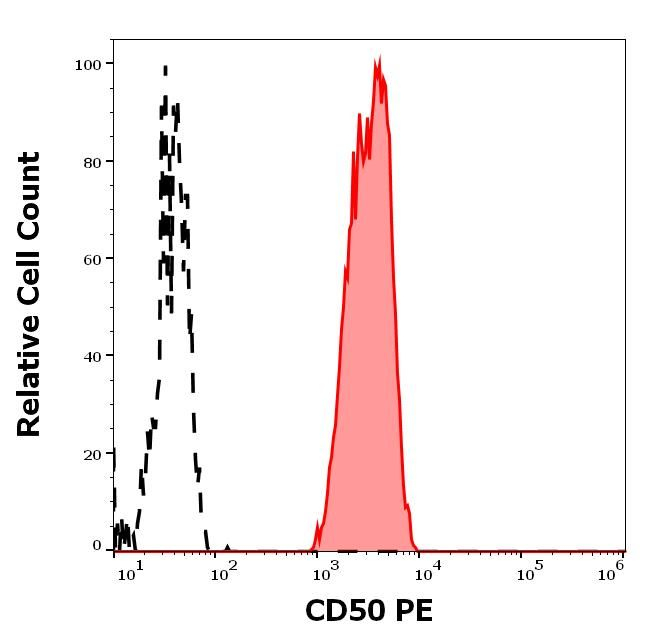
图: 1 / 2
ICAM-3 Antibody (MA1-10244) in Flow
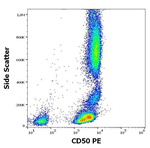
Flow cytometry analysis of ICAM-3 in human blook. Samples were stained ICAM-3 PE monoclonal antibody (Product # MA1-10244) using a dilution of 1 μg/mL. Separation of human lymphocytes (red-filled) from CD50 negative debris (black-dashed) in flow cytometry analysis (surface staining) of human peripheral whole blood.
Please note: We are reviewing Western blot images included in the antibody testing data in our catalog, including those provided by third parties. Unless expressly labeled or annotated as “raw-unedited”, Western blot images included in the antibody testing data in our catalog may have been edited, optimized or otherwise adjusted for presentation.


产品信息
MA1-10244
产品规格
种属反应
Human
宿主/亚型
Mouse
/ IgG1
分类
Monoclonal
类型
Antibody
克隆号
MEM-171
抗原
Human granulocytes
偶联物
PE
PE
PE
激发/发射光谱
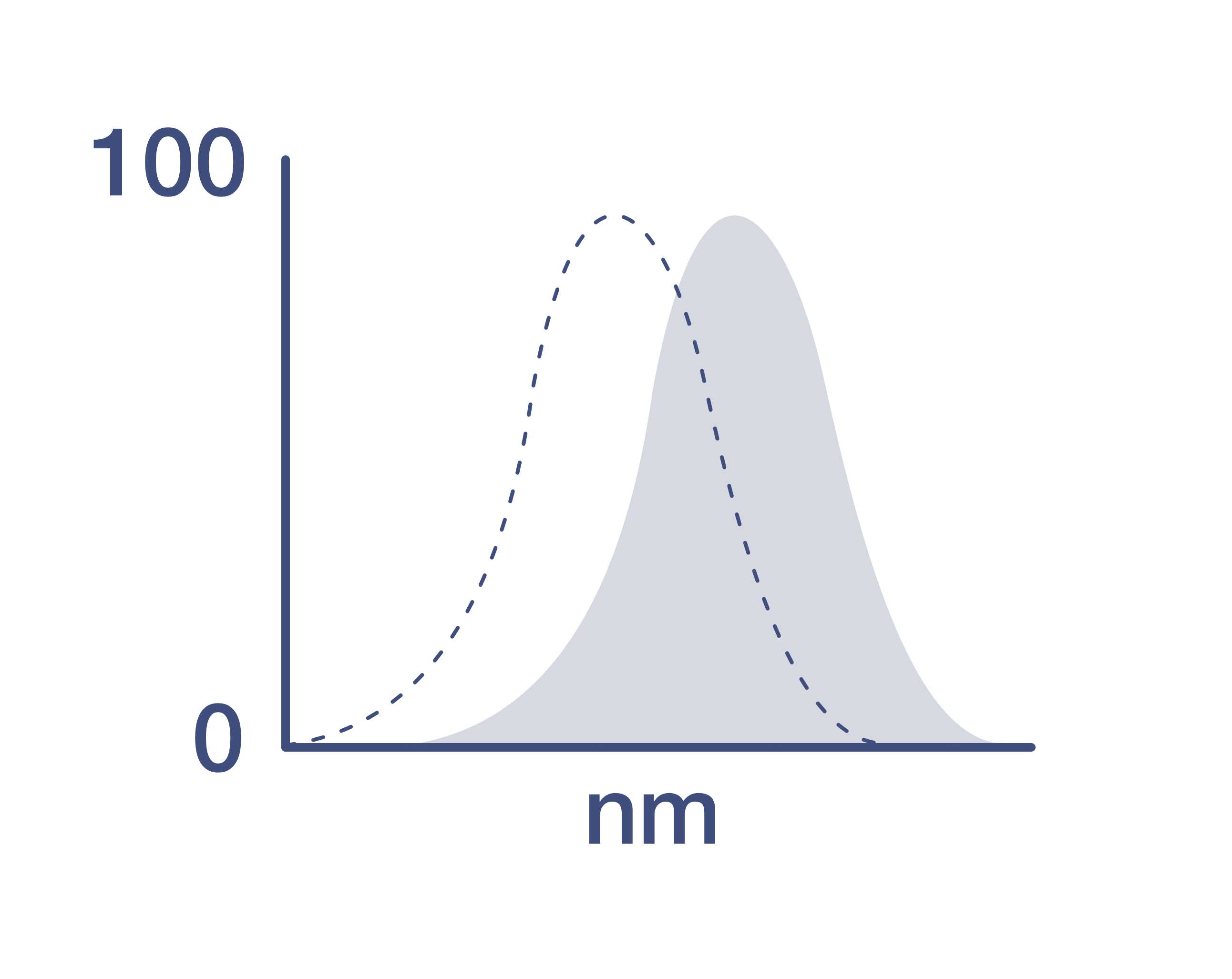
565/576 nm
查看光谱
形式
Liquid
纯化类型
Size-exclusion chromatography
保存液
PBS, pH 7.4, with 0.2% BSA
内含物
15mM sodium azide
保存条件
4°C, store in dark, DO NOT FREEZE!
运输条件
Ambient (domestic); Wet ice (international)
RRID
产品详细信息
This antibody recognizes an extracellular epitope in the D2 domain of CD50 (ICAM-3), a 120-130 kDa type I membrane protein (immunoglobulin supergene family) expressed on leukocytes, endothelial cells and Langerhans cells; it is negative on platelets and erythrocytes.
靶标信息
CD50 (intracellular adhesion molecule 3, ICAM-3) is a transmembrane glycoprotein expressed by leukocytes, that serves as a counter-receptor for the lymphocyte function-associated antigen (LFA)-1 integrin. Besides functioning as an adhesive molecule that mediates e.g. the contact between T cells and antigen presenting cells, ICAM-3 regulates affinity of LFA-1 for ICAM-1 and induces T cell activation and proliferation. ICAM-3 plays an essential role in the initiation of the immune response both on T cells and antigen presenting cells and interacts also with CD209 (dendritic cell-specific ICAM-3-grabbing nonintegrin, DC-SIGN), a C-type lectin of dendritic cells and macrophages; this process is involved in dialogue between dendritic cells and granulocytes.
仅用于科研。不用于诊断过程。未经明确授权不得转售。
How to use the Panel Builder
Watch the video to learn how to use the Invitrogen Flow Cytometry Panel Builder to build your next flow cytometry panel in 5 easy steps.
篇参考文献 (0)
您是否在文献中引用过该产品?请点击下方按钮邮件告知我们。
生物信息学
蛋白别名: ICAM-3; intercellular adhesion molecule; unnamed protein product
基因别名: CD50; CDW50; ICAM-R
UniProt ID: (Human) P32942
Entrez Gene ID: (Human) 3385
Disclaimer

Clicking the images or links will redirect you to a website hosted by BenchSci that provides third-party scientific content. Neither the content nor the BenchSci technology and processes for selection have been evaluated by us; we are providing them as-is and without warranty of any kind, including for use or application of the Thermo Fisher Scientific products presented.

