Search
Invitrogen
IL1F9 Polyclonal Antibody, PeproTech®
{{$productOrderCtrl.translations['antibody.pdp.commerceCard.promotion.promotions']}}
{{$productOrderCtrl.translations['antibody.pdp.commerceCard.promotion.viewpromo']}}
{{$productOrderCtrl.translations['antibody.pdp.commerceCard.promotion.promocode']}}: {{promo.promoCode}} {{promo.promoTitle}} {{promo.promoDescription}}. {{$productOrderCtrl.translations['antibody.pdp.commerceCard.promotion.learnmore']}}
Additional Information:
{{banner.description}}
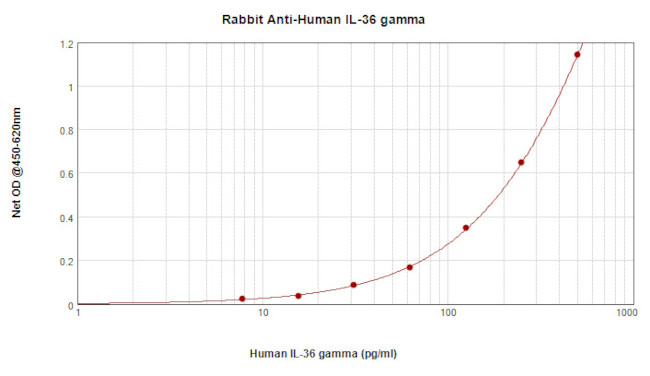
图: 1 / 3
IL1F9 Antibody (500-P316-1MG) in ELISA
Sandwich ELISA: To detect Human IL-36gamma (IL-1F9) by sandwich ELISA (using 100 µL/well antibody solution), a concentration of 0.5-2.0 µg/mL of IL1F9 Polyclonal Antibody (Product # 500-P316-1MG) is required. This antigen affinity purified antibody, in conjunction with PeproTech IL1F9 Polyclonal Antibody, Biotin (Product # 500-P316BT-500UG) as a detection antibody, allows the detection of at least 0.2-0.4 ng/well of Recombinant Human IL-36gamma (IL-1F9).
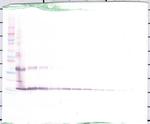
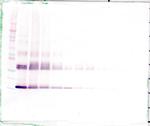
Please note: We are reviewing Western blot images included in the antibody testing data in our catalog, including those provided by third parties. Unless expressly labeled or annotated as “raw-unedited”, Western blot images included in the antibody testing data in our catalog may have been edited, optimized or otherwise adjusted for presentation.


产品信息
500-P316-1MG
产品规格
种属反应
Human
宿主/亚型
Rabbit
分类
Polyclonal
类型
Antibody
抗原
E.coli-derived Animal-Free Recombinant Human IL-36gamma (IL-1F9)
偶联物
Unconjugated
Unconjugated
Unconjugated
形式
Lyophilized
浓度
0.1-1.0 mg/mL
规格
1 mg
纯化类型
Antigen affinity chromatography
保存液
PBS
内含物
no preservative
保存条件
-20°C
运输条件
Ambient
RRID
产品详细信息
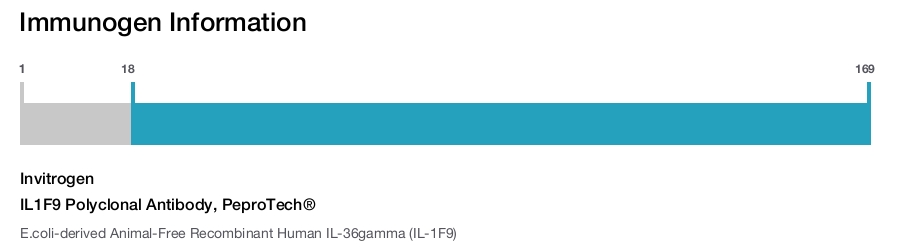
AA Sequence of recombinant protein: SMCKPITGTI NDLNQQVWTL QGQNLVAVPR SDSVTPVTVA VITCKYPEAL EQGRGDPIYL GIQNPEMCLY CEKVGEQPTL QLKEQKIMDL YGQPEPVKPF LFYRAKTGRT STLESVAFPD WFIASSKRDQ PIILTSELGK SYNTAFELNI ND.
Preparation: Produced from sera of rabbits immunized with highly pure Recombinant Human IL-36gamma (IL-1F9). Anti-Human IL-36gamma (IL-1F9)-specific antibody was purified by affinity chromatography employing an immobilized Human IL-36gamma (IL-1F9) matrix.
Sandwich ELISA: To detect Human IL-36gamma (IL-1F9) by sandwich ELISA (using 100 µL/well antibody solution), a concentration of 0.5-2.0 µg/mL of this antibody is required. This antigen affinity purified antibody, in conjunction with PeproTech Biotinylated Anti-Human IL-36gamma (IL-1F9) (500-P316Bt) as a detection antibody, allows the detection of at least 0.2-0.4 ng/well of Recombinant Human IL-36gamma (IL-1F9).
Western Blot: To detect Human IL-36gamma by Western Blot analysis this antibody can be used at a concentration of 0.1-0.2 µg/mL. When used in conjunction with compatible secondary reagents, the detection limit for Recombinant Human IL-36gamma is 1.5-3.0 ng/lane, under either reducing or non-reducing conditions.
靶标信息
Cytokine that binds to and signals through the IL1RL2/IL-36R receptor which in turn activates NF-kappa-B and MAPK signaling pathways in target cells. Part of the IL-36 signaling system that is thought to be present in epithelial barriers and to take part in local inflammatory response; similar to the IL-1 system with which it shares the coreceptor IL1RAP. Seems to be involved in skin inflammatory response by acting on keratinocytes, dendritic cells and indirectly on T-cells to drive tissue infiltration, cell maturation and cell proliferation. In cultured keratinocytes induces the expression of macrophage, T-cell, and neutrophil chemokines, such as CCL3, CCL4, CCL5, CCL2, CCL17, CCL22, CL20, CCL5, CCL2, CCL17, CCL22, CXCL8, CCL20 and CXCL1; also stimulates its own expression and that of the prototypic cutaneous proinflammatory parameters TNF-alpha, S100A7/psoriasin and inducible NOS. May play a role in proinflammatory responses during particular neutrophilic airway inflammation: activates mitogen-activated protein kinases and NF-kappa B in primary lung fibroblasts, and stimulates the expression of IL-8 and CXCL3 and Th17 chemokine CCL20 in lung fibroblasts. May be involved in the innate immune response to fungal pathogens, such as Aspergillus fumigatus.
仅用于科研。不用于诊断过程。未经明确授权不得转售。
篇参考文献 (0)
您是否在文献中引用过该产品?请点击下方按钮邮件告知我们。
生物信息学
蛋白别名: IL-1 epsilon; IL-1-related protein 2; IL-1F9; IL-1H1; IL-1RP2; Interleukin; Interleukin-1 epsilon; Interleukin-1 family member 9; Interleukin-1 homolog 1; Interleukin-36; Interleukin-36 gamma
基因别名: IL1E; IL1F9; IL1H1; IL1RP2; IL36G; UNQ2456/PRO5737
Entrez Gene ID: (Human) 56300
Disclaimer

Clicking the images or links will redirect you to a website hosted by BenchSci that provides third-party scientific content. Neither the content nor the BenchSci technology and processes for selection have been evaluated by us; we are providing them as-is and without warranty of any kind, including for use or application of the Thermo Fisher Scientific products presented.

