Search
Invitrogen
LPS Monoclonal Antibody (C6)
{{$productOrderCtrl.translations['antibody.pdp.commerceCard.promotion.promotions']}}
{{$productOrderCtrl.translations['antibody.pdp.commerceCard.promotion.promocode']}}: {{promo.promoCode}} {{promo.promoTitle}} {{promo.promoDescription}}. {{$productOrderCtrl.translations['antibody.pdp.commerceCard.promotion.learnmore']}}
{{$ctrl.translations['antibody.pdp.skuNotes.additionalInformation']}}:
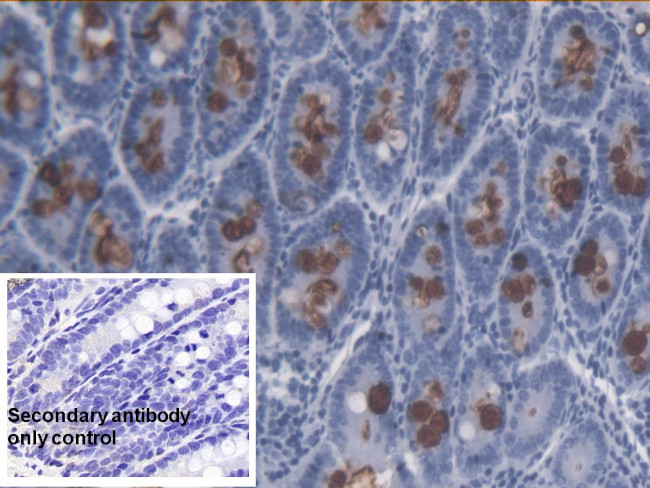
图: 1 / 5
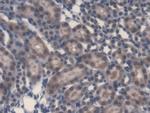
LPS Antibody (MA5-41631) in IHC (P)
Immunohistochemistry (Paraffin) analysis of Lipopolysaccharide in rat small intestine tissue using LPS Monoclonal Antibody (C6) (Product # MA5-41631) (20 µg/mL) and using PBS intead of the primary antibody as a control. The sample was then stained with HRP-Goat anti-Mouse IgG polyclonal secondary antibody (2 µg/mL). DAB staining.
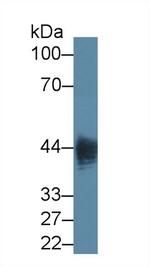
Please note: We are reviewing Western blot images included in the antibody testing data in our catalog, including those provided by third parties. Unless expressly labeled or annotated as “raw-unedited”, Western blot images included in the antibody testing data in our catalog may have been edited, optimized or otherwise adjusted for presentation.


产品信息
MA5-41631
产品规格
种属反应
Bacteria
宿主/亚型
Mouse
/ IgG2b, kappa
分类
Monoclonal
类型
Antibody
克隆号
C6
抗原
OVA Conjugated Lipopolysaccharide (LPS) from Escherichia coli (O55:B5)
偶联物
Unconjugated
Unconjugated
Unconjugated
形式
Liquid
浓度
1 mg/mL
规格
200 µg
纯化类型
Protein A/G
保存液
PBS, pH 7.4, with 50% glycerol
内含物
0.05% ProClin 300
保存条件
Store at 4°C short term. For long term storage, store at -20°C, avoiding freeze/thaw cycles.
运输条件
Ambient (domestic); Wet ice (international)
RRID
靶标信息
Lipopolysaccharide (LPS) is a large molecule found in the outer membrane of Gram-negative bacteria, serving as a potent endotoxin. Structurally, LPS is composed of three regions: the lipid A, core oligosaccharide, and O antigen polysaccharide. Lipid A, consisting of a phosphorylated glucosamine disaccharide with fatty acids, anchors LPS within the bacterial membrane and is largely responsible for its toxic effects. The core oligosaccharide links lipid A to the O antigen, which varies significantly among bacterial species and contributes to antigenic diversity. Functionally, LPS plays a crucial role in protecting bacteria from hostile environmental conditions while serving as a major factor in eliciting strong immune responses in host organisms. Once released into the bloodstream following bacterial cell lysis or infection, LPS activates immune cells by binding to Toll-like receptor 4 (TLR4), leading to the production of pro-inflammatory cytokines. This interaction can result in septic shock, characterized by widespread inflammation and cardiovascular collapse. Hence, understanding the biology and effects of LPS is critical for developing strategies to combat bacterial infections and manage sepsis.
仅用于科研。不用于诊断过程。未经明确授权不得转售。
篇参考文献 (0)
您是否在文献中引用过该产品?请点击下方按钮邮件告知我们。
生物信息学
蛋白别名: LPS
Disclaimer

Clicking the images or links will redirect you to a website hosted by BenchSci that provides third-party scientific content. Neither the content nor the BenchSci technology and processes for selection have been evaluated by us; we are providing them as-is and without warranty of any kind, including for use or application of the Thermo Fisher Scientific products presented.

