Search
Invitrogen
ATP7A Monoclonal Antibody (L60/4), PE
{{$productOrderCtrl.translations['antibody.pdp.commerceCard.promotion.promotions']}}
{{$productOrderCtrl.translations['antibody.pdp.commerceCard.promotion.promocode']}}: {{promo.promoCode}} {{promo.promoTitle}} {{promo.promoDescription}}. {{$productOrderCtrl.translations['antibody.pdp.commerceCard.promotion.learnmore']}}
{{$ctrl.translations['antibody.pdp.skuNotes.additionalInformation']}}:
产品信息
MA5-45521
应用
建议稀释比
已发表文章
产品规格
种属反应
Human,
Mouse,
Rat
宿主/亚型
Mouse
/ IgG2b
分类
Monoclonal
类型
Antibody
克隆号
L60/4
抗原
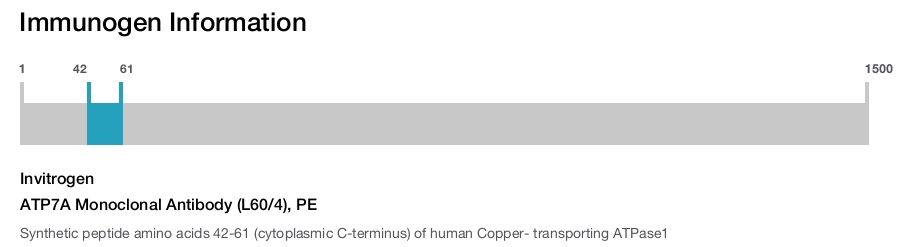
Synthetic peptide amino acids 42-61 (cytoplasmic C-terminus) of human Copper- transporting ATPase1
偶联物
PE
PE
PE
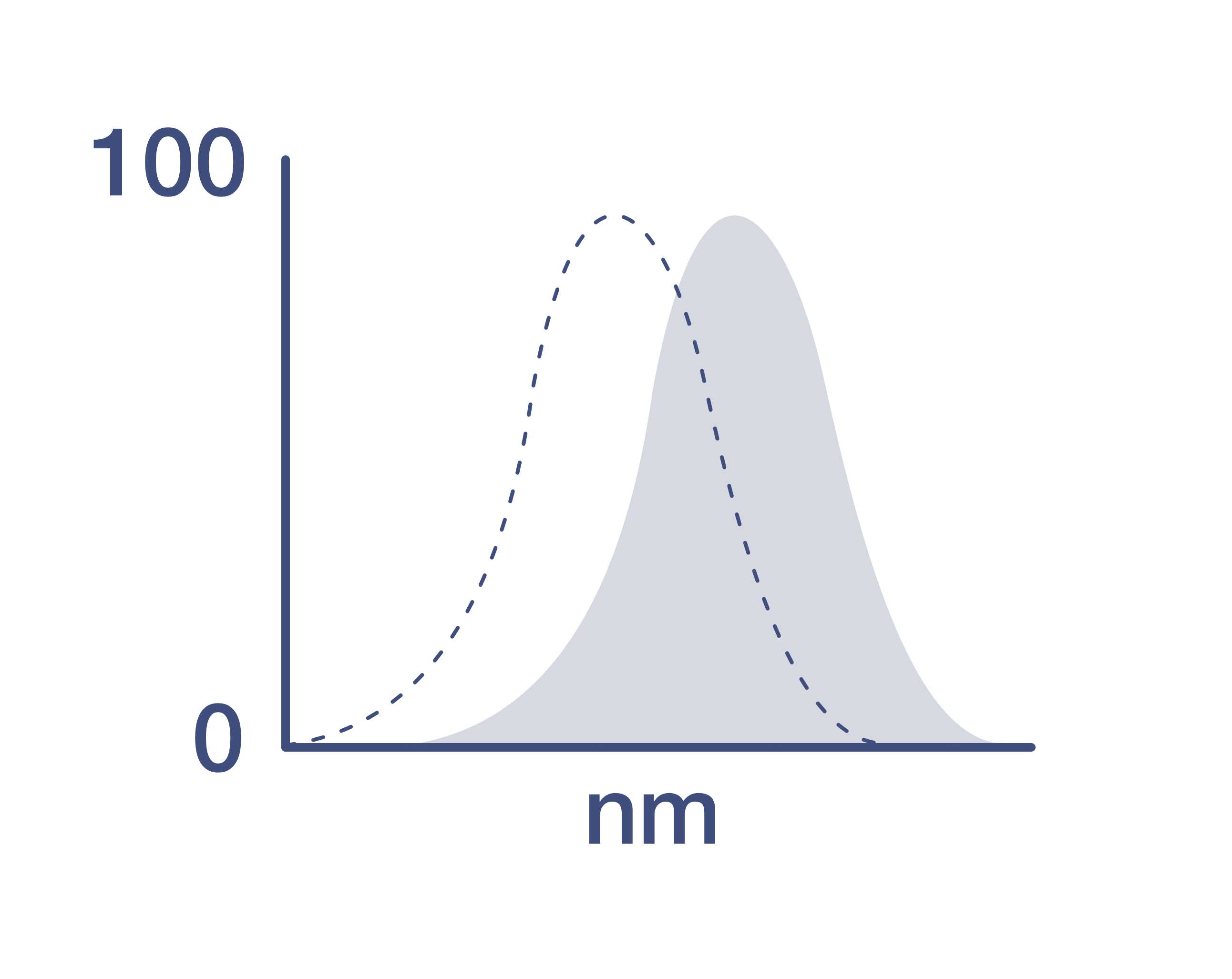
激发/发射光谱
565/576 nm
查看光谱
形式
Liquid
浓度
1 mg/mL
规格
100 µg
纯化类型
Protein G
保存液
95.64mM phosphate/2.48mM MES, pH 7.4, with 0.5M EDTA
内含物
no preservative
保存条件
4°C
运输条件
Ambient (domestic); Wet ice (international)
RRID
产品详细信息
1 µg/mL of MA5-45521 was sufficient for detection of Copper-transporting ATPase1 in 20 µg of rat brain lysate by colorimetric immunoblot analysis using Goat IgG:HRP as the secondary antibody.|Detects approximately 180kDa in rat brain membrane preparations.
This antibody was formerly sold as clone S60-4.
靶标信息
ATP7A (also known as Copper-transporting ATPase 1) functions as a transmembrane copper-translocating P-type ATPase and plays a vital role in systemic copper absorption in the gut and copper reabsorption in the kidney. Polarized epithelial cells such as Madin-Darby canine kidney cells are a physiologically relevant model for systemic copper absorption and reabsorption in vivo. Although ATP7A is not detectable in most normal tissues, it is expressed in a considerable fraction of many common tumor types. Increased expression of ATP7A renders cells resistant to cisplatin and carboplatin. Mutations in the ATP7A gene result in Menkes disease, which is fatal in early childhood.
仅用于科研。不用于诊断过程。未经明确授权不得转售。
篇参考文献 (0)
您是否在文献中引用过该产品?请点击下方按钮邮件告知我们。
生物信息学
蛋白别名: ATP 7A; ATP7A; ATPase, Cu++ transporting, alpha polypeptide; copper efflux transporter; copper pump 1; Cu++-transporting P-type ATPase; FLJ17790; MC 1; Menke; Menkes disease-associated protein; menkes disease-associated protein homolog; Menkes protein; Menkes syndrome; OHS; OTTHUMP00000062077; unnamed protein product; Wilson disease gene
基因别名: DSMAX; HMNX; MK; MNK; SMAX3
UniProt ID: (Human) Q04656, (Mouse) Q64430, (Rat) P70705
Entrez Gene ID: (Human) 538, (Mouse) 11977, (Rat) 24941
nucleotide binding
copper ion transmembrane transporter activity
copper ion binding
protein binding
ATP binding
ATPase activity, coupled to transmembrane movement of ions, phosphorylative mechanism
superoxide dismutase copper chaperone activity
ATPase activity
cation-transporting ATPase activity
copper-dependent protein binding
metal ion binding
P-type monovalent copper transporter activity
cuprous ion binding
small GTPase binding
chaperone binding
blood vessel development
release of cytochrome c from mitochondria
blood vessel remodeling
regulation of oxidative phosphorylation
catecholamine metabolic process
cation transport
copper ion transport
cellular copper ion homeostasis
mitochondrion organization
locomotory behavior
glycoprotein biosynthetic process
response to manganese ion
detoxification of copper ion
regulation of gene expression
positive regulation of lamellipodium assembly
copper ion import
peptidyl-lysine modification
removal of superoxide radicals
cerebellar Purkinje cell differentiation
pyramidal neuron development
central nervous system neuron development
extracellular matrix organization
collagen fibril organization
hair follicle morphogenesis
negative regulation of iron ion transmembrane transport
cellular response to platelet-derived growth factor stimulus
T-helper cell differentiation
epinephrine metabolic process
norepinephrine metabolic process
dopamine metabolic process
norepinephrine biosynthetic process
serotonin metabolic process
positive regulation of catalytic activity
pigmentation
negative regulation of neuron apoptotic process
skin development
positive regulation of cell size
ATP metabolic process
response to copper ion
positive regulation of melanin biosynthetic process
elastic fiber assembly
lung alveolus development
neuron projection morphogenesis
dendrite morphogenesis
positive regulation of epithelial cell proliferation
cartilage development
copper ion export
cellular response to amino acid stimulus
cellular response to copper ion
positive regulation of superoxide dismutase activity
positive regulation of response to wounding
positive regulation of vascular associated smooth muscle cell migration
regulation of cytochrome-c oxidase activity
positive regulation of cytochrome-c oxidase activity
in utero embryonic development
liver development
female pregnancy
lactation
response to iron(III) ion
response to zinc ion
response to lead ion
cellular response to antibiotic
cellular response to cadmium ion
cellular response to cobalt ion
cellular response to iron ion
cellular response to lead ion
cellular response to hypoxia
Disclaimer

Clicking the images or links will redirect you to a website hosted by BenchSci that provides third-party scientific content. Neither the content nor the BenchSci technology and processes for selection have been evaluated by us; we are providing them as-is and without warranty of any kind, including for use or application of the Thermo Fisher Scientific products presented.

