Search
Invitrogen
MARVELD2 Polyclonal Antibody
{{$productOrderCtrl.translations['antibody.pdp.commerceCard.promotion.promotions']}}
{{$productOrderCtrl.translations['antibody.pdp.commerceCard.promotion.promocode']}}: {{promo.promoCode}} {{promo.promoTitle}} {{promo.promoDescription}}. {{$productOrderCtrl.translations['antibody.pdp.commerceCard.promotion.learnmore']}}
{{$ctrl.translations['antibody.pdp.skuNotes.additionalInformation']}}:
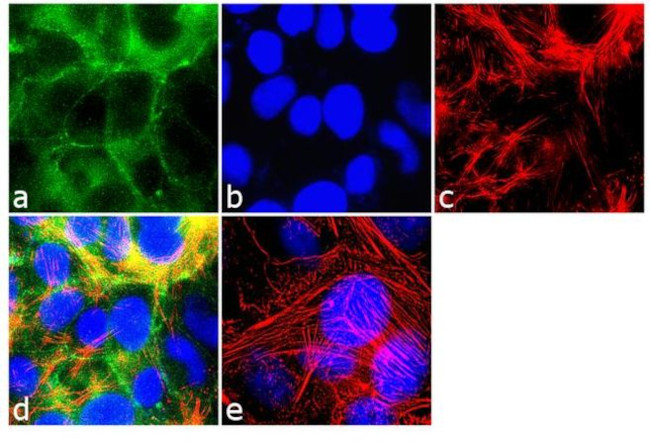
图: 1 / 25
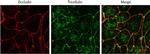
MARVELD2 Antibody (48-8400) in ICC/IF
Immunofluorescence analysis of Marveld2/ Tricellulin was performed using 90% confluent log phase MCF-7 cells. The cells were fixed with 4% paraformaldehyde for 10 minutes, permeabilized with 0.1% Triton™ X-100 for 10 minutes, and blocked with 2% BSA for 1 hour at room temperature. The cells were labeled with MARVELD2/Tricellulin Rabbit Polyclonal Antibody (Product # 48-8400) at 2 µg/mL in 0.1% BSA and incubated for 3 hours at room temperature and then labeled with Goat anti-Rabbit IgG (Heavy Chain) Superclonal™ Secondary Antibody, Alexa Fl... View More
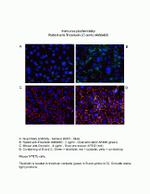
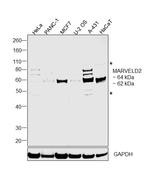
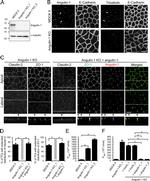
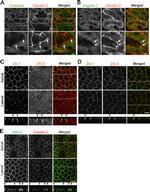
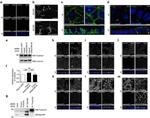
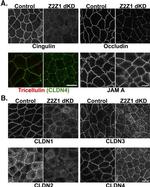
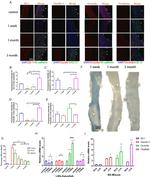
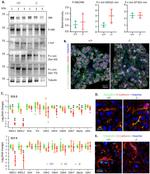
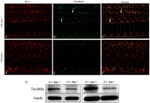
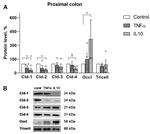
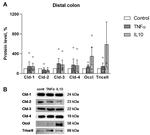
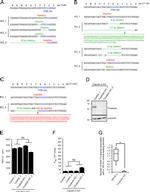
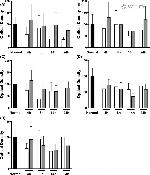
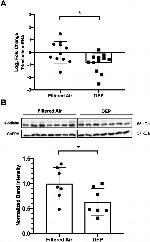
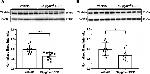
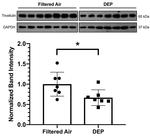
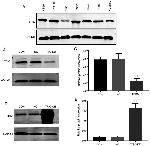
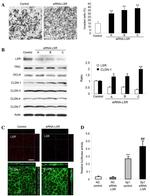
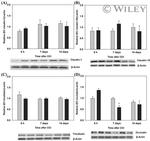
Please note: We are reviewing Western blot images included in the antibody testing data in our catalog, including those provided by third parties. Unless expressly labeled or annotated as “raw-unedited”, Western blot images included in the antibody testing data in our catalog may have been edited, optimized or otherwise adjusted for presentation.


产品信息
48-8400
应用
建议稀释比
已发表文章
产品规格
种属反应
Human,
Mouse,
Rat
已发表种属
Dog,
Human,
Mouse,
Rat
宿主/亚型
Rabbit
/ IgG
分类
Polyclonal
类型
Antibody
抗原
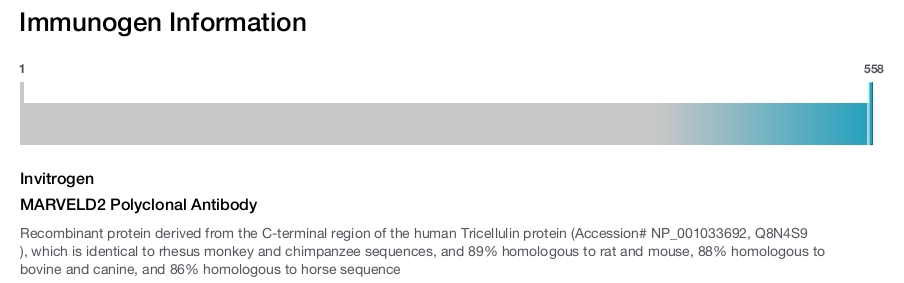
Recombinant protein derived from the C-terminal region of the human Tricellulin protein (Accession# NP_001033692, Q8N4S9), which is identical to rhesus monkey and chimpanzee sequences, and 89% homologous to rat and mouse, 88% homologous to bovine and canine, and 86% homologous to horse sequence
偶联物
Unconjugated
Unconjugated
Unconjugated
形式
Liquid
浓度
0.25 mg/mL
规格
100 µg
纯化类型
Antigen affinity chromatography
保存液
PBS, pH 7.4
内含物
0.1% sodium azide
保存条件
Store at 4°C short term. For long term storage, store at -20°C, avoiding freeze/thaw cycles.
运输条件
Ambient (domestic); Wet ice (international)
RRID
产品详细信息
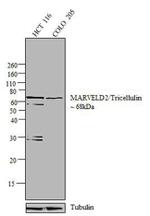
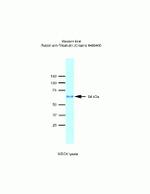
This antibody is specific for the Tricellulin/MARVELD-2 protein. On western blots, it identifies the target band at ~64 kDa. Reactivity has been confirmed with human Caco-2, dog MDCK, mouse IMCD-3 cells, and mouse kidney lysates by western blotting, and with mouse MTE7b cells by immunocytochemistry. Based on amino acid sequence homology, reactivity with Rhesus monkey, chimpanzee, rat, bovine, and horse is expected.
靶标信息
Tight junctions form an important barrier of paracellular transport in epithelial cells. Sealing of two adjacent cells at bicellular tight junctions, a point where three adjacent cells are in contact with each other. Tricellulin is the first protein identified that specifically concentrates in tricellular tight junctions. This protein has four membrane spanning domains, similarly to claudins. Tricellulin expression is high in epithelium-derived tissues, such as small intestine, kidney and lung. Functional evidence for the role of tricellulin in tight junction formation comes from siRNA studies, where suppression of its expression leads to compromised epithelial barrier and tight junction formation. Loss of function in tricellulin mutants missing all or most of a conserved region in the cytosolic domain which binds to the cytosolic scaffolding protein ZO-1, indicate that interaction with other known tight junction proteins plays an important role for the function of tricellulin.
仅用于科研。不用于诊断过程。未经明确授权不得转售。
生物信息学
蛋白别名: MARVEL (membrane-associating) domain containing 2; TRIC; TRICbeta; tricellular junction protein; tricellulin; unnamed protein product
基因别名: DFNB49; MARVD2; MRVLDC2; Tric; Trica; Tricb; Tricc
UniProt ID: (Human) Q8N4S9, (Mouse) Q3UZP0
Entrez Gene ID: (Human) 153562, (Rat) 365657, (Mouse) 218518
sensory perception of sound
positive regulation of lamellipodium assembly
positive regulation of gene expression
negative regulation of gene expression
epithelial cell migration
regulation of glucose transport
positive regulation of microtubule polymerization
cell-cell junction organization
response to ethanol
positive regulation of glucose import
establishment of endothelial barrier
response to interleukin-18
bicellular tight junction assembly
cellular response to tumor necrosis factor
positive regulation of wound healing
tight junction organization
response to Gram-positive bacterium
protein localization to cell leading edge
positive regulation of maintenance of permeability of blood-brain barrier
Disclaimer

Clicking the images or links will redirect you to a website hosted by BenchSci that provides third-party scientific content. Neither the content nor the BenchSci technology and processes for selection have been evaluated by us; we are providing them as-is and without warranty of any kind, including for use or application of the Thermo Fisher Scientific products presented.

