Search
Abnova
MECP2 Monoclonal Antibody (1B11)
{{$productOrderCtrl.translations['antibody.pdp.commerceCard.promotion.promotions']}}
{{$productOrderCtrl.translations['antibody.pdp.commerceCard.promotion.promocode']}}: {{promo.promoCode}} {{promo.promoTitle}} {{promo.promoDescription}}. {{$productOrderCtrl.translations['antibody.pdp.commerceCard.promotion.learnmore']}}
{{$ctrl.translations['antibody.pdp.skuNotes.additionalInformation']}}:
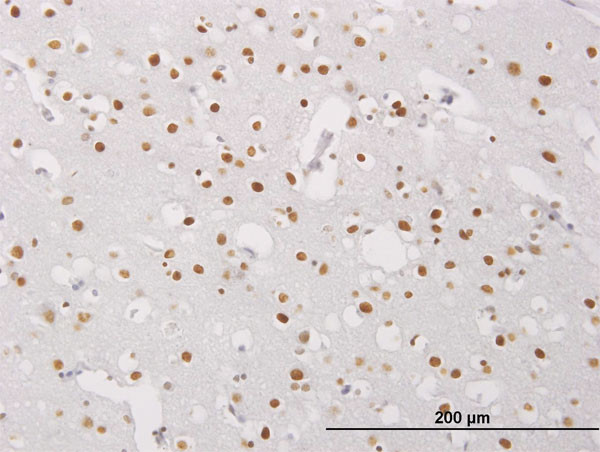
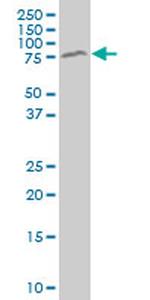
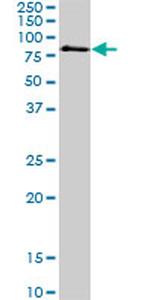
Please note: We are reviewing Western blot images included in the antibody testing data in our catalog, including those provided by third parties. Unless expressly labeled or annotated as “raw-unedited”, Western blot images included in the antibody testing data in our catalog may have been edited, optimized or otherwise adjusted for presentation.


产品信息
H00004204-M03
产品规格
种属反应
Human
宿主/亚型
Mouse
/ IgG2a, kappa
分类
Monoclonal
类型
Antibody
克隆号
1B11
抗原
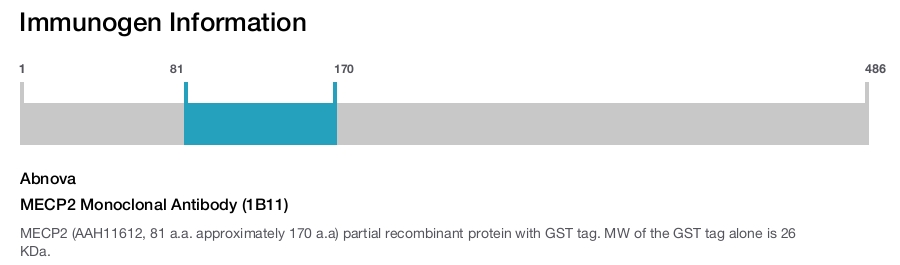
MECP2 (AAH11612, 81 a.a. approximately 170 a.a) partial recombinant protein with GST tag. MW of the GST tag alone is 26 KDa.
偶联物
Unconjugated
Unconjugated
Unconjugated
形式
Liquid
浓度
See Label
规格
100 µg
纯化类型
Affinity chromatography
保存液
PBS, pH 7.4
内含物
no preservative
保存条件
-20°C, Avoid Freeze/Thaw Cycles
运输条件
Ambient (domestic); Wet ice (international)
产品详细信息
Sequence of this protein is as follows: PKQRRSIIRD RGPMYDDPTL PEGWTRKLKQ RKSGRSAGKY DVYLINPQGK AFRSKVELIA YFEKVGDTSL DPNDFDFTVT GRGSPSRREQ
靶标信息
MECP2 belongs to a family of nuclear proteins (including MBD1, MBD2, MBD3 and MBD4) that have a methyl-CpG binding domain. MECP2 is capable of binding specifically to methylated DNA. DNA methylation is the major modification of eukaryotic genomes and plays an essential role in mammalian development. MECP2 can also repress transcription from methylated gene promoters. In contrast to other MBD family members, MECP2 is X-linked and subject to X inactivation. MECP2 is dispensible in stem cells, but is essential for embryonic development. MECP2 gene mutations are the cause of most cases of Rett syndrome, a progressive neurologic developmental disorder and one of the most common causes of mental retardation in females.
仅用于科研。不用于诊断过程。未经明确授权不得转售。
篇参考文献 (0)
您是否在文献中引用过该产品?请点击下方按钮邮件告知我们。
生物信息学
蛋白别名: DKFZp686A24160; meCp-2 protein; MECP2A; methyl CpG binding protein 2 (Rett syndrome) isoform MECP2_1; methyl CpG binding protein 2 (Rett syndrome) isoform MECP2_2; methyl CpG binding protein 2 (Rett syndrome) isoform MECP2_3; methyl CpG binding protein 2 (Rett syndrome) isoform MECP2_5; methyl CpG binding protein 2 (Rett syndrome) isoform MECP2_6; methyl CpG binding protein 2 (Rett syndrome) isoform MECP2_7; methyl CpG binding protein 2 (Rett syndrome) isoform MECP2_8; Rett Syndrome transcript 1; Rett syndrome; MECP2B; transcript variant; transcriptional repressor; involved in Rett syndrome disease; unnamed protein product
基因别名: AUTSX3; MRX16; MRX79; MRXS13; MRXSL; PPMX; RS; RTS; RTT
UniProt ID: (Human) P51608
Entrez Gene ID: (Human) 4204
nucleic acid binding
DNA binding
chromatin binding
transcription corepressor activity
RNA binding
mRNA binding
protein binding
methyl-CpG binding
double-stranded methylated DNA binding
siRNA binding
binding, bridging
histone reader activity
molecular condensate scaffold activity
promoter-specific chromatin binding
negative regulation of transcription from RNA polymerase II promoter
Notch signaling pathway
associative learning
gene expression
negative regulation of gene expression
negative regulation of angiogenesis
neuron differentiation
regulation of gene expression, epigenetic
negative regulation of blood vessel endothelial cell migration
hypermethylation of CpG island
negative regulation of transcription, DNA-templated
cell development
negative regulation of developmental process
negative regulation of smooth muscle cell differentiation
regulation of multicellular organismal process
genetic imprinting
positive regulation of microtubule nucleation
axo-dendritic protein transport
protein localization to presynapse
Disclaimer

Clicking the images or links will redirect you to a website hosted by BenchSci that provides third-party scientific content. Neither the content nor the BenchSci technology and processes for selection have been evaluated by us; we are providing them as-is and without warranty of any kind, including for use or application of the Thermo Fisher Scientific products presented.

