Search
Invitrogen
MRPL23 Polyclonal Antibody
{{$productOrderCtrl.translations['antibody.pdp.commerceCard.promotion.promotions']}}
{{$productOrderCtrl.translations['antibody.pdp.commerceCard.promotion.promocode']}}: {{promo.promoCode}} {{promo.promoTitle}} {{promo.promoDescription}}. {{$productOrderCtrl.translations['antibody.pdp.commerceCard.promotion.learnmore']}}
{{$ctrl.translations['antibody.pdp.skuNotes.additionalInformation']}}:
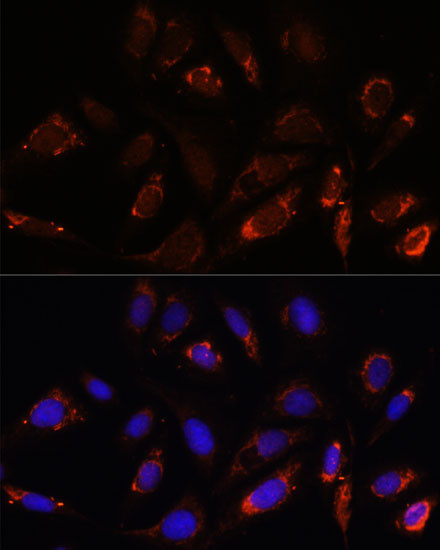
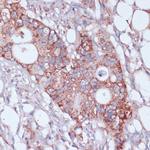
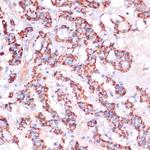
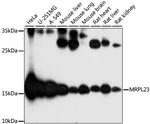
Please note: We are reviewing Western blot images included in the antibody testing data in our catalog, including those provided by third parties. Unless expressly labeled or annotated as “raw-unedited”, Western blot images included in the antibody testing data in our catalog may have been edited, optimized or otherwise adjusted for presentation.


Product Details
PA5-109978
Applications
Tested Dilution
Publications
Product Specifications
Species Reactivity
Human,
Mouse,
Rat
Host/Isotype
Rabbit
/ IgG
Class
Polyclonal
Type
Antibody
Immunogen
Recombinant protein (or fragment)
Conjugate
Unconjugated
Unconjugated
Unconjugated
Form
Liquid
Concentration
1.81 mg/mL
Amount
181 µg
Purification
Affinity Chromatography
Storage buffer
PBS, pH 7.3, with 50% glycerol
Contains
0.01% thimerosal
Storage conditions
-20°C, Avoid Freeze/Thaw Cycles
Shipping conditions
Ambient (domestic); Wet ice (international)
RRID
Product Specific Information
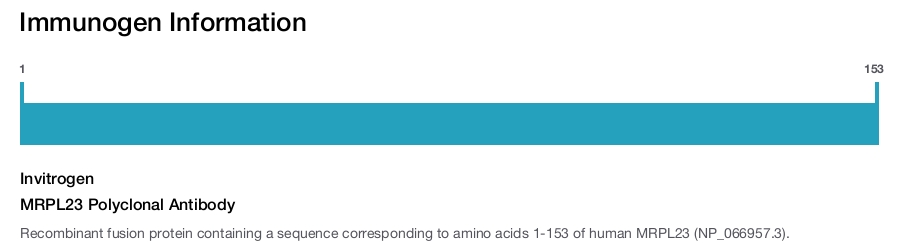
Immunogen sequence: MARNVVYPLY RLGGPQLRVF RTNFFIQLVR PGVAQPEDTV QFRIPMEMTR VDLRNYLEGI YNVPVAAVRT RVQHGSNKRR DHRNVRIKKP DYKVAYVQLA HGQTFTFPDL FPEKDESPEG SAADDLYSML EEERQQRQSS DPRRGGVPSW FGL
Target Information
MRPL23 are mammalian mitochondrial ribosomal proteins are encoded by nuclear genes and help in protein synthesis within the mitochondrion. Mitochondrial ribosomes (mitoribosomes) consist of a small 28S subunit and a large 39S subunit. They have an estimated 75% protein to rRNA composition compared to prokaryotic ribosomes, where this ratio is reversed. Another difference between mammalian mitoribosomes and prokaryotic ribosomes is that the latter contain a 5S rRNA. Among different species, the proteins comprising the mitoribosome differ greatly in sequence, and sometimes in biochemical properties, which prevents easy recognition by sequence homology. MRPL23 encodes a 39S subunit protein and is biallelically expressed, despite its location within a region of imprinted genes on chromosome 11.
⚠WARNING: This product can expose you to chemicals including mercury, which is known to the State of California to cause birth defects or other reproductive harm. For more information go to www.P65Warnings.ca.gov.
For Research Use Only. Not for use in diagnostic procedures. Not for resale without express authorization.
References (0)
Have you cited this product in a publication?
Let us know so we can reference it here.
Bioinformatics
Protein Aliases: 39S ribosomal protein L23, mitochondrial; FLJ45387; L23 mitochondrial-related protein; L23-related gene; L23mt; mitochondrial large ribosomal subunit protein uL23m; MRP-L23; ribosomal protein L23-related product homolog; ribosomal protein related to L23 (mitochondrial); unnamed protein product
Gene Aliases: L23MRP; L23mt; MRP-L23; rL23MRP; Rpl23; Rpl23-rs; RPL23L; uL23m
UniProt ID: (Human) Q16540, (Rat) Q63750, (Mouse) O35972
Entrez Gene ID: (Human) 6150, (Rat) 64360, (Mouse) 19935
Disclaimer

Clicking the images or links will redirect you to a website hosted by BenchSci that provides third-party scientific content. Neither the content nor the BenchSci technology and processes for selection have been evaluated by us; we are providing them as-is and without warranty of any kind, including for use or application of the Thermo Fisher Scientific products presented.

Performance Guarantee
If an Invitrogen™ antibody doesn't perform as described on our website or datasheet,we'll replace the product at no cost to you, or provide you with a credit for a future purchase.*
Learn more
We're here to help
Get expert recommendations for common problems or connect directly with an on staff expert for technical assistance related to applications, equipment and general product use.
Contact tech support