Search
Disclaimer

Clicking the images or links will redirect you to a website hosted by BenchSci that provides third-party scientific content. Neither the content nor the BenchSci technology and processes for selection have been evaluated by us; we are providing them as-is and without warranty of any kind, including for use or application of the Thermo Fisher Scientific products presented.
Invitrogen
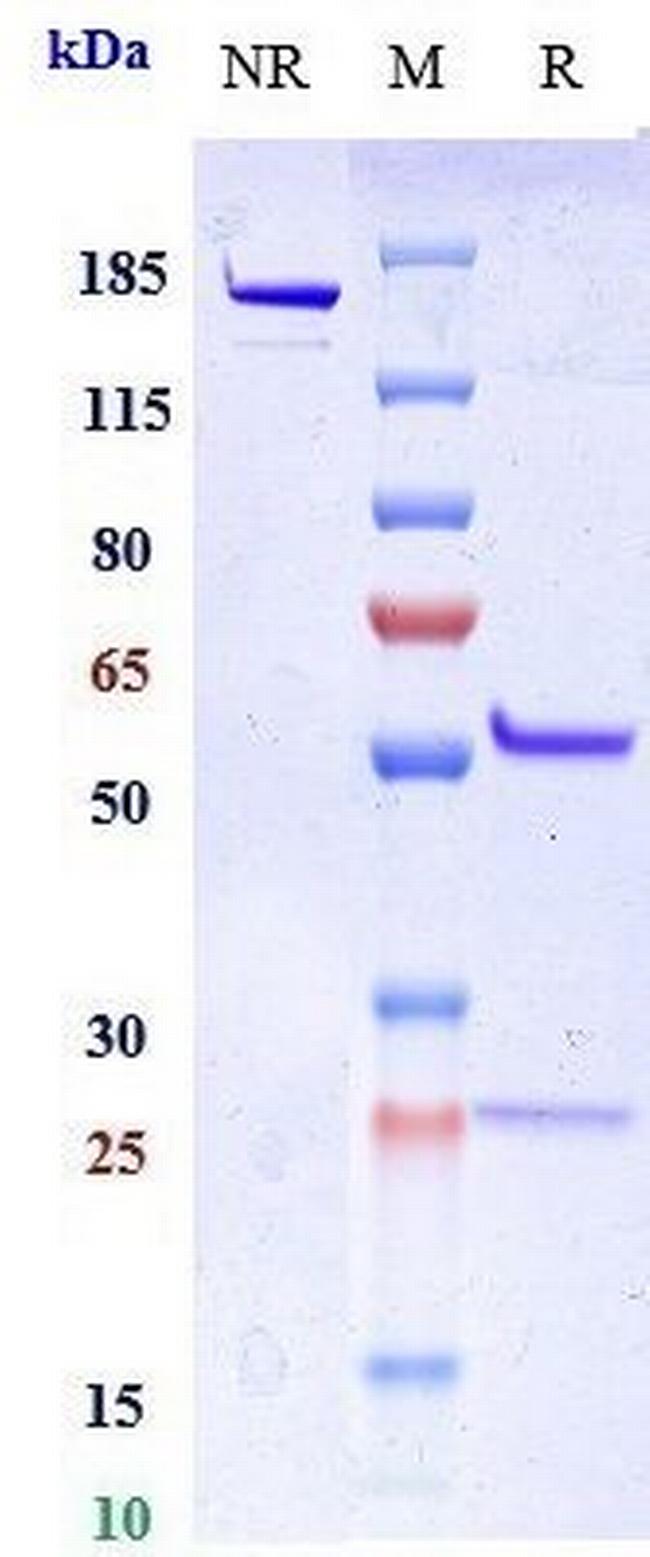
Miptenalimab Humanized Recombinant Human Monoclonal Antibody
{{$productOrderCtrl.translations['antibody.pdp.commerceCard.promotion.promotions']}}
{{$productOrderCtrl.translations['antibody.pdp.commerceCard.promotion.viewpromo']}}
{{$productOrderCtrl.translations['antibody.pdp.commerceCard.promotion.promocode']}}: {{promo.promoCode}} {{promo.promoTitle}} {{promo.promoDescription}}. {{$productOrderCtrl.translations['antibody.pdp.commerceCard.promotion.learnmore']}}

产品信息
MA5-59641
应用
建议稀释比
已发表文章
产品规格
种属反应
Human
宿主/亚型
Human
/ IgG4SP
Expression System
CHO cells
分类
Recombinant Monoclonal
类型
Antibody
偶联物
形式
Lyophilized
浓度
1 mg/mL
纯化类型
Protein A
保存液
25mM histidine, pH 6.2, with 8% sucrose, 0.01% Tween 80
内含物
no preservative
保存条件
-20°C, Avoid Freeze/Thaw Cycles
运输条件
Ambient (domestic); Dry ice (international)
RRID
产品详细信息
For reconstitution, add sterile, distilled water to achieve a final antibody concentration of 1 mg/mL. Gently shake to solubilize the protein completely. Do not vortex. Reconstituted products should be stored at -80 °.
靶标信息
Miptenalimab, also known as BI 754111, is a humanized IgG4 monoclonal antibody that targets the lymphocyte-activation gene 3 (LAG-3). It functions as an immune checkpoint inhibitor designed to treat various cancers, including solid tumors, head and neck cancer, and non-small cell lung cancer. Lymphocyte Activation Gene 3 (LAG3), also known as CD223, is an immune checkpoint receptor encoded by the LAG3 gene located on chromosome 12 (12p13.32). Structurally, LAG3 is closely related to the CD4 molecule, sharing four extracellular immunoglobulin-like domains and a highly conserved cytoplasmic tail, which mediates its inhibitory signaling. Functionally, LAG3 is expressed on activated T cells, natural killer (NK) cells, B cells, and plasmacytoid dendritic cells, playing a crucial role in regulating the immune response. It acts by binding to its primary ligand, MHC class II molecules, and can also interact with other ligands such as fibrinogen-like protein 1 and galectin-3. Through these interactions, LAG3 transmits inhibitory signals to reduce the proliferation and activation of effector T cells, thus maintaining immune homeostasis and preventing autoimmunity. In cancer, LAG3 contributes to the immune evasion of tumors by suppressing anti-tumor T cell activity, making it a significant target for novel cancer immunotherapies.
仅用于科研。不用于诊断过程。未经明确授权不得转售。
篇参考文献 (0)
您是否在文献中引用过该产品?请点击下方按钮邮件告知我们。

