Search
Invitrogen
Oxytocin/Neurophysin I Recombinant Rabbit Monoclonal Antibody (PSH08-24)
{{$productOrderCtrl.translations['antibody.pdp.commerceCard.promotion.promotions']}}
{{$productOrderCtrl.translations['antibody.pdp.commerceCard.promotion.promocode']}}: {{promo.promoCode}} {{promo.promoTitle}} {{promo.promoDescription}}. {{$productOrderCtrl.translations['antibody.pdp.commerceCard.promotion.learnmore']}}
{{$ctrl.translations['antibody.pdp.skuNotes.additionalInformation']}}:
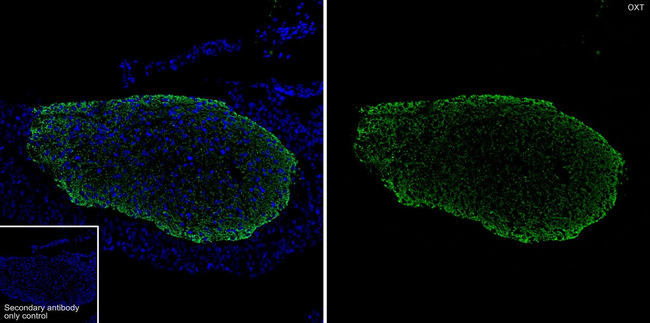
图: 1 / 12
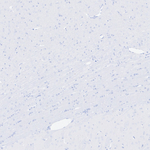
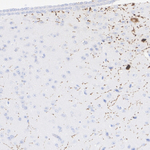
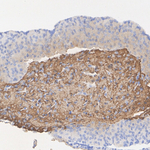
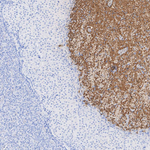
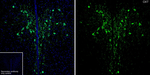
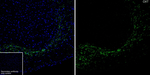
Oxytocin/Neurophysin I Antibody (MA562912) in IHC (P)
Immunohistochemistry (Paraffin)/Immunofluorescence analysis of Oxytocin/Neurophysin I on formalin-fixed paraffin-embedded mouse pituitary tissue.The sections were pre-treated using heat mediated antigen retrieval with sodium citrate buffer (pH 6.0) for 2 minutes. The tissues were blocked in 10% negative goat serum for 1 hour at room temperature, washed with PBS, and then probed with Oxytocin/Neurophysin I R... View More
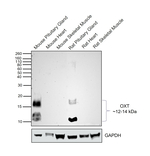
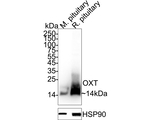
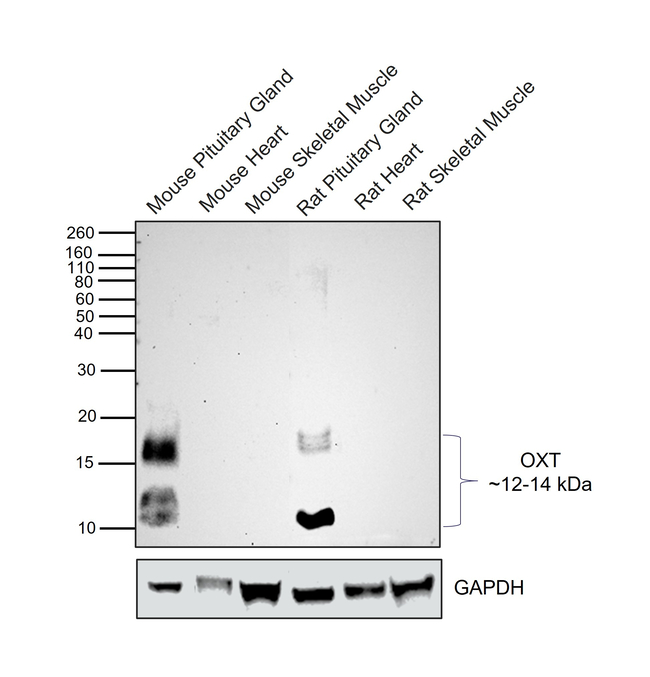
Please note: We are reviewing Western blot images included in the antibody testing data in our catalog, including those provided by third parties. Unless expressly labeled or annotated as “raw-unedited”, Western blot images included in the antibody testing data in our catalog may have been edited, optimized or otherwise adjusted for presentation.


产品信息
MA562912
应用
建议稀释比
已发表文章
产品规格
种属反应
Human,
Mouse,
Rat
宿主/亚型
Rabbit
/ IgG
Expression System
HEK293 cells
分类
Recombinant Monoclonal
类型
Antibody
克隆号
PSH08-24
抗原
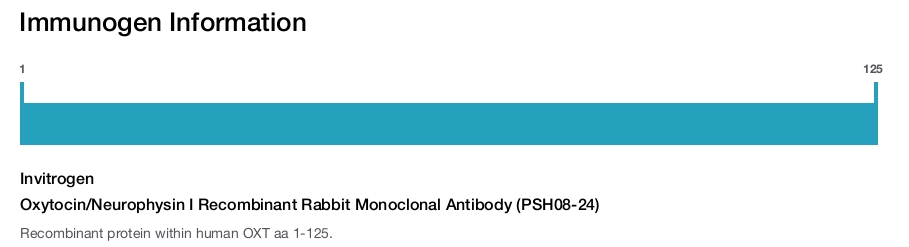
Recombinant protein within human OXT aa 1-125.
偶联物
Unconjugated
Unconjugated
Unconjugated
形式
Liquid
浓度
0.2 mg/mL
规格
20 µg
纯化类型
Protein A
保存液
PBS, pH 7.4, with 0.1% BSA, 40% glycerol
内含物
0.05% sodium azide
保存条件
Store at 4°C short term. For long term storage, store at -20°C, avoiding freeze/thaw cycles.
运输条件
Ambient (domestic); Wet ice (international)
RRID
产品详细信息
Positive Control: Mouse paraventricular nucleus tissue, rat supraoptic nucleus tissue, mouse pituitary tissue, rat pituitary tissue, Mouse pituitary tissue lysate, Rat pituitary tissue lysate.
Tissue Specificity: Tissue enriched (brain).
Subcellular Location: Secreted.
Sequence Similarities: 87% Mouse/Rat.
Predicted band size: 13 kDa
靶标信息
Oxytocin is a neuropeptide comprising nine amino acids, synthesized mainly in the hypothalamus and released by the posterior pituitary gland. It functions as a hormone and neuromodulator, facilitating numerous physiological processes such as labor, lactation, and social bonding. The gene encoding oxytocin, located on chromosome 20p13, closely neighbors the gene encoding arginine-vasopressin. Neurophysin I is a carrier protein associated with oxytocin, ensuring its proper storage and release. The gene for Neurophysin I also lies in proximity to the oxytocin gene within the same chromosomal region, indicating co-regulation and functional interdependence. This arrangement reflects a shared evolutionary and functional pathway, highlighting the critical roles of both proteins in neurophysiological functions and their interconnection in the modulation of stress, social behavior, and reproductive functions.
仅用于科研。不用于诊断过程。未经明确授权不得转售。
篇参考文献 (0)
您是否在文献中引用过该产品?请点击下方按钮邮件告知我们。
生物信息学
蛋白别名: neurophysin 1; neurophysin I; OT-NPI; oxcytocin; oxytocin, prepro- (neurophysin I); oxytocin, prepropeptide; oxytocin-neurophysin I, preproprotein; oxytocin/neurophysin (Oxt) gene, complete gene, complete cds; oxytocin/neurophysin 1 prepropeptide; oxytocin/neurophysin precursor; prepro-oxytocin-neurophysin; pro-OXT; pro-oxytocin/neurophysin; unnamed protein product
基因别名: OT; OT-NPI; OXT-NPI; Oxy
UniProt ID: (Human) P01178, (Mouse) P35454, (Rat) P01179
Entrez Gene ID: (Human) 5020, (Mouse) 18429, (Rat) 25504
response to amphetamine
regulation of heart rate
maternal aggressive behavior
signal transduction
positive regulation of cytosolic calcium ion concentration
heart development
female pregnancy
memory
grooming behavior
response to sucrose
hormone transport
positive regulation of norepinephrine secretion
response to activity
response to food
positive regulation of prostaglandin secretion
response to estradiol
response to retinoic acid
response to progesterone
response to genistein
response to prostaglandin E
social behavior
intracellular signal transduction
negative regulation of urine volume
response to cocaine
maternal behavior
sperm ejaculation
eating behavior
drinking behavior
response to peptide hormone
response to ether
negative regulation of blood pressure
positive regulation of blood pressure
positive regulation of ossification
positive regulation of female receptivity
response to steroid hormone
positive regulation of synaptic transmission
response to glucocorticoid
response to cAMP
response to electrical stimulus
positive regulation of synapse assembly
fetal process involved in parturition
male mating behavior
positive regulation of penile erection
positive regulation of hindgut contraction
positive regulation of uterine smooth muscle contraction
positive regulation of cold-induced thermogenesis
behavioral fear response
response to mechanical stimulus
response to external biotic stimulus
regulation of synaptic plasticity
parturition
lactation
regulation of female receptivity
Disclaimer

Clicking the images or links will redirect you to a website hosted by BenchSci that provides third-party scientific content. Neither the content nor the BenchSci technology and processes for selection have been evaluated by us; we are providing them as-is and without warranty of any kind, including for use or application of the Thermo Fisher Scientific products presented.

