Search
Invitrogen
PCDH15 Polyclonal Antibody
{{$productOrderCtrl.translations['antibody.pdp.commerceCard.promotion.promotions']}}
{{$productOrderCtrl.translations['antibody.pdp.commerceCard.promotion.promocode']}}: {{promo.promoCode}} {{promo.promoTitle}} {{promo.promoDescription}}. {{$productOrderCtrl.translations['antibody.pdp.commerceCard.promotion.learnmore']}}
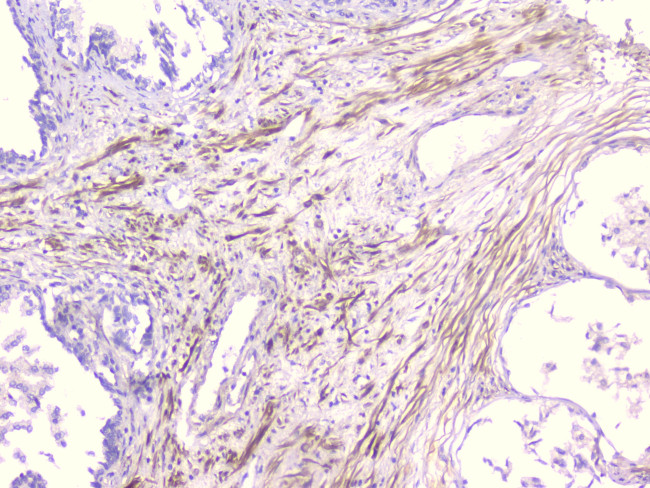
图: 1 / 11
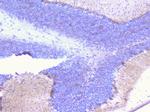
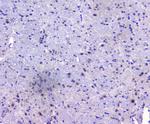
PCDH15 Antibody (PA5-95603) in IHC (P)
Immunohistochemistry analysis of PCDH15 in paraffin-embedded human prostatic cancer tissues. Antigen retrieval was performed on the tissue using citrate buffer (pH 6, 20 min) and blocked with 10% goat serum. Samples were incubated with PCDH15 polyclonal antibody (Product # PA5-95603) at a 1 µg/mL dilution, followed by biotinylated goat anti-rabbit IgG (30 min, 37°C), and developed with Strepavidin-Biotin-Co... View More
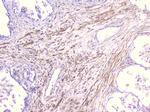

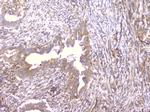

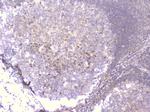
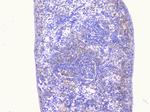
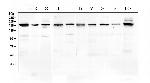
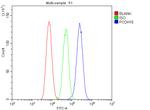
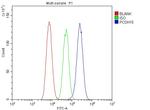
Please note: We are reviewing Western blot images included in the antibody testing data in our catalog, including those provided by third parties. Unless expressly labeled or annotated as “raw-unedited”, Western blot images included in the antibody testing data in our catalog may have been edited, optimized or otherwise adjusted for presentation.


产品信息
PA5-95603
应用
建议稀释比
已发表文章
产品规格
种属反应
Human,
Mouse,
Rat
宿主/亚型
Rabbit
/ IgG
分类
Polyclonal
类型
Antibody
抗原
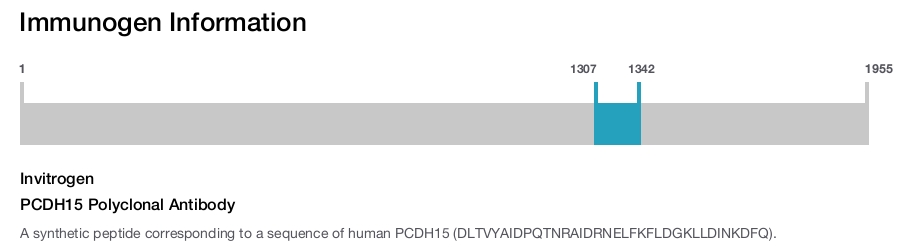
A synthetic peptide corresponding to a sequence of human PCDH15 (DLTVYAIDPQTNRAIDRNELFKFLDGKLLDINKDFQ).
偶联物
Unconjugated
Unconjugated
Unconjugated
形式
Lyophilized
浓度
500 µg/mL
规格
100 µg
纯化类型
Affinity chromatography
保存液
PBS with 4mg trehalose
内含物
0.05mg sodium azide
保存条件
-20°C
运输条件
Ambient (domestic); Wet ice (international)
RRID
产品详细信息
Reconstitute with 0.2 mL of distilled water to yield a concentration of 500 µg/mL.
Positive Control - WB: human placenta tissue, human U2OS whole cell, human Hela whole cell, rat brain tissue, rat lung tissue, mouse brain tissue, mouse lung tissue, mouse kidney tissue, mouse spleen tissue, mouse Neuro-2a whole cell. IHC: human skeletal muscle tissue, human prostatic cancer tissue, human rectal cancer tissue, human tonsil tissue, mouse brain tissue, mouse spleen tissue, rat brain tissue, rat spleen tissue. Flow: U-87MG cell.|Store at -20°C for one year from date of receipt. After reconstitution, at 4°C for one month. It can also be aliquotted and stored frozen at -20°C for six months. Avoid repeated freeze-thaw cycles.
靶标信息
PCDH15 is a member of the cadherin superfamily. Family members encode integral membrane proteins that mediate calcium-dependent cell-cell adhesion. PCDH15 consists of a signal peptide, 11 extracellular calcium-binding domains, a transmembrane domain and a unique cytoplasmic domain. It plays an essential role in maintenance of normal retinal and cochlear function. Mutations in this gene have been associated with hearing loss, which is consistent with its location at the Usher syndrome type 1F (USH1F) critical region on chromosome 10.
仅用于科研。不用于诊断过程。未经明确授权不得转售。
篇参考文献 (0)
您是否在文献中引用过该产品?请点击下方按钮邮件告知我们。
生物信息学
蛋白别名: Ames waltzer; cadherin-related family member 15; DKFZp667A1711; PCDH15; protocadherin 15; protocadherin 15 CD2; RP11-449J3.2; unnamed protein product
基因别名: av; CDHR15; DFNB23; Gm9815; nmf19; roda; USH1F
UniProt ID: (Human) Q96QU1, (Mouse) Q99PJ1
Entrez Gene ID: (Human) 65217, (Mouse) 11994, (Rat) 690865
cell adhesion
homophilic cell adhesion via plasma membrane adhesion molecules
visual perception
sensory perception of sound
photoreceptor cell maintenance
inner ear development
sensory perception of light stimulus
equilibrioception
startle response
morphogenesis of an epithelium
actin filament organization
locomotory behavior
adult walking behavior
multicellular organism growth
auditory receptor cell differentiation
detection of mechanical stimulus involved in sensory perception of sound
detection of mechanical stimulus involved in equilibrioception
actin filament bundle assembly
response to calcium ion
righting reflex
auditory receptor cell stereocilium organization
inner ear receptor stereocilium organization
non-motile cilium assembly
Disclaimer

Clicking the images or links will redirect you to a website hosted by BenchSci that provides third-party scientific content. Neither the content nor the BenchSci technology and processes for selection have been evaluated by us; we are providing them as-is and without warranty of any kind, including for use or application of the Thermo Fisher Scientific products presented.

