Search
Abnova
PRSS35 Polyclonal Antibody, MaxPab™
{{$productOrderCtrl.translations['antibody.pdp.commerceCard.promotion.promotions']}}
{{$productOrderCtrl.translations['antibody.pdp.commerceCard.promotion.viewpromo']}}
{{$productOrderCtrl.translations['antibody.pdp.commerceCard.promotion.promocode']}}: {{promo.promoCode}} {{promo.promoTitle}} {{promo.promoDescription}}. {{$productOrderCtrl.translations['antibody.pdp.commerceCard.promotion.learnmore']}}
Additional Information:
{{banner.description}}
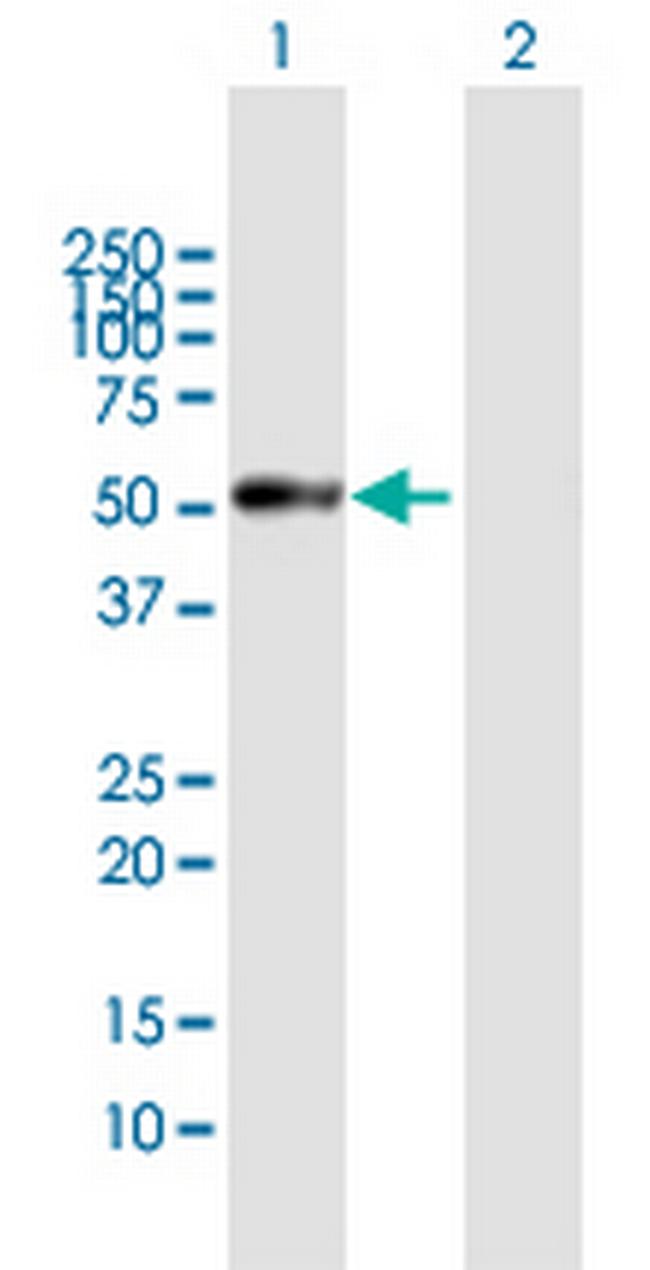

Please note: We are reviewing Western blot images included in the antibody testing data in our catalog, including those provided by third parties. Unless expressly labeled or annotated as “raw-unedited”, Western blot images included in the antibody testing data in our catalog may have been edited, optimized or otherwise adjusted for presentation.

产品信息
H00167681-B01P
产品规格
种属反应
Human
宿主/亚型
Mouse
/ IgG
分类
Polyclonal
类型
Antibody
抗原
PRSS35 (NP_699193, 1 a.a. approximately 413 a.a) full-length human protein.
偶联物
Unconjugated
Unconjugated
Unconjugated
形式
Liquid
浓度
1 mg/mL
规格
50 µg
纯化类型
Protein A
保存液
PBS, pH 7.4
内含物
no preservative
保存条件
-20°C, Avoid Freeze/Thaw Cycles
运输条件
Ambient (domestic); Wet ice (international)
产品详细信息
Product may be used with Western Blot (Transfected lysate).
The Isotype of this product is composed of an IgG Mixture.
Immunogen sequence: MENMLLWLIF FTPGWTLIDG SEMEWDFMWH LRKVPRIVSE RTFHLTSPAF EADAKMMVNT VCGIECQKEL PTPSLSELED YLSYETVFEN GTRTLTRVKV QDLVLEPTQN ITTKGVSVRR KRQVYGTDSR FSILDKRFLT NFPFSTAVKL STGCSGILIS PQHVLTAAHC VHDGKDYVKG SKKLRVGLLK MRNKSGGKKR RGSKRSRREA SGGDQREGTR EHLQERAKGG RRRKKSGRGQ RIAEGRPSFQ WTRVKNTHIP KGWARGGMGD ATLDYDYALL ELKRAHKKKY MELGISPTIK KMPGGMIHFS GFDNDRADQL VYRFCSVSDE SNDLLYQYCD AESGSTGSGV YLRLKDPDKK NWKRKIIAVY SGHQWVDVHG VQKDYNVAVR ITPLKYAQIC LWIHGNDANC AYG
靶标信息
The PRSS35 (Protease, Serine 35) gene encodes a protein that belongs to the trypsin-like serine protease family, which is involved in various physiological processes, including digestion, immune response, and blood coagulation. PRSS35 is located on chromosome 6 in humans. The protein is believed to play a role in extracellular matrix remodeling and may be involved in processes such as tissue repair and inflammation. Expression of PRSS35 has been detected in multiple tissues, including the reproductive system, where it may influence fertility and reproductive tract function. However, the specific substrates and detailed biological functions of PRSS35 are still under investigation. Alterations in PRSS35 expression have been associated with certain pathological conditions, such as cancer and inflammatory diseases, suggesting its potential as a biomarker and therapeutic target.
仅用于科研。不用于诊断过程。未经明确授权不得转售。
篇参考文献 (0)
您是否在文献中引用过该产品?请点击下方按钮邮件告知我们。
生物信息学
蛋白别名: protease, serine 35; unnamed protein product
基因别名: C6orf158; dJ223E3.1
UniProt ID: (Human) Q8N3Z0
Entrez Gene ID: (Human) 167681
Disclaimer

Clicking the images or links will redirect you to a website hosted by BenchSci that provides third-party scientific content. Neither the content nor the BenchSci technology and processes for selection have been evaluated by us; we are providing them as-is and without warranty of any kind, including for use or application of the Thermo Fisher Scientific products presented.

