Search
Invitrogen
PSMB10 Polyclonal Antibody
{{$productOrderCtrl.translations['antibody.pdp.commerceCard.promotion.promotions']}}
{{$productOrderCtrl.translations['antibody.pdp.commerceCard.promotion.promocode']}}: {{promo.promoCode}} {{promo.promoTitle}} {{promo.promoDescription}}. {{$productOrderCtrl.translations['antibody.pdp.commerceCard.promotion.learnmore']}}
{{$ctrl.translations['antibody.pdp.skuNotes.additionalInformation']}}:
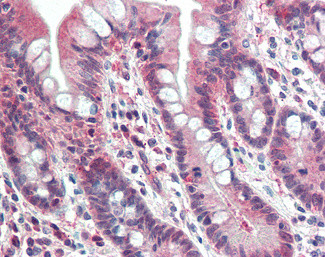
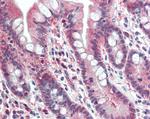
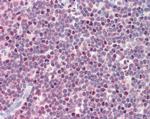
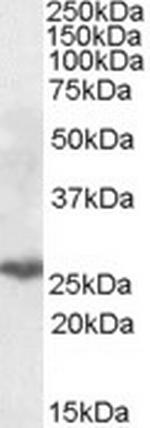
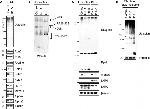
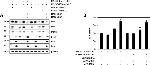
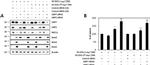
Please note: We are reviewing Western blot images included in the antibody testing data in our catalog, including those provided by third parties. Unless expressly labeled or annotated as “raw-unedited”, Western blot images included in the antibody testing data in our catalog may have been edited, optimized or otherwise adjusted for presentation.


产品信息
PA5-19146
产品规格
种属反应
Human
已发表种属
Human
宿主/亚型
Goat
/ IgG
分类
Polyclonal
类型
Antibody
抗原
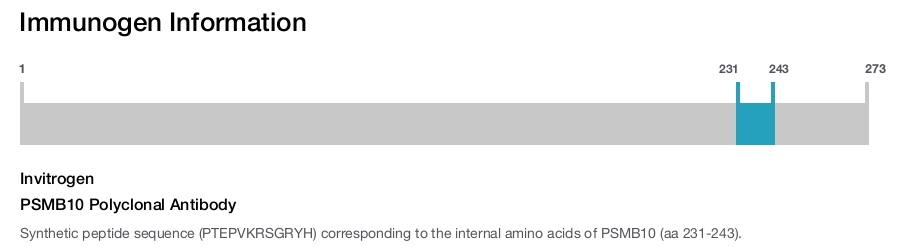
Synthetic peptide sequence (PTEPVKRSGRYH) corresponding to the internal amino acids of PSMB10 (aa 231-243).
偶联物
Unconjugated
Unconjugated
Unconjugated
形式
Liquid
浓度
0.5 mg/mL
规格
100 µg
纯化类型
Ammonium sulfate precipitation
保存液
TBS, pH 7.3, with 0.5% BSA
内含物
0.02% sodium azide
保存条件
-20°C, Avoid Freeze/Thaw Cycles
运输条件
Ambient (domestic); Wet ice (international)
RRID
产品详细信息
This antibody is tested in Peptide ELISA: antibody detection limit dilution 8,000.
靶标信息
The 20S proteasome is a protease complex that is responsible for cytosolic protein degradation and generation of peptide ligands for major histocompatibility complex (MHC) class I molecules, either in their final form or in the form of amino-terminally extended precursors. Upon IFN-gamma stimulation of cells, three constitutively expressed subunits of the 20S proteasome are replaced by inducible subunits LMP2 (low-molecular mass polypeptide 2), LMP7, and MECL-1 (multicatalytic endopeptidase complex-like-1, LMP10). LMP2, LMP7, and MECL-1 subunits form immunoproteasomes, which are associated with more efficient class I antigen processing and presentation. Independent assortment of LMP-2, LMP-7, and MECL-1 into different proteasome complexes can lead to 36 unique proteasome subsets, which may mediate differences in the cleavage specificities/cleavage motifs of proteins subject to constitutive- and immuno-proteasomes.
仅用于科研。不用于诊断过程。未经明确授权不得转售。
生物信息学
蛋白别名: low molecular mass protein 10; macropain subunit MECl-1; MGC1665; multicatalytic endopeptidase complex subunit MECl-1; OTTHUMP00000174858; proteasome (prosome, macropain) subunit, beta type, 10; proteasome catalytic subunit 2i; Proteasome MECl 1; proteasome MECl-1; proteasome subunit beta 10; proteasome subunit beta 7i; proteasome subunit beta-2i; proteasome subunit beta2i; proteasome subunit MECL1; PSMB 10; PSMB10; unnamed protein product
基因别名: beta2i; IMD121; LMP10; MECL1; PRAAS5
UniProt ID: (Human) P40306
Entrez Gene ID: (Human) 5699
immune system process
antigen processing and presentation of exogenous peptide antigen via MHC class I, TAP-dependent
humoral immune response
proteasomal protein catabolic process
proteasomal ubiquitin-independent protein catabolic process
protein catabolic process
positive regulation of interferon-gamma production
positive regulation of interleukin-2 production
positive regulation of tumor necrosis factor production
response to interferon-gamma
proteasome-mediated ubiquitin-dependent protein catabolic process
CD8-positive, alpha-beta T cell differentiation
thymic T cell selection
T-helper 1 cell differentiation
negative regulation of regulatory T cell differentiation
T-helper 17 cell differentiation
CD8-positive, alpha-beta T cell homeostasis
Disclaimer

Clicking the images or links will redirect you to a website hosted by BenchSci that provides third-party scientific content. Neither the content nor the BenchSci technology and processes for selection have been evaluated by us; we are providing them as-is and without warranty of any kind, including for use or application of the Thermo Fisher Scientific products presented.

