Search
Invitrogen
Pan-Methyl Lysine Monoclonal Antibody (7F4)
{{$productOrderCtrl.translations['antibody.pdp.commerceCard.promotion.promotions']}}
{{$productOrderCtrl.translations['antibody.pdp.commerceCard.promotion.promocode']}}: {{promo.promoCode}} {{promo.promoTitle}} {{promo.promoDescription}}. {{$productOrderCtrl.translations['antibody.pdp.commerceCard.promotion.learnmore']}}
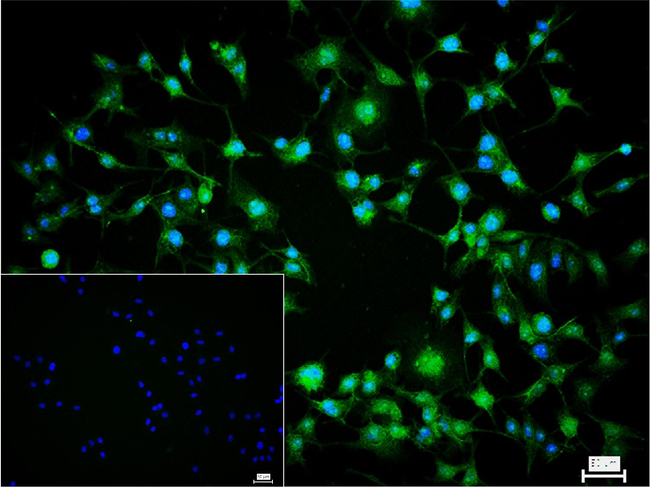
图: 1 / 2
Pan-Methyl Lysine Antibody (MA571608) in ICC/IF
Immunocytochemistry analysis of Pan-Methyl Lysine in HeLa cells. Permeabilized with Trinton X-100 at room temp for 20 min. Samples were incubated with Pan-Methyl Lysine Monoclonal (Product # MA571608 using a dilution at 1:100, for 90 min at 37°C. Followed by conjugated Goat Anti-Mouse IgG antibody (green) at 37°C for 90 min, DAPI was used to stain the cell nuclei. PBS instead of the primary antibody was use... View More
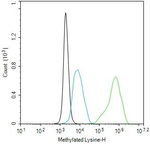
Please note: We are reviewing Western blot images included in the antibody testing data in our catalog, including those provided by third parties. Unless expressly labeled or annotated as “raw-unedited”, Western blot images included in the antibody testing data in our catalog may have been edited, optimized or otherwise adjusted for presentation.


产品信息
MA571608
应用
建议稀释比
已发表文章
产品规格
种属反应
Human
宿主/亚型
Mouse
/ IgG1
分类
Monoclonal
类型
Antibody
克隆号
7F4
抗原
BSA conjugated Methylated Lysine (di methyl, mono methyl, Trimethyl-lysine).
偶联物
Unconjugated
Unconjugated
Unconjugated
形式
Liquid
浓度
1 mg/mL
规格
100 µg
纯化类型
Protein G
保存液
TBS, pH 7.4, with 50% glycerol, 1% BSA
内含物
0.02% ProClin 300
保存条件
Store at 4°C short term. For long term storage, store at -20°C, avoiding freeze/thaw cycles.
运输条件
Ambient (domestic); Wet ice (international)
靶标信息
Pan methyl lysine refers to lysine residues in proteins that undergo post translational methylation on the epsilon-amino group, occurring as mono, di, or trimethylation, a reversible process catalyzed by lysine methyltransferases (KMTs) and removed by lysine demethylases (KDMs). Lysine methylation plays a key role in regulating chromatin structure and gene expression by altering histone DNA interactions, with functional outcomes that depend on the specific residue and methylation state, such as H3K4me3 being associated with active transcription and H3K27me3 with gene repression. Beyond histones, methylation of lysine residues influences diverse biological processes including gene regulation, signal transduction, and protein, protein interactions, as methylated lysines serve as recognition sites for proteins containing methyl lysine binding domains such as chromodomains and Tudor domains. Clinically, aberrant lysine methylation patterns are linked to diseases including cancer and neurological disorders, making methylation status a useful biomarker for diagnosis and prognosis and positioning methylation and demethylation enzymes as important targets for therapeutic drug development.
仅用于科研。不用于诊断过程。未经明确授权不得转售。
篇参考文献 (0)
您是否在文献中引用过该产品?请点击下方按钮邮件告知我们。
Disclaimer

Clicking the images or links will redirect you to a website hosted by BenchSci that provides third-party scientific content. Neither the content nor the BenchSci technology and processes for selection have been evaluated by us; we are providing them as-is and without warranty of any kind, including for use or application of the Thermo Fisher Scientific products presented.

